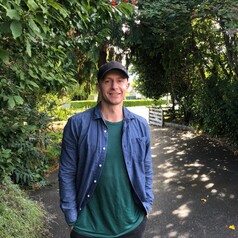
Associate Dean of Research and Professor of Biomedical Informatics, College of Health Solutions, Arizona State University Matthew Scotch is Visiting Professorial Fellow at the Kirby Institute at UNSW. He is also Interim Assistant Dean of Research and Professor of Biomedical Informatics in the College of Health Solutions at Arizona State University (ASU), and Assistant Director of the Biodesign Center for Environmental Health Engineering. His research focuses on genomic epidemiology and bioinformatics of RNA viruses with a particular interest in influenza A viruses. Current projects include studying approaches to advance genomic epidemiology by enrichment of virus sequence metadata (funding: NIH/NIAID 1R01AI164481-01A1) and analysis of viruses from wastewater using bioinformatics (funding: NIH/NLM U01LM013129). The latter is partially funded by the NIH RADx-rad initiative. His lab group is also interested in the molecular epidemiology of viruses including the amplification and sequencing of influenza A and B viruses for short and long-read high-throughput sequencing (HTS) and public health surveillance.
PhD Candidate, Biosecurity Program, Kirby Institute, UNSW Sydney Haley Stone is a PhD candidate at the Kirby Institute’s Biosecurity Program, led by Professor Raina MacIntyre. Her PhD focuses on Epidemic modelling techniques for respiratory diseases with pandemic potential, specifically avian influenza and COVID-19. In addition, she works as a Research officer for EPIWATCH, an open-source intelligence tool which harnesses the power of AI and open-source data to capture early epidemic signals globally and rapid epidemic detection, leading to the prevention of global spread.
Postdoctoral Researcher, Fundamental Physics in Radio Astronomy, Max Planck Institute for Radio Astronomy I am currently a postdoctoral researcher with a data scientist role at the Max-Planck Institute for Radioastronomy in Germany. I have over 10 years of experience working in software development and data science within some international collaborations. My work is about extracting information from a large amount of data and interpreting it. Coordinator of a research working group, my skills are the following: data science, C/C++/Python, Linux, GPU/CUDA, ML, Spark, HPC (Slurm).
Senior Lecturer in Geotechnical Engineering, University of Sydney Granular materials such as sand and snow have the ability to behave both as solids (in sand dunes and snowdrifts) and as fluids (in hourglasses and avalanches). Dr François Guillard studies the properties and behaviours of granular materials and of brittle porous media, which have implications for industries including construction, mining, agriculture and pharmaceuticals. "Granular materials are present everywhere in nature and in industry, but they exhibit extremely complex and rich behaviours that we don't yet fully understand. For example, no one knows quite how sandcastles hold together, how we can walk on sand or snow, or what happens inside a box of cereal. "My research focuses particularly on the behaviour of granular materials when they are flowing, and how they transition between this behaviour and their solid state. "I'm also studying how brittle porous media - such as rocks and sandstone, snow, volcanic ashes and even bones - behave under load and chemical degradation. I use puffed rice grains as a model material, for example, which can be brittle when dry but become soft and mushy when they stay too long in a liquid such as milk. These principles are of tremendous importance for both natural and artificial brittle porous materials that are compacted under load and soaked in water. "In addition, I am involved in advancing the technology used to study granular materials. Currently we cannot see the behaviour of the grains below the surface, so I am developing X-ray radiography methods to study in real time and in three dimensions how granular materials flow internally. "A better understanding of the properties and behaviours of such materials, combined with better experimental investigation techniques, can improve the safety and efficiency of numerous industrial processes, including the construction industry's use of sand, concrete and composite materials; the mining industry's methods of ore extraction and processing; the agricultural industry's storage, transport and processing of cereal grains; and the pharmaceutical industry's bulk handling and delivery of drugs in powdered form. "I've been working in this field since 2010, and I joined the University of Sydney in 2013. Working here has greatly broadened my research interests and afforded me more direct access to the practical implications of my research. It also provides access to state-of-the-art infrastructure and facilities, which is of tremendous help in developing and addressing my research questions."
Research Fellow in Management, Auckland University of Technology Most of my current work focusses on workforce sustainability issues in healthcare professions. I am interested in using theories and concepts from organisational behaviour, social psychology, employment relations and other disciplines to understand how healthcare systems can be redesigned for the benefit of workers and patients.