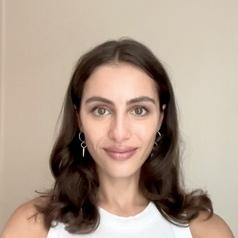
PhD student, Psychology, University of the Witwatersrand I am a third-year PhD student in psychology at Wits University and a research assistant at the Health Communication Research Unit. My PhD research focuses on adolescent mental health. My PhD topic, ‘Mhealth services for adolescent mental health: a focus on Soweto’, looks at how technology can be leveraged to provide mental health services to adolescents. My research interests are in health communication, mental health and migration. Before starting my PhD, I worked as a research assistant and sessional lecturer in the School of Human and Community Development at Wits University. I have been involved in collaborative multidisciplinary projects, including research on African migration and health communication in diverse contexts.
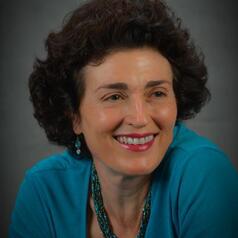
Professor of Psychology and Assistant Dean of Research: Faculty of Humanities, University of the Witwatersrand Prof Maria Marchetti-Mercer is a professor of psychology at the University of the Witwatersrand (Wits) and currently serving as assistant dean of research for the Faculty of Humanities. She served as the head of the School of Human and Community Development at Wits from 2012 to 2016. Prior to that, she was the head of the Psychology Department at the University of Pretoria from 2001 to 2011. She has been involved in the training of professional psychologists especially with regard to family therapy for nearly 30 years and her doctoral thesis was on the Milan School of family therapy. She has also received advanced post-graduate family therapy training in Italy. Her current area of research focuses on the impact of migration on South African families and most recently the use of ICTs in African migrant families. Her new co-edited book, “Transnational Families in Africa: Migrants and the Role of Information Communication Technologies” has just been published. She also co-authored a book, “The Italian Diaspora in South Africa: Nostalgia, Identity, and Belonging in the Second and Third Generations" (Routledge) with A. Virga in 2023. She is a C1 NRF-rated researcher and has published widely both nationally and internationally in the field of migration and families, the training of professional psychologists, and family murder. In 2008 she received an award from the Institute for School-Based Family Counseling and the University of San Francisco Center for Child and Family Development for outstanding international contributions to school-based family counselling presented at Brasenose College, Oxford University. She was awarded the Order of the Star of Italy in 2022 for her professional contributions from the president of Italy.
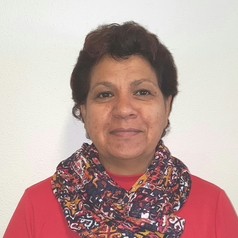
Research Officer, Curtin University I graduated from the Master of Public Health at the University of Melbourne in 2023. During my studies, I developed an interest in qualitative research methods and community-based approaches to public health responses and research. Since graduating, I have been working at the Melbourne School of Population and Global Health and the National Drug Research Institute at Curtin University in Indigenous health research. I also have experience working in sexual and reproductive healthcare and Victorian Government public health programs.
Research Associate in Justice Health and Social Issues, Curtin University Jocelyn comes from a nursing background with a Masters in Epidemiology and is currently a PhD candidate with the Telethon Kids Institute Jocelyn has extensive experience in the fields of Aboriginal primary health care services, health research, policy development and justice services. Her areas of research interest are Aboriginal health, child protection and justice, particularly juvenile delinquency and women in prison.
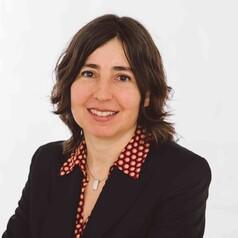
Group Leader, Department of Archaeogenetics, Max Planck Institute for Evolutionary Anthropology I am a population geneticist who develops and applies computational tools to analyze genomic data. A key research interest of mine is the study of human ancient DNA. This field is rapidly growing - by now thousands of genomes of humans who lived thousands of years ago are being published every single year. I develop new ways to study these ancient genomes and make computational tools available to other researchers. Currently, I hold a junior group leader position at the Max Planck Institute for Evolutionary Anthropology in Leipzig (Germany), and I build up a research group in this field.