


 Trump Signs “America First Arms Transfer Strategy” to Prioritize U.S. Weapons Sales
  Trump’s Inflation Claims Clash With Voters’ Cost-of-Living Reality
  China Warns US Arms Sales to Taiwan Could Disrupt Trump’s Planned Visit
  Jack Lang Resigns as Head of Arab World Institute Amid Epstein Controversy
  TrumpRx Website Launches to Offer Discounted Prescription Drugs for Cash-Paying Americans
  Trump Endorses Japan’s Sanae Takaichi Ahead of Crucial Election Amid Market and China Tensions
  Missouri Judge Dismisses Lawsuit Challenging Starbucks’ Diversity and Inclusion Policies
  Trump Allows Commercial Fishing in Protected New England Waters
  Trump Backs Nexstar–Tegna Merger Amid Shifting U.S. Media Landscape
  Nighttime Shelling Causes Serious Damage in Russia’s Belgorod Region Near Ukraine Border
  Pentagon Ends Military Education Programs With Harvard University
  Trump Allegedly Sought Airport, Penn Station Renaming in Exchange for Hudson River Tunnel Funding
  TrumpRx.gov Highlights GLP-1 Drug Discounts but Offers Limited Savings for Most Americans
  Trump Lifts 25% Tariff on Indian Goods in Strategic U.S.–India Trade and Energy Deal
  U.S.-India Trade Framework Signals Major Shift in Tariffs, Energy, and Supply Chains
  South Korea Assures U.S. on Trade Deal Commitments Amid Tariff Concerns
  US Pushes Ukraine-Russia Peace Talks Before Summer Amid Escalating Attacks


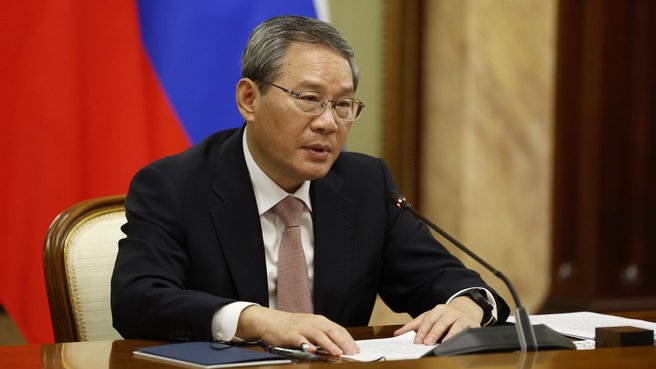
Chinese Premier Li Qiang reiterated China’s commitment to "firmly advance" reunification with Taiwan while opposing external interference. In his annual work report to China’s parliament, Li emphasized working with "fellow Chinese in Taiwan" to achieve national rejuvenation.
China considers Taiwan its territory despite strong objections from Taipei and has increased military pressure on the island, including large-scale war games. Unlike past reports, Li’s latest statement omits the term "peaceful reunification," signaling a firmer stance. Beijing continues to oppose separatist movements and foreign intervention, particularly from the U.S., as tensions between the two superpowers escalate.
Taiwan’s President Lai Ching-te maintains that only the people of Taiwan can determine their future. Lai has repeatedly sought dialogue with China, but Beijing dismisses him as a "separatist." While Taiwan's Mainland Affairs Council did not immediately comment, a senior Taiwanese official noted that China’s tone remained largely unchanged, with its focus on the economy and U.S. relations taking priority.
March marks the 20th anniversary of China’s "anti-secession" law, which grants Beijing legal authority to use force if Taiwan declares independence or peaceful reunification becomes impossible. However, the law remains vague on specific actions.
China is also expected to ramp up cross-strait exchanges, using cultural and religious ties to expand its influence while restricting interactions that do not align with its political goals. Despite these efforts, Taiwan remains firm on self-governance, rejecting Beijing’s claims and maintaining its democratic autonomy.
As geopolitical tensions rise, China continues to assert its position on Taiwan while rejecting what it calls "hegemonism and protectionism" from foreign powers, particularly the U.S.













