


 Uber Ordered to Pay $8.5 Million in Bellwether Sexual Assault Lawsuit
  Amazon Stock Rebounds After Earnings as $200B Capex Plan Sparks AI Spending Debate
  Trump Backs Nexstar–Tegna Merger Amid Shifting U.S. Media Landscape
  Nasdaq Proposes Fast-Track Rule to Accelerate Index Inclusion for Major New Listings
  Nintendo Shares Slide After Earnings Miss Raises Switch 2 Margin Concerns
  Nvidia Confirms Major OpenAI Investment Amid AI Funding Race
  SpaceX Pushes for Early Stock Index Inclusion Ahead of Potential Record-Breaking IPO
  Nvidia, ByteDance, and the U.S.-China AI Chip Standoff Over H200 Exports
  Anthropic Eyes $350 Billion Valuation as AI Funding and Share Sale Accelerate
  Global PC Makers Eye Chinese Memory Chip Suppliers Amid Ongoing Supply Crunch
  Nvidia CEO Jensen Huang Says AI Investment Boom Is Just Beginning as NVDA Shares Surge
  FDA Targets Hims & Hers Over $49 Weight-Loss Pill, Raising Legal and Safety Concerns
  SpaceX Prioritizes Moon Mission Before Mars as Starship Development Accelerates
  AMD Shares Slide Despite Earnings Beat as Cautious Revenue Outlook Weighs on Stock
  Baidu Approves $5 Billion Share Buyback and Plans First-Ever Dividend in 2026
  Nvidia Nears $20 Billion OpenAI Investment as AI Funding Race Intensifies


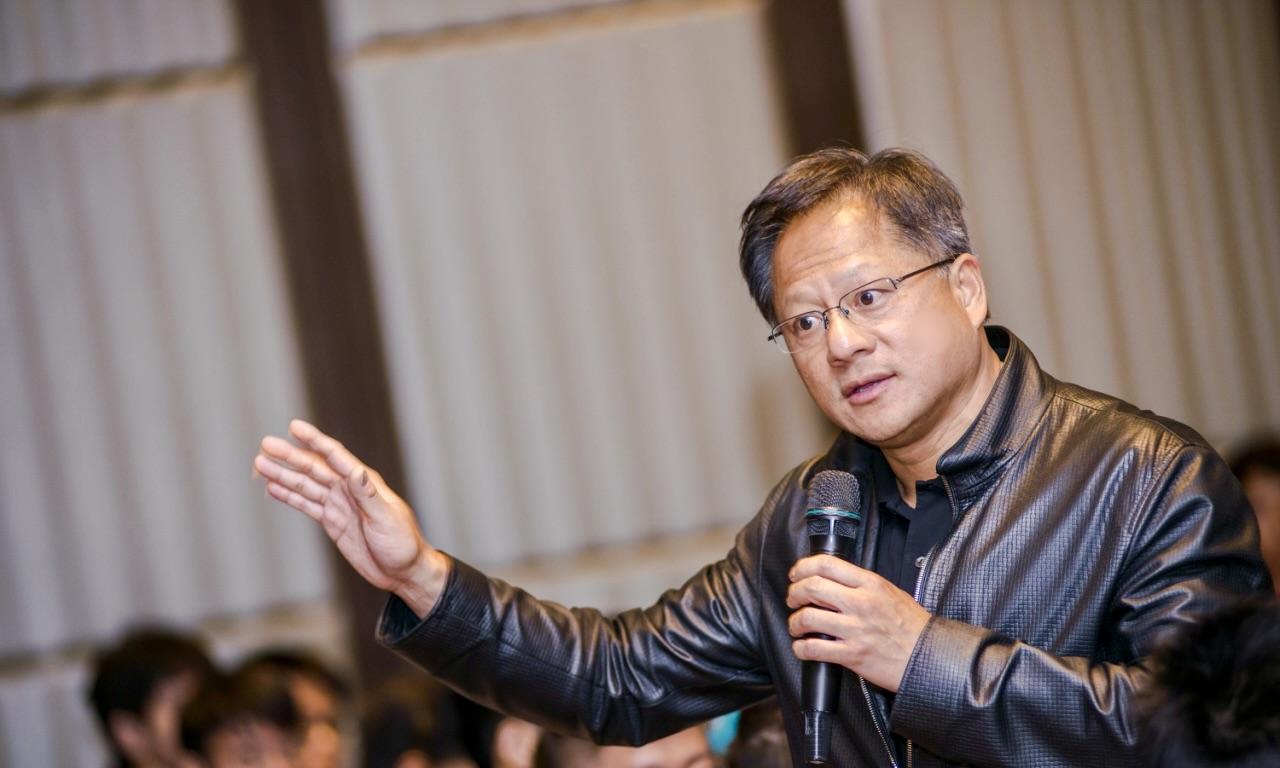
Tech moguls Elon Musk and Larry Ellison begged Nvidia CEO Jensen Huang over dinner for more AI GPUs, as Oracle plans a massive supercluster powered by Nvidia technology, signaling the escalating race in artificial intelligence.
Elon Musk and Larry Ellison Begged Nvidia’s Jensen Huang for GPUs
Oracle co-founder Larry Ellison, speaking during the most recent earnings call, acknowledged (via Barron's) that he had to grovel to Nvidia CEO Jensen Huang to get the latest graphics processing units (GPUs) for his company.
“In Nobu Palo Alto, I went to dinner with Elon Musk, Jensen Huang, and I would describe the dinner as me and Elon begging Jensen for GPUs. Please take our money; no, take more of it. You’re not taking enough of it; we need you to take more of our money, please,” Ellison pleaded with the other party throughout the call. “It went okay; it worked.”
Looking back, it appears that Ellison and Oracle got a lot out of this dinner.
More powerful than Musk and xAI's Memphis Supercluster, which presently contains 100,000 Nvidia H100 AI GPUs, the company's upcoming Zettascale AI supercluster, made of 131,072 Nvidia GB200 NVL72 Blackwell GPUs, would give 2.4 ZettaFLOPS of AI performance.
Mobile Generators to Support Oracle’s AI Projects Until Reactors Are Online
Oracle has already obtained permission to construct three modular nuclear reactors to supply its buildings with electricity, as its AI plans require a tremendous amount of power. But since it will probably take a while for data centers to have nuclear reactors installed, the business may, for the time being, follow Musk's example and use huge mobile generators to increase the local power supply if necessary.
Although it is smaller than other large IT businesses that provide data center services, Oracle Cloud Infrastructure (OCI) has a clear edge over Amazon Web Services (AWS), Microsoft Azure (Azure), and Google Cloud (Google Cloud).
Offline Servers Cater to Oracle’s Security-Conscious Clients
When it comes to meeting the unique needs of certain clients, Tom's Hardware claims that OCI offers superior flexibility. For the most security-conscious customers, it goes so far as to offer offline servers that operate on its own networking infrastructure.
Oracle may be little, but it is making a big splash with its AI initiatives.
Ellison, echoing Anthropic CEO Dario Amodei, predicts that the training of frontier AI models due out in the next three years will cost $100 billion. Plus, it appears that OCI aspires to be a frontrunner in the artificial intelligence processing industry.
"Someone’s going to be better at this than anybody else, and multiple people are trying, and there is a race," Ellison stated during the call. Finally, he chimed in, saying, "Getting there first is a big deal."













