


 Oil Prices Steady as US-Iran Nuclear Talks and Rising Crude Inventories Shape Market Outlook
  Gold Prices Rally in February as Geopolitical Risks and Economic Uncertainty Boost Safe-Haven Demand
  USITC to Review Impact of Revoking China’s PNTR Status, Potentially Raising Tariffs on Chinese Imports
  Pakistan-Afghanistan Tensions Escalate as Taliban Offer Talks After Airstrikes
  Stock Market Movers: Dell, Block, Duolingo, Zscaler, CoreWeave, Autodesk, Rocket, MARA
  Keir Starmer Faces Crucial By-Election Test in Manchester Amid Tight Three-Way Race
  Maduro Seeks Dismissal of U.S. Drug Trafficking Case, Citing Sanctions Interference
  Tokyo Core Inflation Slows Below 2%, Complicating BOJ Rate Hike Outlook
  Asian Stocks Rise on Nvidia Earnings Boost; Yen Weakens as BOJ Rate Outlook Clouds
  U.S. Signals Openness to North Korea Talks as Kim Jong Un Calls for Shift in “Hostile Policy”
  Trump Floats “Friendly Takeover” of Cuba as Rubio Reportedly Engages in Talks
  U.S. Stocks Close Lower as Hot PPI Data, Nvidia Slide Weigh on Wall Street
  Dominican Republic Unveils Massive Rare Earth Deposits to Boost High-Tech and Energy Sectors
  Federal Judge Blocks Virginia Social Media Age Verification Law Over First Amendment Concerns
  Bank of Korea Holds Interest Rate at 2.50% as Growth Outlook Improves Amid AI Chip Boom
  U.S.-Iran Nuclear Talks Show Progress but No Breakthrough Amid Rising Military Tensions


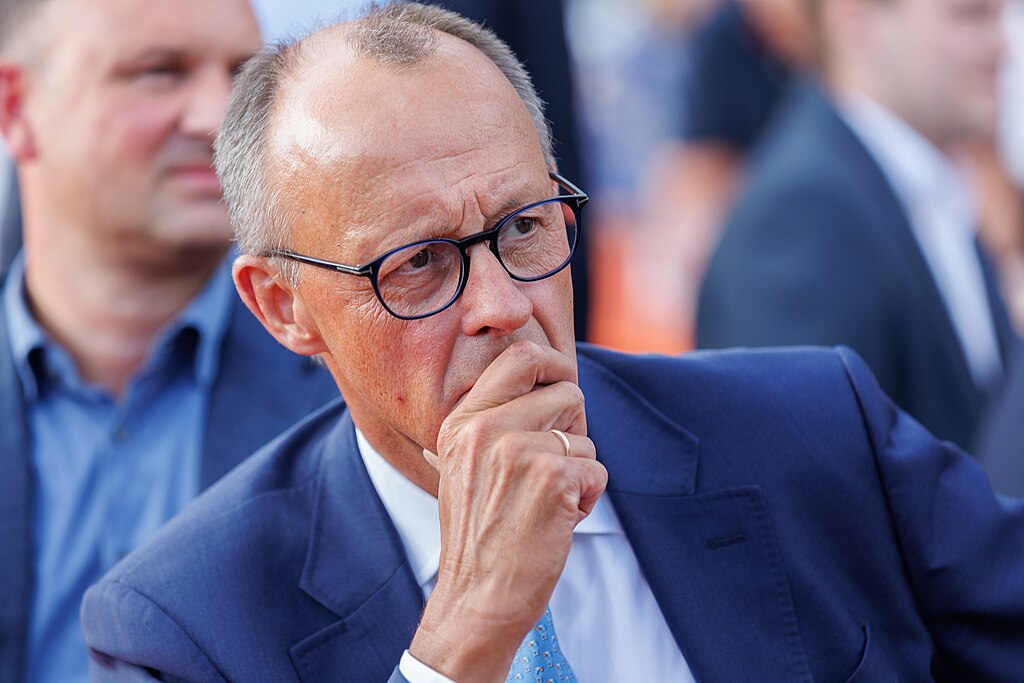
German Chancellor Friedrich Merz concluded a pivotal visit to Beijing this week, signaling Germany’s continued commitment to open markets and strong economic ties with China. As the first foreign leader to visit China in the new lunar year, Merz met with President Xi Jinping to strengthen bilateral relations and outline priorities for the “Year of the Horse.” The high-profile trip underscores the importance of Germany-China relations in shaping global trade and economic stability.
The delegation included 30 leading German executives, highlighting the deep economic interdependence between the world’s second- and third-largest economies. Annual trade between Germany and China exceeds $200 billion, while two-way investment stocks have surpassed $65 billion. These figures reflect a robust partnership built on industrial cooperation, advanced manufacturing, and expanding collaboration in digital transformation and green technology innovation.
During the summit, both leaders reaffirmed their support for mutual respect, “win-win” cooperation, and long-term strategic alignment. Talks focused on upgrading traditional manufacturing ties into next-generation sectors such as renewable energy, artificial intelligence, and smart industrial systems. German media reported extensive preparations ahead of the visit, emphasizing Berlin’s recognition of China as a key partner in achieving its technology and innovation goals through 2030.
Beyond economic cooperation, the meeting addressed broader geopolitical challenges. Germany and China issued a joint statement supporting free trade, multilateralism, and the role of the United Nations in maintaining a stable international order. President Xi outlined three guiding principles for future cooperation: reliability, innovation, and cultural exchange, while calling for stronger coordination in upholding international law.
Chancellor Merz reiterated Germany’s readiness to deepen its strategic partnership with China. As global markets face uncertainty, closer alignment between Germany’s digitalization strategy and China’s 15th Five-Year Plan positions both nations as stabilizing forces in the global economy, reinforcing their shared commitment to open trade and sustainable growth.













