


 UK Government Agrees to Release Documents on Peter Mandelson Appointment Amid Epstein Scandal
  NYC Mayor Zohran Mamdani Meets President Trump to Tackle Housing Crisis and ICE Detentions
  Maduro Seeks Dismissal of U.S. Drug Trafficking Case, Citing Sanctions Interference
  Dominican Republic Unveils Massive Rare Earth Deposits to Boost High-Tech and Energy Sectors
  Pentagon to Halt Ivy League Programs for U.S. Military Officers Starting 2026
  U.S. Plans 4,500 Monthly Refugee Admissions for White South Africans Amid Policy Debate
  Russia Downs 220 Ukrainian Drones in Major Air Defence Operation, Moscow Targeted
  Keir Starmer Faces Crucial By-Election Test in Manchester Amid Tight Three-Way Race
  U.S. Signals Openness to North Korea Talks as Kim Jong Un Calls for Shift in “Hostile Policy”
  Federal Judge Blocks Virginia Social Media Age Verification Law Over First Amendment Concerns
  Denver Mayor Orders Police to Protect Protesters, Restricts ICE Access to City Property
  Melania Trump to Chair UN Security Council Meeting as U.S. Assumes Presidency
  Germany and China Reaffirm Open Trade and Strategic Partnership in Landmark Beijing Visit
  USITC to Review Impact of Revoking China’s PNTR Status, Potentially Raising Tariffs on Chinese Imports
  ICE Hiring Surge Raises Vetting Concerns Amid Rapid Expansion
  HHS Adds New Members to Vaccine Advisory Panel Amid Legal and Market Uncertainty
  U.S.-Iran Nuclear Talks Show Progress but No Breakthrough Amid Rising Military Tensions


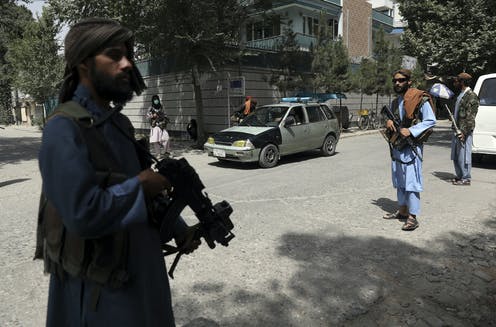
Afghanistan’s Taliban government said it is ready to negotiate with Pakistan after a sharp escalation in cross-border violence that both sides have described as an “open war.” The crisis intensified when Pakistan launched airstrikes targeting Kabul, Kandahar, and other Afghan cities, accusing the Taliban of harboring militants responsible for attacks inside Pakistan.
Taliban spokesperson Zabihullah Mujahid confirmed that Pakistani airstrikes struck parts of Kabul, Kandahar, Paktia, Paktika, Khost, and Laghman. Thick smoke and large fires were reported in the Afghan capital, with witnesses describing loud explosions and emergency sirens. A Kabul resident said an ammunition depot was hit, causing secondary blasts as stored ordnance ignited. Taliban officials reported civilian casualties but did not provide detailed figures.
Pakistan stated that its military carried out air-to-ground missile strikes on Taliban military positions in response to Afghan drone attacks along the shared border. Islamabad claimed the strikes killed 274 Taliban officials and militants, while Afghanistan said it killed 55 Pakistani soldiers. Reuters could not independently verify those numbers. Pakistan confirmed 12 of its soldiers died, and Afghanistan acknowledged the loss of 13 Taliban fighters.
The conflict stems from long-standing tensions over Pakistan’s allegation that Afghanistan shelters Tehreek-e-Taliban Pakistan (TTP) militants. Kabul denies providing safe haven, insisting that Pakistan is shifting blame for its internal security challenges. The United Nations has previously noted links between the Afghan Taliban and the TTP.
UN Secretary-General Antonio Guterres expressed deep concern and called for an immediate ceasefire and diplomatic resolution. The United States voiced support for Pakistan’s right to defend itself, while the European Union urged de-escalation and dialogue.
With Pakistan’s superior military strength and Afghanistan’s experienced guerrilla forces, fears are rising of prolonged instability along the 2,600-kilometer border. Qatar and other regional actors are reportedly working to mediate and prevent further escalation in the Afghanistan-Pakistan conflict.













