


 Takeda Hit With $885M Verdict Over Amitiza Generic Drug Delay Scheme
  Medicare to Cover GLP-1 Weight-Loss and Diabetes Drugs Starting July 1
  Trump Administration Bars U.S. Travelers From Congo Flights Amid Ebola Outbreak
  Trump Reportedly Approves Plan to Remove FDA Commissioner Marty Makary Amid Growing Controversies
  Novo Nordisk Raises 2026 Outlook on Strong Wegovy Demand
  Supreme Court Blocks 5th Circuit Ruling on Abortion Pill Access
  NIH Infectious Disease Leadership Shake-Up Raises Concerns Amid Ebola, Hantavirus Outbreaks
  GSK Reportedly Nears $9 Billion Acquisition of Cancer Drug Developer Nuvalent
  AstraZeneca Shares Sink After Wainua Trial Misses Key Heart Disease Goal
  White House Seeks $1.4 Billion to Combat Growing Ebola Outbreak
  Venezuela Earthquake Health Risks Rise as Disease Monitoring Intensifies
  Alcohol is one of the most dangerous drugs, yet its presence is ubiquitous in social settings and celebrations
  RFK Jr. Orders Extended Hantavirus Quarantine for Cruise Passenger
  Should I take zinc or eat oysters to ward off colds, boost my immune system or improve fertility?
  Supreme Court Blocks 5th Circuit Ruling on Abortion Pill Access



While some of us love the winter chill, this winter others will notice itchy or tender red lumps on their fingers and toes.
These small bumps are called chilblains (also known as pernio) and they occur with exposure to cold. While children and the elderly are most commonly affected, other age groups are not immune to this problem.
Several hours after exposure to cold, damp weather, the blood vessels in the fingers and toes tighten up and get smaller (called vasoconstriction) to keep the warm blood as far away from the skin as possible, as this is where heat is lost.
When returning to a warm environment from the cold, these blood vessels expand again, but can get inflamed (called vasculitis) if this happens too quickly.
This causes itch and burning in the affected area. Small reddish lumps can appear on the skin, which may become painful or blistered. In those with skin of colour, chilblains may look purple-ish or even present as a brown patch of skin. The most commonly affected areas include the fingers, toes, ears and nose.
If they’re untreated, chilblains can swell and form blisters, with a risk of ulcers, scarring and infection. But usually, if extremities are warmed, they will get better on their own in a few weeks.
This reaction is more common in people who have a family history of chilblains and those who have problems with their blood circulation. Smoking, diabetes and high cholesterol can lead to poorer blood circulation. People who are underweight or have diseases that affect connective tissue (such as lupus) are also at increased risk of chilblains.
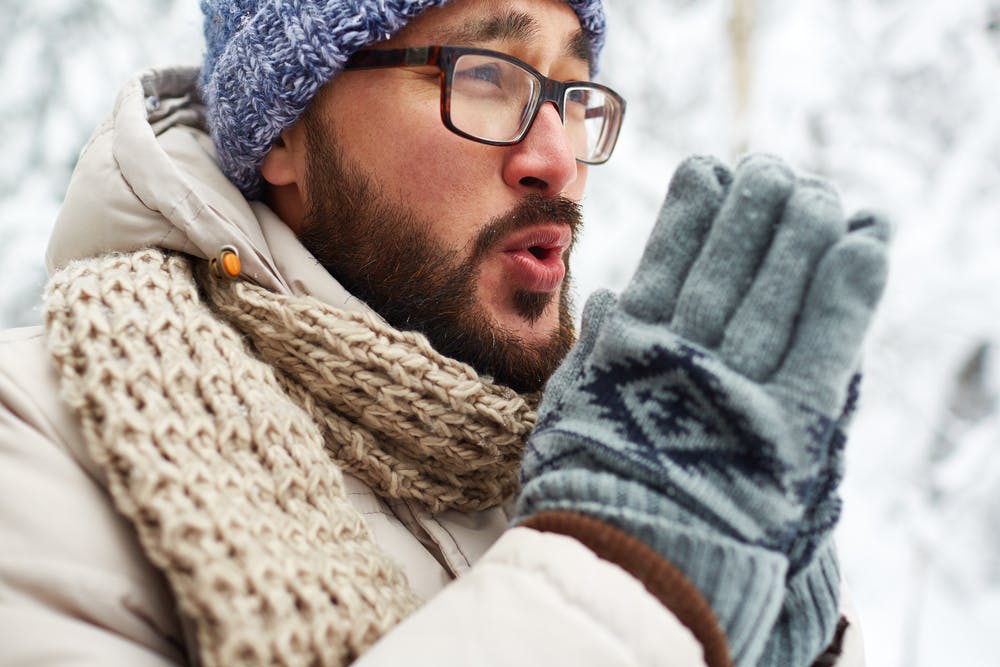
Keep your extremities covered, and warm them up slowly if they get cold. from www.shutterstock.com
The diagnosis is usually straightforward and no extra tests are needed. But occasionally other conditions need to be excluded, such as lupus and Raynaud’s disease (where small arteries narrow, limiting blood circulation). For this, your doctor might need to do some blood tests or even take a small piece of skin (skin biopsy) to confirm the diagnosis.
If the weather gets the better of you and chilblains do appear, your doctor is likely to suggest topical steroid creams to help with itch and inflammation. For more severe cases, medications that open (dilate) blood vessels, such as nifedipine and diltiazem, can be used.
But we all know prevention is better than cure, so here are some tips to avoid chilblains:
-
clothing: keep your extremities warm with covered shoes, gloves and ear muffs
-
temperature control: keep your skin dry and warm, and when you’re rewarming your skin, do it slowly and gently
-
get active: staying active and keeping fit with physical activity improves circulation so will decrease the risk of developing chilblains
-
avoid smoking and eat well to optimise the health of your blood vessels.








