


 Brazil Court Bars Flavio Bolsonaro From Visiting Jair Bolsonaro Ahead of Election
  DOJ Grand Jury Investigates UAW President Shawn Fain Ahead of Union Election
  DOJ Seeks Dismissal of Fraud Charges Against Gautam Adani in U.S. Court
  Apple Sues OpenAI, Former Employees Over Alleged Trade Secret Theft
  Muji Owner Ryohin Keikaku Stock Soars After Raising Full-Year Earnings Forecast
  Fortescue Faces Class Action Over Sexual Harassment Claims at Australian Mining Sites
  Trump Administration Hands Over Key Evidence in Minnesota Immigration Shooting Investigations
  SoftBank Corp Partners With Sierra to Expand AI Customer Support Across Japan
  Morgan Stanley Names Marks & Spencer Top European Retail Pick, Sees Strong Upside
  Mastercard Explores Sale of Majority Stake in UK Payments Firm Vocalink: Report
  Trump Orders DOJ Investigation Into Exxon, Chevron Over High Gas Prices
  Trinidad Businessman Dominic Hadeed Appeals Detention Over Alleged Assassination Plot
  Rio Tinto Reports Strong Q2 Iron Ore Sales, Maintains 2026 Production Outlook
  Australia Flags Child Safety Gaps at Apple, Meta, Google Over Online Sexual Extortion
  Supreme Court Backs Lisa Cook, Defends Federal Reserve Independence Against Trump Firing Attempt
  Sara Duterte Impeachment Trial Opens, Putting 2028 Philippine Election in Focus
  UBS Starts CarTrade Tech With Buy Rating, Sees Strong Earnings Growth and ₹4,000 Target








Newfoundland and Labrador made history in September as the first Canadian province to implement a sugar-sweetened beverage tax. Sugar-sweetened beverage taxes also exist outside of Canada, including in Mexico, Philadelphia, Penn. and the United Kingdom. In Newfoundland and Labrador the tax amounts to 20 cents per litre of sugar-sweetened beverage.
Sugar-sweetened beverage taxation is supported by many global and national health organizations, such as the World Health Organization, Diabetes Canada and the Heart and Stroke Foundation. Taxes are a popular public health policy because of associations between sugary beverage consumption and Type 2 diabetes and weight gain.
Sugar-sweetened beverage taxes are excise taxes, or flat taxes, which also make them regressive taxes. This type of taxation has real potential to have harmful effects on equity as lower-income populations will pay a higher proportion of their income through this tax. Previous critiques of sugar-sweetened beverage taxation also include the potential harm to small business and First Nations communities.
Weight stigma
Notably absent from this list of harms is the potential of sugar-sweetened beverage taxation to create or exacerbate stigma, including weight stigma. Weight stigma in health policies has received global attention and there are many calls to action to end weight-stigmatizing policies.
Stigma occurs, in part, when a label — such as “obesity” — is associated with negative stereotypes, leading to discrimination and loss of status. Weight stigma includes stereotypes of laziness and stupidity. It can lead to discrimination in health-care and workplace settings.
Weight stigma has negative effects on mental and physical health, including health-care avoidance, disordered eating, self exclusion from sport and exercise and stress. Contrary to what many people think, stigma is not an effective strategy for weight loss.
Even before Newfoundland and Labrador declared its intentions with sugar-sweetened beverage taxation, significant interest in Canada and globally led us to explore attitudes and acceptability of a tax in our province of Manitoba. We conducted an interview-based study with residents of many different locations, including a middle-to-upper class, liberal neighbourhood in the provincial capital, Winnipeg.
Our participants from this location were white, food secure and primarily highly educated. In our analysis, we specifically sought out instances of weight stigma in the interview transcripts.
Stigmatizing messages
We were interested in the language participants used because people absorb the messages they hear and the images they see. They may push back, change or repeat these messages.
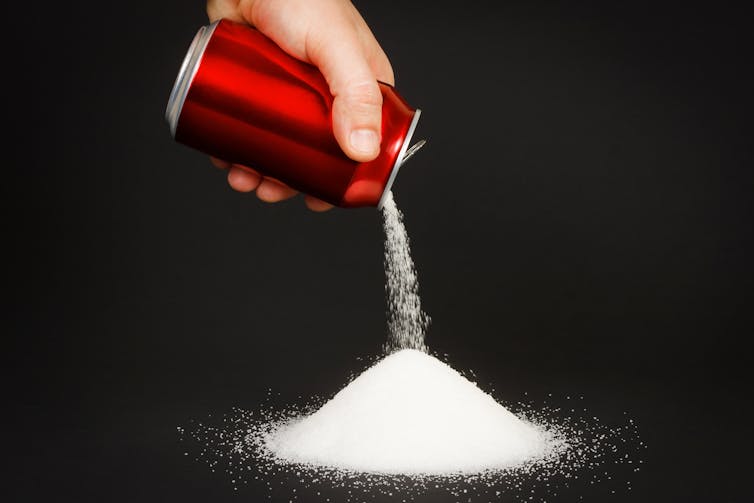
People absorb the messages they hear and the images they see. (Shutterstock)
In our analysis of the interviews, we found that many participants repeated weight-stigmatizing messages when discussing sugar-sweetened beverages. A more overt way this occurred was through the judgement of higher-weight individuals who were buying or consuming sugar-sweetened beverages.
Weight stigma also occurred in more covert or subtle ways. For example, some participants talked about their “disgust” and other negative emotions associated with their weight and others’ weight. Many participants also spoke of their “responsibility” to lose weight or to protect their children from becoming overweight by not consuming sugar-sweetened beverages and juice.
Weight dissatisfaction is harmful to one’s health. Disgust also has justice implications for public health. Being disgusted by someone makes them seem less than human. It can contribute to blaming people for conditions caused by multiple biological and social factors and can reinforce prejudice.
Participants also described higher weight individuals as a “burden” on the health-care system and that a tax on sugar-sweetened beverages would help offset these perceived costs. While this myth of obesity bankrupting the health-care system is pervasive, research suggests otherwise. In Manitoba, the health service usage for individuals classified as overweight was found to be similar to those classified as normal weight. Health-care usage was only marginally higher for individuals classified as obese.
Policies and stigma
Hearing these comments repeated in our interviews indicated to us how pervasive and widespread weight stigma was in participants’ attitudes toward sugar-sweetened beverage intake. Most importantly, these beliefs informed support or acceptability of sugar-sweetened beverage taxation.
This finding echoes existing research suggesting reciprocal processes between stigma at inter- and intra-personal levels and policies. This indicates that interpersonal stigma may contribute to the creation of stigmatizing policies and that stigmatizing policies may in turn legitimize and worsen existing stigma.
Our specific research population was chosen because it was a good representation of the dominant social group in Canada — a white, middle-to-upper class, highly educated segment of the population. This dominant population is also likely to be similar to many policymakers, further supporting the perspectives of this group within Canadian policies.
Our findings demonstrate how weight-stigmatizing comments were used in support of sugar-sweetened beverage taxation. Weight stigma has serious health consequences. If Canadian public health professionals are committed to tackling weight stigma in health policies, we need to reconsider our support for this policy.







