


 Muji Owner Ryohin Keikaku Stock Soars After Raising Full-Year Earnings Forecast
  Paramount-Warner Bros. Discovery Merger Faces Lawsuit From 12 States
  Citi Raises TSMC Price Target as AI Chip Demand Strengthens Growth Outlook
  BHP Faces Major Port Hedland Strike as Labor Talks Stall Ahead of Production Report
  Morgan Stanley Says China’s Reusable Rocket Progress Poses Long-Term Challenge to SpaceX
  Goldman Sachs Says China Competition Weighs More on EU Growth Than Trade Deficit
  Gold Surges Past $4150 on Dovish Fed Signals and Weak Jobs Data; Bullish Outlook Prevails
  DBS Targets S$1 Trillion Wealth AUM by 2030 Amid Asia Wealth Boom
  SK Hynix Stock Soars as AI Memory Demand Outlook Fuels Chip Rally
  JPMorgan Cuts Gold Price Forecast, Sees Bullion Reaching $4,500 by End of 2026
  USA at 250: the Black American struggle for life, liberty and the pursuit of happiness
  SoftBank Corp Partners With Sierra to Expand AI Customer Support Across Japan
  Elon Musk Says Anthropic Leads AI Race as Claude Models Challenge OpenAI
  OpenAI Executive Fidji Simo to Step Down Amid Health Challenges Ahead of IPO




There has been a six-fold increase in sales of infant formula prescribed for babies with cows’ milk protein allergy in the United Kingdom from 2006 to 2016. This is despite no evidence of a concurrent increase in the prevalence of infants with the allergy.
An investigation published today in the BMJ found infant formula manufacturers have been funding the development of guidelines for the diagnosis and treatment of cows’ milk allergy as well as providing research and consultancy funds to those who wrote them.
Rates of cow’s milk allergy appear to have been relatively stable – estimated at between 1-2% over the last decade.
Research has found the perception of an allergic response to cow’s milk protein in children is ten times greater than what actual diagnosis would indicate. This means guidelines on allergy for doctors are really important.
In some cases, doctors who spoke to the BMJ said the guidelines were so vague that
virtually every single infant could potentially be diagnosed using these symptoms.
A diagnosis can only be made only by excluding cow’s milk protein from the maternal diet, observing symptoms, and then reintroducing it. But the BMJ paper notes that evidence for advising such exclusions to treat non-specific symptoms in breastfed infants is weak.
The paper also found much of the education for health professionals and parents about cows’ milk allergy was provided by organisations also funded by the infant formula industry.
Previous research has found that changes in diagnostic and treatment guidelines can have enormous effects on the revenue of pharmaceutical and nutritional products. Conflicts of interest due to industry funding have been found to affect doctors’ prescribing behaviour, research results and the quality of patient care.
Parents are also vulnerable to marketing. They crave a happy, quiet, calm baby who sleeps, eats and poos in a predictable pattern.
But babies wake often. They can have difficulty adjusting to life outside the womb and their stomachs are getting used to digesting food. They vomit. They cry for reasons that are hard to understand.
Marketing takes this normal infant behaviour and turns it into a problem that can be solved by buying a product.
When businesses are allowed to shape the guidelines health professionals use to diagnose and treat, this can lead to guidelines that find normal infant behaviour is treatable – with a product.
Unfortunately there may similar pressures on doctors in Australia.
A variety of infant formula products available in Australia claim to be antidotes to normal challenges new parents face such as crying, vomiting and constipation.
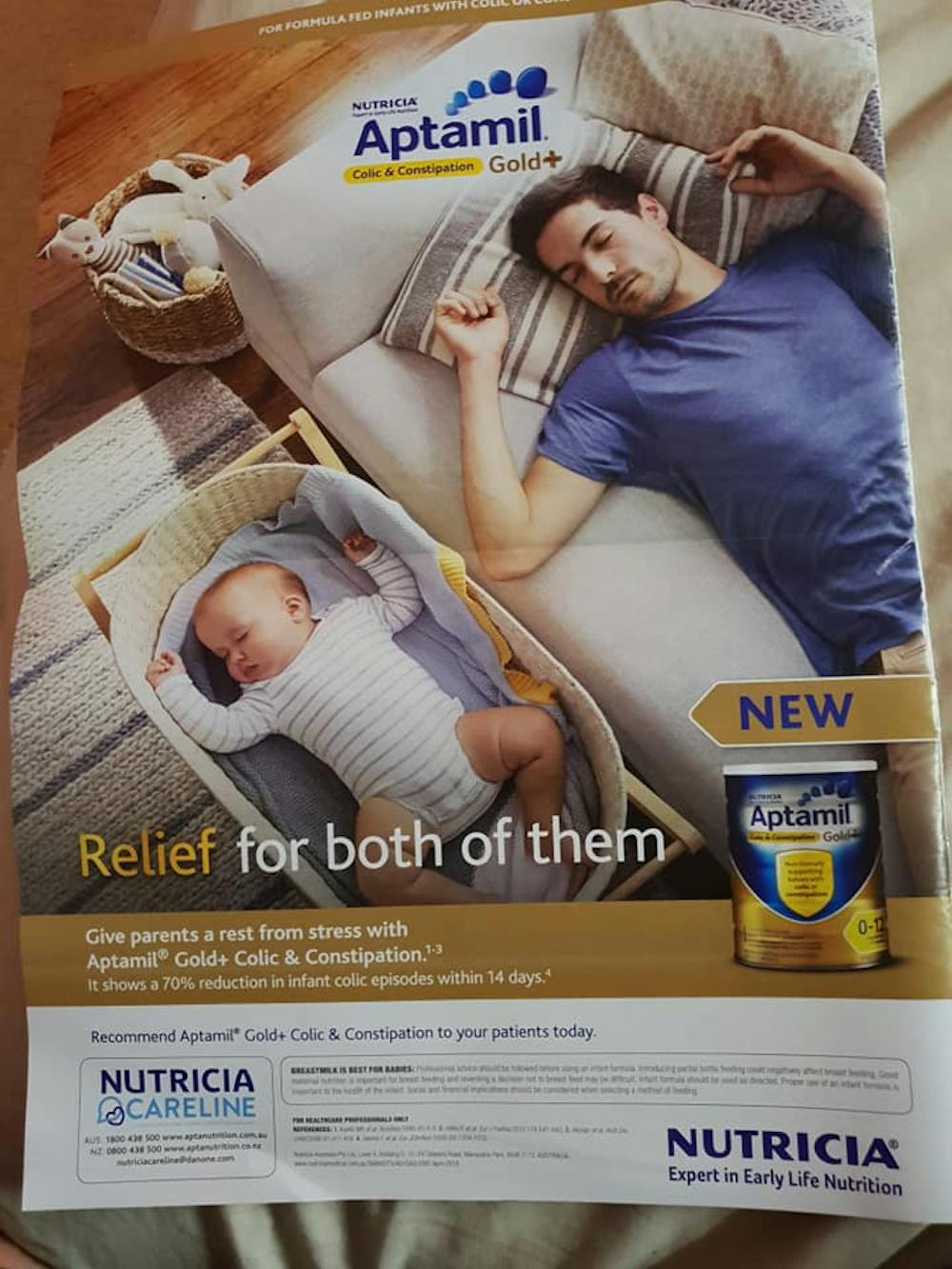
An advertisement in Australian Doctor. ., Author provided
The above advertisement is from the publication Australian Doctor (which is available through subscription to medical professionals and includes drug advertising). It is a powerful piece of persuasion. It invokes every parent’s desire for a good night’s sleep and a contented, healthy baby to drive purchasing behaviour. Notice the presence of the mother in this picture. Although we can’t see her, we presume she is also sleeping somewhere.
When parents are desperate for help, doctors want to provide it. Colic is a variation of normal infant behaviour. It has no known medical cause or cure and this can make doctors feel powerless. However, this advertisement offers them a way to help. It gives doctors a solution – they just need to suggest the infant formula.
Parents are told to seek assistance from health professionals when they are concerned about their baby. However, if health professional guidelines and education is contaminated with marketing and influenced in other ways by infant formula manufacturers, the support they provide will be of poor quality.
Health professionals need independent, non-commercial information on infant feeding and parents should be protected from predatory marketing through effective enforcement of regulations.







