


 Federal Judge Restores Funding for Gateway Rail Tunnel Project
  China Warns US Arms Sales to Taiwan Could Disrupt Trump’s Planned Visit
  TrumpRx Website Launches to Offer Discounted Prescription Drugs for Cash-Paying Americans
  TrumpRx.gov Highlights GLP-1 Drug Discounts but Offers Limited Savings for Most Americans
  Netanyahu to Meet Trump in Washington as Iran Nuclear Talks Intensify
  Trump Signs “America First Arms Transfer Strategy” to Prioritize U.S. Weapons Sales
  Trump Allows Commercial Fishing in Protected New England Waters
  Trump’s Inflation Claims Clash With Voters’ Cost-of-Living Reality
  India–U.S. Interim Trade Pact Cuts Auto Tariffs but Leaves Tesla Out
  U.S. Lawmakers to Review Unredacted Jeffrey Epstein DOJ Files Starting Monday
  Nicaragua Ends Visa-Free Entry for Cubans, Disrupting Key Migration Route to the U.S.
  U.S. to Begin Paying UN Dues as Financial Crisis Spurs Push for Reforms
  Norway Opens Corruption Probe Into Former PM and Nobel Committee Chair Thorbjoern Jagland Over Epstein Links
  Trump Signs Executive Order Threatening 25% Tariffs on Countries Trading With Iran
  U.S.-India Trade Framework Signals Major Shift in Tariffs, Energy, and Supply Chains
  Jack Lang Resigns as Head of Arab World Institute Amid Epstein Controversy
  Pentagon Ends Military Education Programs With Harvard University


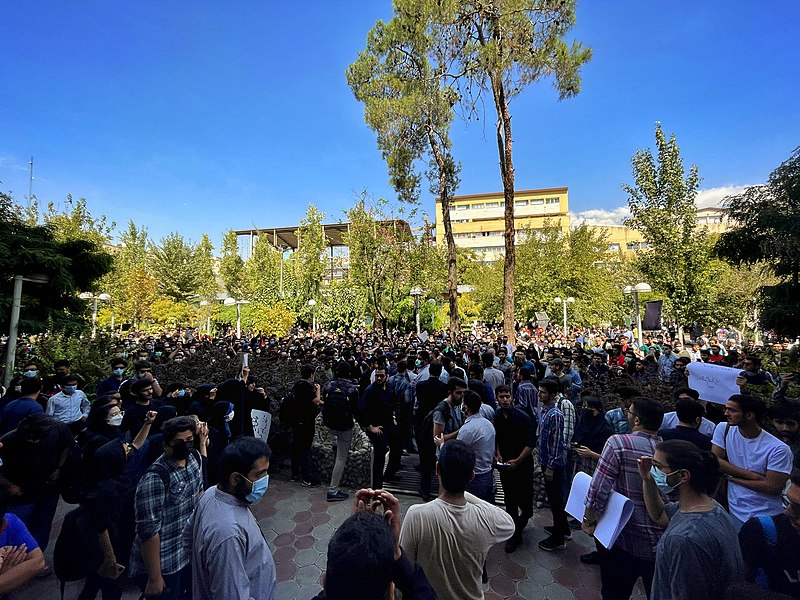
Hackers claiming to be linked to “Anonymous” launched a cyber-attack on the Iranian government and state-affiliated websites. The cyber-attacks were in support of the ongoing protests against the Iranian government following the death of 22-year-old Mahsa Amini.
Hackers linked to “Anonymous” claimed to have launched a cyber-attack on the Iranian government, hacking into two of its websites as well as the websites of state-affiliated media outlets. The hacking was aimed to support the widespread protests in the country due to the death of Amini while in the custody of the country’s Morality Police.
Iranian officials and state media said Amini suffered a stroke and two heart attacks while she was detained by the Morality Police for improperly wearing her hijab. Iranian authorities have also denied mistreating Amini while she was detained, claiming that she suffered from health problems. However, Amini’s family has rejected the claims.
“This was the last straw,” an altered voice on a video of the protests, claiming to be Anonymous, said. “The Iranian people are not alone.”
Two main websites of the Iranian government were the main targets of the cyber-attacks.
Amini’s death has sparked widespread protests that have turned violent, with three people getting killed, according to Kurdistan’s governor. However, the governor said the deaths of the three were considered “suspicious.”
Iranian state media outlets have also reported that the protests spread to 15 cities in the country, including the capital Tehran.
Activist groups, however, say the actual death toll from the protests is higher than what authorities are reporting.
Tehran has resorted to blocking off social media platforms in the country, according to internet watchdog NetBlocks, as platforms such as Instagram and WhatsApp were restricted. Internet interruptions were also reported across the country as public outrage over Amini’s death increased, with one major mobile phone operator getting disrupted, sending millions of Iranians offline.
NetBlocks also reported that there is a “nation-scale loss of connectivity” on Iran’s main mobile phone operator and the network of another company. The watchdog said the internet restrictions in Iran as of late are at the most severe since the massacre that occurred in November 2019.













