


 Goldman AM Sees Strong Buyout Opportunities in Japan, South Korea and Australia
  US Stock Futures Slide as Iran Conflict Escalates Ahead of Key Q2 Earnings Week
  SpaceX Delays Starship V3 Launch Ahead of Potential Record IPO
  US Inflation Expected to Ease in June, but Fed Rate Hike Risks Persist Amid Middle East Tensions
  Neuralink Expands Brain Implant Trials with 12 Global Patients
  Wildfires ignite infection risks, by weakening the body’s immune defences and spreading bugs in smoke
  Blue Origin New Glenn Rocket Explodes During Launch Pad Test, Delaying Space Ambitions
  European Stocks Slip as Middle East Tensions and Hormuz Threat Rattle Markets
  Rice feeds billions of people – but its role in fueling climate change is growing
  Nvidia Tightens AI Chip Sales in Asia With Stricter Customer Approval Process
  China vs. NASA: The New Moon Race and What's at Stake by 2030
  NASA's Artemis II Crew Arrives in Florida for Historic Moon Mission
  Trump and Merck KGaA Partner to Slash IVF Drug Costs and Expand Fertility Coverage
  Samsung Chairman Lee Jae-yong Expected to Meet Nvidia CEO Jensen Huang on AI and Chip Partnership
  Asia Stocks Slip as Iran-Hormuz Tensions Lift Oil Prices, Dollar and Bond Yields


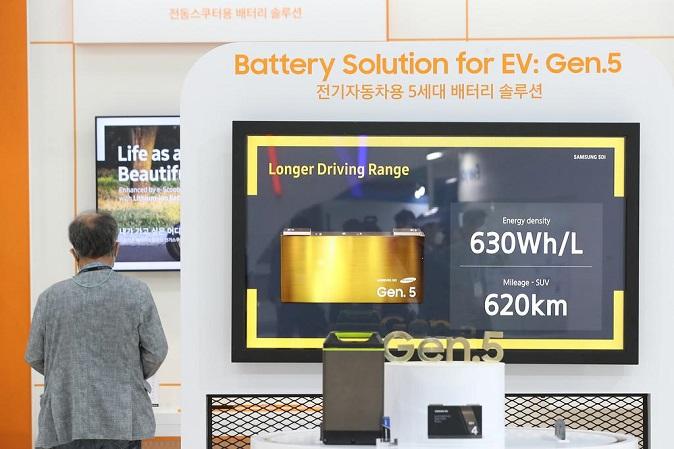
The research team at Gwangju Institute of Science and Technology has developed a high-performing lithium metal battery with higher energy storage capacity that can extend the driving distance of electric vehicles by enabling the realization of.
The new lithium battery’s capacity is about 1.5 times higher than the existing ones due to the use of vanadium oxide as a cathode material.
The vanadium oxide’s capacity is about 1.5 to 2 times higher than that of existing transition metal oxide, but its collapsible structure during the battery charging and discharging process results in low electron and ion conductivity.
.
Consequently, the electrochemical reaction is slower.
The research team developed a nanoplate-layered vanadium oxide cathode material using a new synthetic method to address vanadium oxide’s shortcomings.







