


 Trump Backs Nexstar–Tegna Merger Amid Shifting U.S. Media Landscape
  Hims & Hers Halts Compounded Semaglutide Pill After FDA Warning
  CK Hutchison Launches Arbitration After Panama Court Revokes Canal Port Licences
  Amazon Stock Rebounds After Earnings as $200B Capex Plan Sparks AI Spending Debate
  Asian Stocks Slip as Tech Rout Deepens, Japan Steadies Ahead of Election
  Vietnam’s Trade Surplus With US Jumps as Exports Surge and China Imports Hit Record
  South Korea’s Weak Won Struggles as Retail Investors Pour Money Into U.S. Stocks
  Gold Prices Slide Below $5,000 as Strong Dollar and Central Bank Outlook Weigh on Metals
  Baidu Approves $5 Billion Share Buyback and Plans First-Ever Dividend in 2026
  Rio Tinto Shares Hit Record High After Ending Glencore Merger Talks
  Silver Prices Plunge in Asian Trade as Dollar Strength Triggers Fresh Precious Metals Sell-Off
  India–U.S. Interim Trade Pact Cuts Auto Tariffs but Leaves Tesla Out
  SpaceX Pushes for Early Stock Index Inclusion Ahead of Potential Record-Breaking IPO
  Global Markets Slide as AI, Crypto, and Precious Metals Face Heightened Volatility
  Once Upon a Farm Raises Nearly $198 Million in IPO, Valued at Over $724 Million
  Uber Ordered to Pay $8.5 Million in Bellwether Sexual Assault Lawsuit
  Thailand Inflation Remains Negative for 10th Straight Month in January


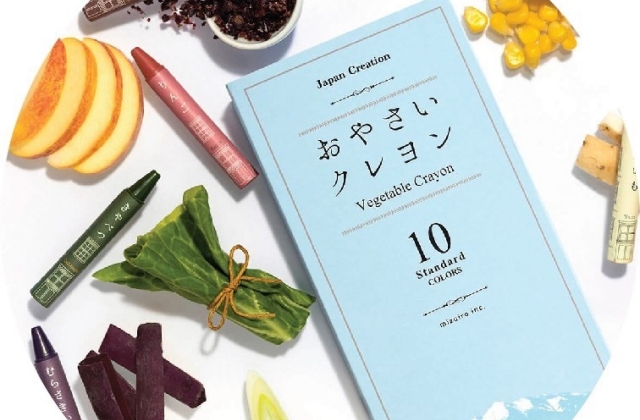
Mizuiro Inc., a Japanese company, founded by Naoko Kimura, a designer, created a crayon that is very safe for kids to use. They are not the traditional crayons as they were made from all-natural ingredients.
The coloring material that is mostly used for kids’ art projects is called the Oyasai Crayons, and they are also known as vegetable crayons. These are produced from food waste, so they are more sustainable and safer to use compared to the pigmented wax version that everyone is familiar with.
The introduction of eco-friendly crayons
The Crayon Collection project that was set up to make sure that all the children around the world would have access to crayons and develop their creativity stated that every year, around 150 million crayons are disposed of in the United States alone.
Environmental Leader noted that most of the crayons are not eco-friendly as well, and unfortunately, these are the types that are being sold in the market. These crayons are made of paraffin wax, where petroleum is one of its main components. This is a toxic chemical and obviously not safe for children, especially if they are accidentally swallowed.
What’s more, if these types of crayons are not recycled, they always end up in landfills and never decompose, so they remain as waste. Now, the Oyasai Crayons were introduced, and apart from the appearance, this is nothing like the traditional crayons.
How the plant-based “vegetable” crayons are made
These are made from rice and vegetables, so they are 100% all-natural. The rice bran oil and the wax from the rice bran are the main ingredients. The rice oil and wax are said to be byproducts of the rice polishing process, so the crayons are basically made from waste.
The pigments are from recycled materials as well, and leaves of vegetables are used for this. The discarded or rejected vegetables are collected during harvest periods and processed to create the color pigments in the plant-based crayons.
Since the crayons are made from vegetables, each color is given a name of the vegetable where it was actually made from, such as Japanese yam, corn, carrot, green onion, burdock, long potato, apple, purple potato, takesumi (a bamboo charcoal) and cassis.
As per Inhabitat, these pigments are the same ones that are used as ingredients in food. While this is not edible, it is surely all-natural, so parents can allow their kids to use crayons without any worries.













