


 Baidu Approves $5 Billion Share Buyback and Plans First-Ever Dividend in 2026
  Tencent Shares Slide After WeChat Restricts YuanBao AI Promotional Links
  Instagram Outage Disrupts Thousands of U.S. Users
  SoftBank Shares Slide After Arm Earnings Miss Fuels Tech Stock Sell-Off
  Ford and Geely Explore Strategic Manufacturing Partnership in Europe
  Hims & Hers Halts Compounded Semaglutide Pill After FDA Warning
  Palantir Stock Jumps After Strong Q4 Earnings Beat and Upbeat 2026 Revenue Forecast
  SpaceX Seeks FCC Approval for Massive Solar-Powered Satellite Network to Support AI Data Centers
  CK Hutchison Launches Arbitration After Panama Court Revokes Canal Port Licences
  Elon Musk’s Empire: SpaceX, Tesla, and xAI Merger Talks Spark Investor Debate
  Nvidia, ByteDance, and the U.S.-China AI Chip Standoff Over H200 Exports
  TrumpRx Website Launches to Offer Discounted Prescription Drugs for Cash-Paying Americans
  Nintendo Shares Slide After Earnings Miss Raises Switch 2 Margin Concerns
  Amazon Stock Rebounds After Earnings as $200B Capex Plan Sparks AI Spending Debate
  Global PC Makers Eye Chinese Memory Chip Suppliers Amid Ongoing Supply Crunch
  Anthropic Eyes $350 Billion Valuation as AI Funding and Share Sale Accelerate
  TSMC Eyes 3nm Chip Production in Japan with $17 Billion Kumamoto Investment


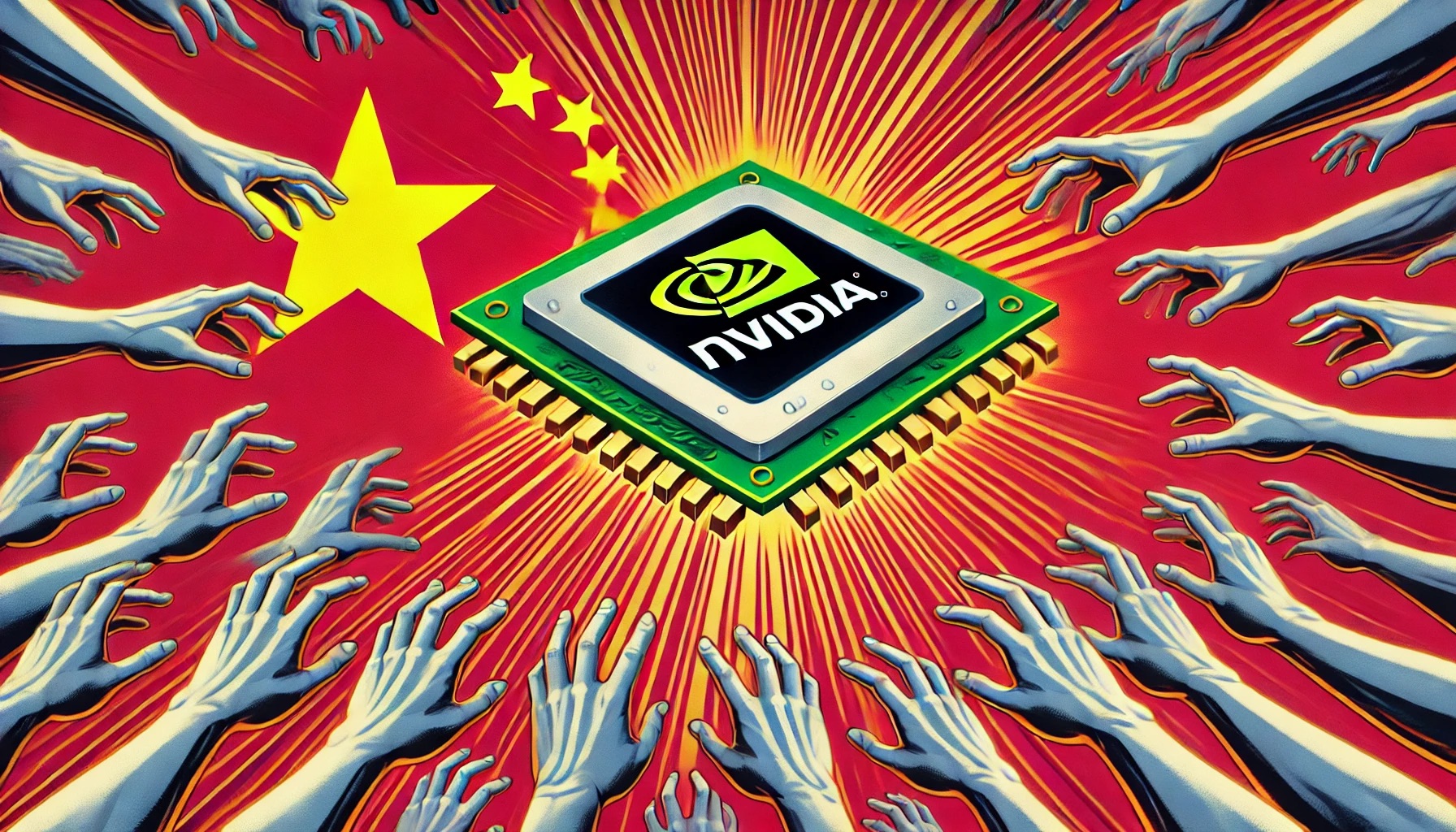
China’s AI sector faces a dilemma between relying on NVIDIA’s powerful chips or transitioning to domestic alternatives. A new report highlights the limitations of China’s AI hardware and suggests sticking with NVIDIA for optimal performance amid increasing US sanctions.
NVIDIA’s Dominance in China’s AI Market
The future of China's artificial intelligence (AI) processing capacity is a hotly contested topic, with many pointing out that the country's AI companies can no longer depend on hardware from companies like NVIDIA due to the increasing impact of US sanctions.
While Huawei's domestic solutions have helped alleviate some of the problems, a recent study from the China Academy of Information and Communications Technology (CAICT) argues that Chinese data centers shouldn't rely solely on domestic products because of their limitations.
Domestic AI Solutions Face Limitations
A report on China's growing computing power released on Sunday by the China Academy of Information and Communications Technology (via SCMP) said, "If the conditions allow, [data centres] can choose [Nvidia’s] A100 and H100 high-performance computing units, if the need for computing power is limited, they can also choose H20 or alternative domestic solutions."
NVIDIA’s Continued Success in China Despite Sanctions
According to WCCFTECH, NVIDIA has found success in China, a market hit hard by US trade restrictions; the country accounts for over 10% of the company's year-over-year revenue.
Team Green's hardware is crucial for Chinese AI companies like ByteDance and Tencent. Their enormous consumer base means they need a lot of AI computing capacity. An indication of China's enormous demand for AI hardware, CAICT revealed that GPU-based processing power for AI training and inference experienced a YoY rise of 70% in the region.
Chinese AI Chipmakers Struggle Against NVIDIA
Companies such as BirenTech and Huawei have introduced their own artificial intelligence chips to compete with NVIDIA's market dominance; Huawei's Ascend 910B AI GPU has been particularly successful in driving sales for the Chinese tech giant.
According to rumors, the company will also unveil the more powerful Ascend 910C. However, the CAICT thinks it's not worth the hassle to adapt existing LLMs developed on NVIDIA's compute stack and implement domestic solutions for code porting.













