


 Iran–U.S. Nuclear Talks in Oman Face Major Hurdles Amid Rising Regional Tensions
  Trump Says “Very Good Talks” Underway on Russia-Ukraine War as Peace Efforts Continue
  South Korea Assures U.S. on Trade Deal Commitments Amid Tariff Concerns
  U.S. to Begin Paying UN Dues as Financial Crisis Spurs Push for Reforms
  Trump Allegedly Sought Airport, Penn Station Renaming in Exchange for Hudson River Tunnel Funding
  Jack Lang Resigns as Head of Arab World Institute Amid Epstein Controversy
  Nighttime Shelling Causes Serious Damage in Russia’s Belgorod Region Near Ukraine Border
  Trump Backs Nexstar–Tegna Merger Amid Shifting U.S. Media Landscape
  Trump Signs Executive Order Threatening 25% Tariffs on Countries Trading With Iran
  India–U.S. Interim Trade Pact Cuts Auto Tariffs but Leaves Tesla Out
  Netanyahu to Meet Trump in Washington as Iran Nuclear Talks Intensify
  US Pushes Ukraine-Russia Peace Talks Before Summer Amid Escalating Attacks
  Pentagon Ends Military Education Programs With Harvard University
  China Warns US Arms Sales to Taiwan Could Disrupt Trump’s Planned Visit
  Trump’s Inflation Claims Clash With Voters’ Cost-of-Living Reality
  Japan Election 2026: Sanae Takaichi Poised for Landslide Win Despite Record Snowfall


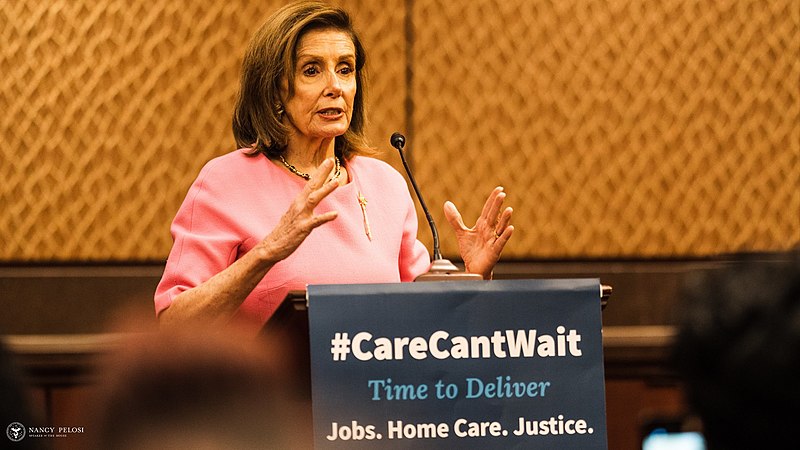
The House has originally set the date to the end of September to vote on the $1.2 bipartisan infrastructure bill. However, as negotiations continue regarding the $3.5 trillion social infrastructure bill, House Speaker Nancy Pelosi set a new deadline for the House to vote on the bipartisan proposal.
Over the weekend, Pelosi released a “Dear Colleague” letter, informing members of her caucus that the $1.2 trillion bipartisan infrastructure bill would be voted on by October 31. Pelosi explained that more time was needed to be able to pass both the $1.2 trillion proposal and the $3.5 trillion bill following Democratic lawmakers’ scrambling to get more votes. This signals a walk back from her promise to the moderate House Democrats to immediately get a vote on the bipartisan proposal that has already passed the Senate.
Pelosi’s deadline of October 31 also marks the day of the 30-day reauthorization of federal highway programs’ expiration. The House passed the extension Friday last week as rifts remain within the Democratic Party regarding the budget resolution.
“There is an October 31st Surface Transportation Authorization deadline after last night’s passage of a critical 30-day extension,” said Pelosi in the letter. “We must pass BIF well before then -- the sooner the better, to get the jobs out there.”
Pelosi also acknowledged the rift between moderate Democrats and progressive Democrats in the letter, saying that she would not bring both bills on the House floor to fail.
Moderate Democrats have asked to immediately vote on the $1.2 trillion bill, threatening to oppose the reconciliation bill if no action was taken. At the same time, progressive House Democrats have threatened to vote against the bipartisan infrastructure proposal if the reconciliation bill is not passed as well. US President Joe Biden visited members of his party last week in order to ease tensions between the two factions of the party.
Both bills represent the bulk of Biden’s agenda. During the weekly press conference last week, Pelosi commented on what the two proposals would mean to her career. “I just told members of my leadership the reconciliation bill will be the culmination of my service in Congress,” said the California Democrat, whose time as House Speaker may be winding down, having previously said that 2020 would be her last term as the House Democratic leader.













