


 China's Anti-Corruption Purge Reaches New Heights as Politburo Shrinks to 25-Year Low
  Trump Issues Deadline for Iran to Reopen Strait of Hormuz Amid Escalating Conflict
  Ukraine Launches Massive Drone Offensive Across Russia, Knocking Out Power to Hundreds of Thousands
  Trump Administration Seeks Emergency Order to Resume White House Ballroom Construction
  U.S. and Israel Escalate Pressure on Iran Over Strait of Hormuz as War Enters Sixth Week
  Israel Poised to Strike Iranian Energy Sites, Awaiting U.S. Approval
  Iran's Stranglehold on the Strait of Hormuz: What It Means for Global Markets
  U.S. Commandos Execute Daring Rescue Mission Deep Inside Iran
  Trump's FY2027 Budget: Major Defense Boost and Domestic Spending Cuts
  U.S.-Iran War Escalates: Downed Fighter Jet, Stalled Ceasefire Talks, and Ground Invasion Fears
  U.S. Envoys Witkoff and Kushner Expected to Visit Kyiv in April Amid Stalled Peace Talks
  Kim Jong Un's Daughter Emerges as North Korea's Likely Successor, South Korean Intelligence Says
  Ukrainian Drone Strikes Hit Novorossiysk, Injuring Eight and Cutting Power Across Russia
  Iran-US Ceasefire Talks: Pakistan Brokers "Islamabad Accord" to Reopen Strait of Hormuz
  Trump's "Easter Miracle" Rescue Sparks Church-State Debate
  Indonesia Files Genocide Case Against Myanmar's Min Aung Hlaing Over Rohingya Crisis
  Iran Rejects Trump's Hormuz Ultimatum, Threatens Wider Trade Disruption


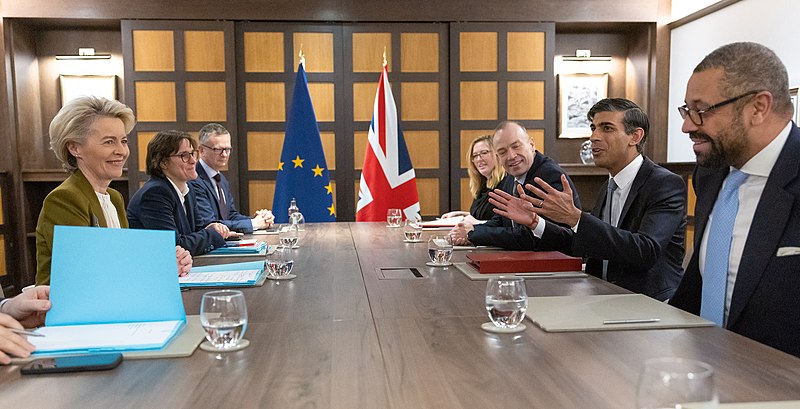
The leader of Northern Ireland’s largest political party has expressed concerns over parts of the new post-Brexit trade deal between the United Kingdom and the European Union. The party’s support for the deal is crucial due to the devolved government in the region.
On Tuesday, Northern Ireland’s Democratic Unionist Party leader Jeffrey Donaldson said in a statement on the party’s website that there were still concerns in key areas in the new deal between the UK and EU to simplify trade rules in the region after the UK left the bloc. This follows the DUP’s announcement last week to undergo a month-long consultation on the new post-Brexit deal known as the Windsor Framework.
“It is my current assessment that there remains key areas of concern which require further clarification, re-working, and change as well as seeing further legal text,” said Donaldson.
Donaldson’s statement follows previous DUP statements that said at the time, the party was ready to engage in the changes and clarifications as needed. The consultation of the DUP is set to report back to the party by the end of March.
A spokesperson for British Prime Minister Rishi Sunak said the government was engaging with the DUP and is open to further discussions and questions the party may have.
“We’ve been clear to the government as the framework sits at the moment, it is insufficient to fully address the concerns that we have,” Donaldson told the BBC in a separate interview. “What we are doing on an ongoing basis is identifying what those concerns are and what the remedy is in law, particularly legislation.”
Donaldson cited the areas of concern, such as the damage done to Northern Ireland’s union with the rest of the UK, the region’s place in the UK’s internal market, the role of EU law, the “green lane” for imports from the UK and the “democratic deficit” around the implementation of EU laws.
On the same day, US President Joe Biden said he accepted the invitation from Sunak to visit Northern Ireland in April to mark the 25th anniversary of the Good Friday Agreement, which largely ended political violence in the region. Biden announced his plans to visit the region during a summit to launch the next phase of the AUKUS submarine agreement between the US, the UK, and Australia.







