


 Jack Lang Resigns as Head of Arab World Institute Amid Epstein Controversy
  US Pushes Ukraine-Russia Peace Talks Before Summer Amid Escalating Attacks
  Antonio José Seguro Poised for Landslide Win in Portugal Presidential Runoff
  China Warns US Arms Sales to Taiwan Could Disrupt Trump’s Planned Visit
  Israel Approves West Bank Measures Expanding Settler Land Access
  Nasdaq Proposes Fast-Track Rule to Accelerate Index Inclusion for Major New Listings
  JPMorgan Lifts Gold Price Forecast to $6,300 by End-2026 on Strong Central Bank and Investor Demand
  India–U.S. Interim Trade Pact Cuts Auto Tariffs but Leaves Tesla Out
  Trump Slams Super Bowl Halftime Show Featuring Bad Bunny


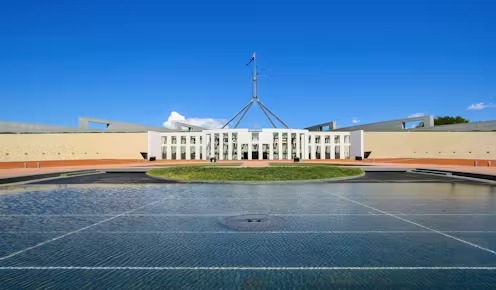

When I was a child, I lived in a very politically engaged household. My parents were always talking politics, and my dad in particular was often growling at the television when the face of someone he disagreed with appeared on it.
Yet despite this, and despite nerdily watching election counts all the way through my school years, spurred by a deep interest in how power operates in this country, I still managed to make it to university and beyond with gaping holes in my civics education.
What does our Constitution say, for example? And why is it such a dry legal document, so different from the grand sentiment of its US counterpart? How did the major political parties come to be? And where does the High Court fit into all this?
So in 2024, in the tumultuous aftermath of the Voice to Parliament referendum that had us all grappling with constitutional change and what it might mean, I decided to use the incredible wealth of knowledge and experience at our disposal in our academic writers and put together a book called How Australian Democracy Works. It’s my hope that readers will find it as informative to read as I did to bring it together.
In it, some of our finest thinkers and writers explain and analyse how our government, parliament and Constitution work, and examine some of the most pressing issues facing our democracy. James Walter explains how our unique democracy evolved; Michelle Grattan looks at the role of the prime minister – and some of the most significant holders of that position we’ve had.
Constitutional law expert Anne Twomey explains why Australia is (still) a constitutional monarchy, Yee-Fui Ng examines corruption and other abuses of political power, and Chris Wallace looks at the role of the public service and its place in our democracy. Finally, political historian Paul Strangio presents an essay on the health of Australian democracy a quarter of the way through the 21st century: where its strengths are, but also the considerable fissures that are emerging.
As we head into a federal election at a pivotal moment in our history, it’s our hope that the book offers a deeper understanding of our democracy: its history, strengths and challenges.
In concert with its publication on March 4 (you can pre-order here), we are hosting a series of launches is February and March, and we’d love to see you there.
Canberra
Monday February 24, 6pm SOLD OUT
Editor Misha Ketchell in conversation with Michelle Grattan, Frank Bongiorno and Mark Kenny
Location: Cultural Centre Kambri, Australian National University
RSVP here
Sydney
Tuesday, March 4, 7pm
Senior Editor Sunanda Creagh in conversation with Michelle Arrow, Anne Twomey and Paul Kildea
Location: Red Mill Distillery, 176 Mullens Street, Rozelle
RSVP here
Melbourne
Friday, March 7, 6pm
Politics + Society Editor Amanda Dunn in conversation with Chris Wallace, Paul Strangio, Denis Muller
Location: Church of All Nations, 180 Palmerston Street, Carlton
RSVP here













