


 Goldman Sees Foreign Investors Driving India Stock Market Recovery
  NASA and Roscosmos Chiefs Meet in Florida to Discuss Moon and ISS Cooperation
  SpaceX’s Starship Completes 11th Test Flight, Paving Way for Moon and Mars Missions
  Asia Stocks Slip as Iran-Hormuz Tensions Lift Oil Prices, Dollar and Bond Yields
  China Trade Surplus Hits $125.6 Billion as June Exports, Imports Smash Forecasts
  European Stocks Slip as Middle East Tensions and Hormuz Threat Rattle Markets
  Eli Lilly’s Inluriyo Gains FDA Approval for Advanced Breast Cancer Treatment
  Trump and Merck KGaA Partner to Slash IVF Drug Costs and Expand Fertility Coverage
  Singapore GDP Grows 5.7% in Q2 2026 as AI-Driven Manufacturing Boosts Economy
  Oil Prices Jump as U.S.-Iran Conflict and Strait of Hormuz Tensions Shake Global Markets
  SpaceX Prioritizes Moon Mission Before Mars as Starship Development Accelerates
  South Korea’s KOSPI Triggers Trading Curb as AI Chip Stock Selloff Deepens
  FDA Pilot Program Eases Rules for Nicotine Pouch Makers
  Gold Price Holds Near $4,000 as Middle East Tensions and Fed Rate Hike Bets Grow
  Tabletop particle accelerator could transform medicine and materials science


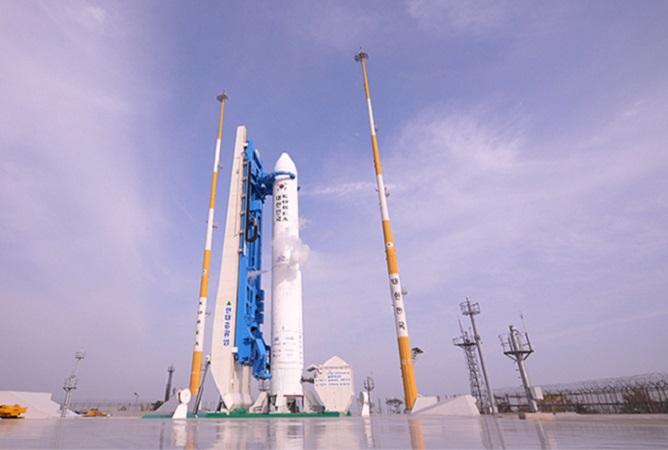
South Korea will invest 12 billion won in developing high-performance, liquid-fuel engines by next year as part of its space project, according to the ICT and science ministry.
The country unveiled the "Space Challenge" program in 2020 intending to invest 49.6 billion won until 2028 to secure future space industry technologies and leadership in 2030.
Of the total, the ministry has set aside a budget of 4.5 billion won this year and 7.5 billion won for 2023 to develop a 100-ton liquid-fuel engine.
The project also seeks to develop the next-generation rocket to succeed the Nuri rocket, which was equipped with 75-ton engines.
Nuri, also known as the KSLV-II, is South Korea's first homegrown space launch vehicle that successfully flew to a target altitude of 700 kilometers in October last year.
However, Nun failed to put a dummy satellite into orbit as its third-stage engine burned out sooner than expected.
South Korea plans to launch its first lunar orbiter this year.







