


 Nvidia Confirms Major OpenAI Investment Amid AI Funding Race
  TSMC Eyes 3nm Chip Production in Japan with $17 Billion Kumamoto Investment
  Bank of Japan Signals Readiness for Near-Term Rate Hike as Inflation Nears Target
  U.S. Stock Futures Slide as Tech Rout Deepens on Amazon Capex Shock
  SpaceX Pushes for Early Stock Index Inclusion Ahead of Potential Record-Breaking IPO
  Japan Economy Poised for Q4 2025 Growth as Investment and Consumption Hold Firm
  Japanese Pharmaceutical Stocks Slide as TrumpRx.gov Launch Sparks Market Concerns
  Nvidia, ByteDance, and the U.S.-China AI Chip Standoff Over H200 Exports
  Nintendo Shares Slide After Earnings Miss Raises Switch 2 Margin Concerns
  Asian Stocks Slip as Tech Rout Deepens, Japan Steadies Ahead of Election
  India–U.S. Interim Trade Pact Cuts Auto Tariffs but Leaves Tesla Out
  South Africa Eyes ECB Repo Lines as Inflation Eases and Rate Cuts Loom
  South Korea Assures U.S. on Trade Deal Commitments Amid Tariff Concerns
  Elon Musk’s Empire: SpaceX, Tesla, and xAI Merger Talks Spark Investor Debate
  Gold Prices Slide Below $5,000 as Strong Dollar and Central Bank Outlook Weigh on Metals
  Palantir Stock Jumps After Strong Q4 Earnings Beat and Upbeat 2026 Revenue Forecast


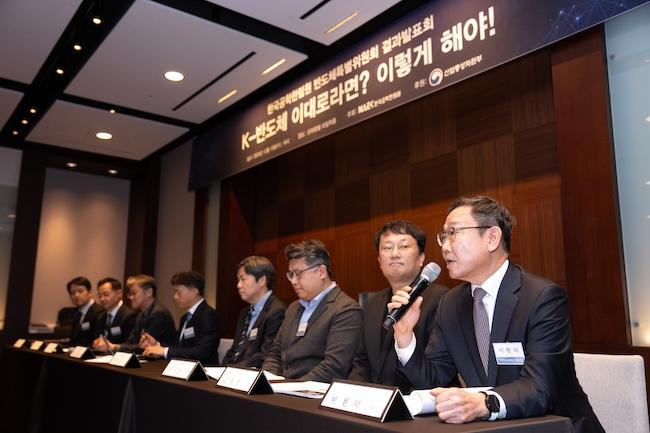
South Korea is developing KSMC with a $13.9 billion investment to challenge TSMC and foster innovation across its semiconductor ecosystem.
KSMC Proposal Aims to Strengthen South Korea's Semiconductor Sector
Korea Semiconductor Manufacturing Company (KSMC) is a possible name for a government-funded contract chipmaker being considered by the South Korean government, according to The Korea Biz Wire. This program was suggested by academics and professionals in the field.
The head of the semiconductor industry in South Korea, Ahn Ki-hyun, has demanded a substantial financial commitment from the government. If KRW 20 trillion ($13.9 billion) were invested in KSMC today, experts predict that by 2045, the economy would have benefited by KRW 300 trillion ($208.7 billion). But if that's enough money to start a chipmaker is the main concern.
Addressing Concerns with Publicly Funded Chipmakers
The ability of publicly-funded companies like KSMC to create lucrative advanced manufacturing technologies and secure sufficient client orders is another area of worry. Korea actually has a demand for more fabless software developers as well as semiconductor manufacturers.
The idea was first presented at a conference put on by the Korean National Academy of Engineering (NAEK). A lack of mature process technologies and an excessive dependence on Samsung's advanced nodes under 10 nm are two examples of the structural deficiencies that the plan seeks to solve.
South Korea's Challenges Compared to Taiwan's Semiconductor Model
In contrast to Taiwan, where TSMC's sophisticated process technologies are supplemented by UMC and PSMC, which concentrate on mature and specialty nodes, smaller system semiconductor enterprises in Korea face challenges thriving because of a lack of manufacturing diversity.
When it comes to memory, Korea is unrivaled. But in terms of logic process technology and chip designers, it lags significantly behind Taiwan, and things aren't looking up anytime soon.
Inadequate investment attractiveness, talent shortages, stringent restrictions, a growing technological gap with foreign competitors, and slow growth in fabless businesses are some of the major obstacles that the report identifies as affecting Korea's semiconductor industry.
Proposals to Strengthen South Korea's Semiconductor Sector
Reusing Samsung's older fabrication facilities for legacy process technologies was suggested by SK Hynix's CEO. Providing financial incentives like subsidies and tax credits and stepping up research and development were two of NAEK's main demands. Reducing regulatory restrictions, particularly on working hours, is another approach.
Engineers at TSMC have stated in public on many occasions that working longer hours allows for the quick creation of breakthrough process technologies, Tom's Hardware shares.
Morris Chang was approached to help start TSMC by Executive Yuan, the government of Taiwan. The government saw the promise of the semiconductor business in the 1980s and wanted to build it in Taiwan. Not everyone knows this, but it is true. There may be other Taiwanese semiconductor manufacturers, but the flagship foundry plays a crucial role in the industry as a whole.
More than 250 fabless firms have thrived in Hsinchu Science Park alone, thanks to Taiwan's semiconductor ecosystem, which NAEK has taken cues from.
The Korean government might learn from this accomplishment and help smaller companies compete with tech behemoths like Samsung and SK Hynix by establishing KSMC and providing financial support.
Large firms already incur additional costs when sourcing components from Japan and Taiwan; CEO Kwak No-jung of SK Hynix suggested a solution: actively helping smaller suppliers of materials, parts, and equipment.













