A SpaceX Falcon 9 carried Northrop Grumman’s enlarged Cygnus XL freighter into orbit Sunday with about 11,000 pounds of cargo for the International Space Station (ISS) to support research in microgravity.
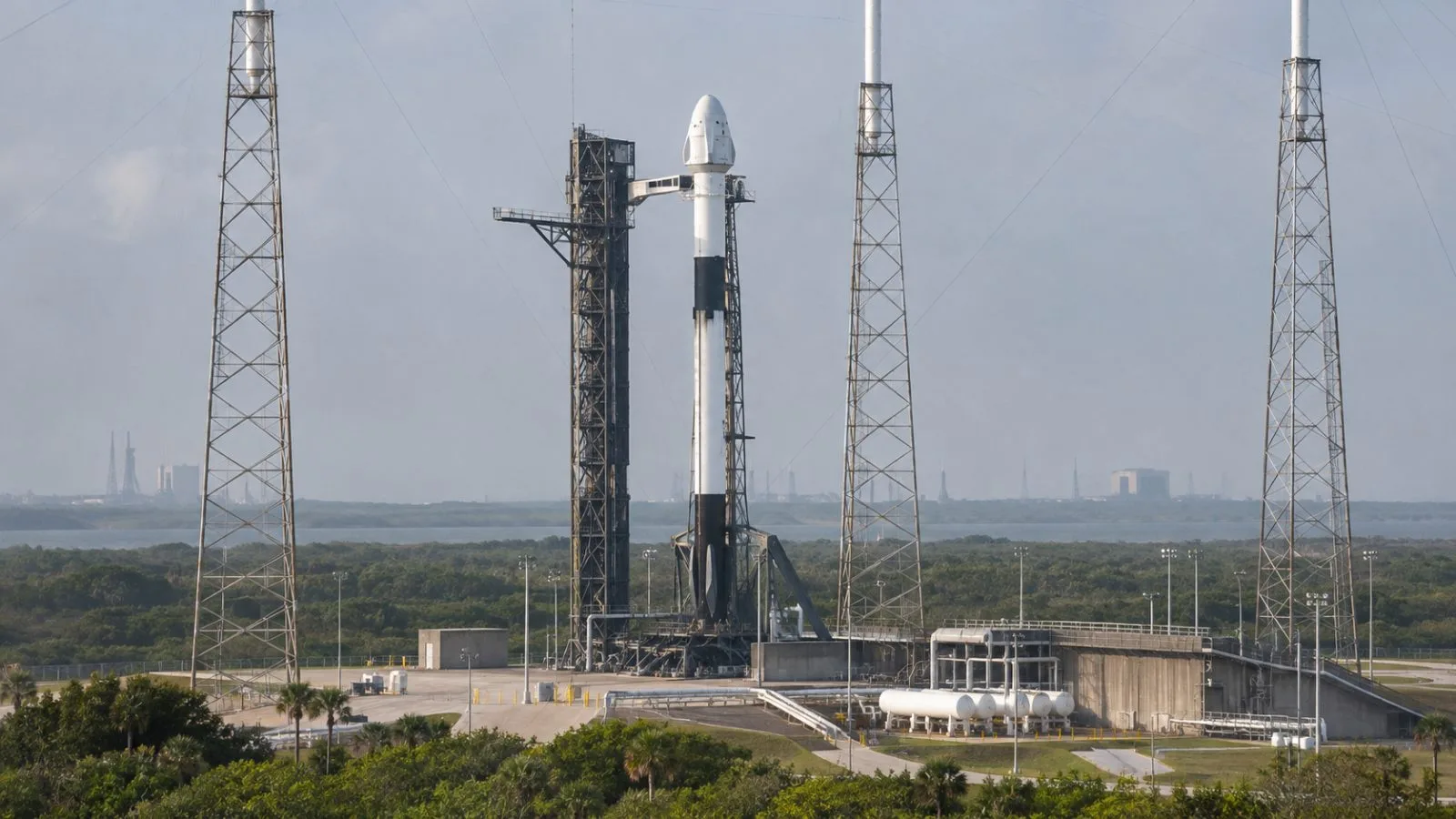
Liftoff occurred at 10:47 a.m. EST Nov. 29 (15:47 UTC), from Florida’s Space Launch Complex 40 at Cape Canaveral Space Force Station. NASA’s timeline placed initial orbital insertion within about 10 minutes of launch, followed by solar-array deployment around 1 hour and 45 minutes later.
NASA’s formal designation is Northrop Grumman Commercial Resupply Services-25, or CRS-25; the company identifies the same flight as NG-25. The biomedical payload includes DNA NANO B, which will examine DNA-inspired particles intended to carry medicine into cartilage and solid tumors. Encapsulate-1 will use patient-derived tumor models to study cancer-cell movement. Cardinal Muscle 2.0 will investigate possible muscle-loss treatments using human muscle-cell cultures and Food and Drug Administration-approved drugs used for other conditions.
The rest of the payload looks toward future missions. The Active Radiation Environment Sensor (ARES) will evaluate radiation-monitoring technology for future Artemis and lunar operations. Ohalo III will study automated cultivation alongside water recovery and air exchange for food production on prolonged missions, including Mars missions. The JOining demonstrations IN-Space (JOINS) technology demonstration will test autonomous robotic welding through laser-beam and friction-stir methods.
The crop-production work follows EconoTimes’ earlier coverage of the NG-25 mission. NASA says commercial U.S. cargo flights help keep station research moving while the agency directs resources toward Artemis and Moon Base programs. CRS-25 is the third flight of the larger Cygnus XL variant.
The company named the vehicle for James “Jim” A. Lovell, who flew Gemini VII, Gemini XII, Apollo 8 and Apollo 13. NASA plans to keep the freighter berthed through May 2027, then send it into destructive re-entry with several thousand pounds of disposal items and other unneeded cargo.
NASA has scheduled astronauts Jessica Watkins and Luke Delaney to use Canadarm2 to capture Cygnus at approximately 2:35 a.m. EST (07:35 UTC) Dec. 1. Controllers then plan to attach it to Unity’s Earth-facing port, although the timing may change with real-time station operations.