


 New York Legalizes Medical Aid in Dying for Terminally Ill Patients
  U.S. Announces Additional $6 Million in Humanitarian Aid to Cuba Amid Oil Sanctions and Fuel Shortages
  Federal Judge Restores Funding for Gateway Rail Tunnel Project
  Trump Lifts 25% Tariff on Indian Goods in Strategic U.S.–India Trade and Energy Deal
  Trump Endorses Japan’s Sanae Takaichi Ahead of Crucial Election Amid Market and China Tensions
  South Korea Assures U.S. on Trade Deal Commitments Amid Tariff Concerns
  Trump Backs Nexstar–Tegna Merger Amid Shifting U.S. Media Landscape
  China Warns US Arms Sales to Taiwan Could Disrupt Trump’s Planned Visit
  Trump Says “Very Good Talks” Underway on Russia-Ukraine War as Peace Efforts Continue
  India–U.S. Interim Trade Pact Cuts Auto Tariffs but Leaves Tesla Out
  Iran–U.S. Nuclear Talks in Oman Face Major Hurdles Amid Rising Regional Tensions
  Trump’s Inflation Claims Clash With Voters’ Cost-of-Living Reality
  Nighttime Shelling Causes Serious Damage in Russia’s Belgorod Region Near Ukraine Border
  Netanyahu to Meet Trump in Washington as Iran Nuclear Talks Intensify
  Missouri Judge Dismisses Lawsuit Challenging Starbucks’ Diversity and Inclusion Policies
  U.S. to Begin Paying UN Dues as Financial Crisis Spurs Push for Reforms


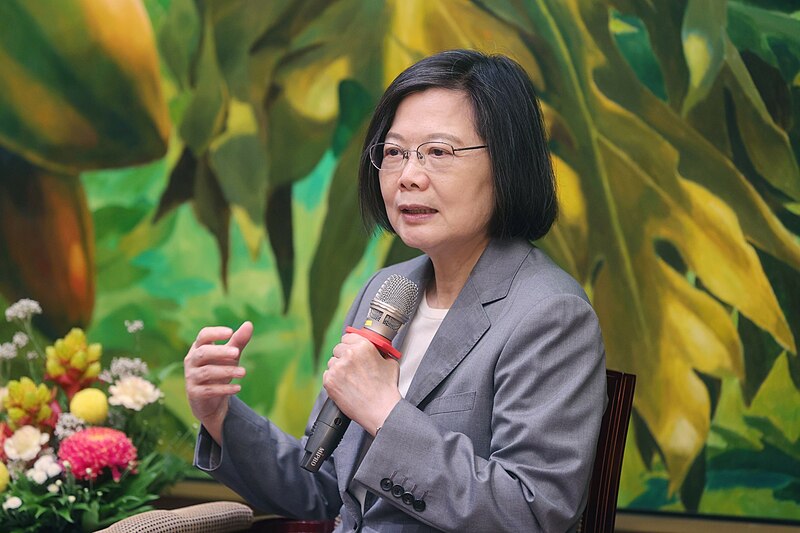
Taiwanese leader Tsai Ing-wen stressed the importance of maintaining peace in the Taiwan Strait at a time of flared tensions with China. This also comes at a time when Beijing has ramped up its military drills close to the island that it claims as its territory.
Tsai marked the seventh anniversary of her tenure as the island nation’s leader on Saturday. In a televised speech, Tsai reiterated that peace and stability must be preserved in the Taiwan Strait and that the island nation will neither provoke nor give in to China’s continued pressure campaign on the democratically-governed Taiwan. Tsai and her administration have repeatedly rejected China’s claims of control over the island.
“War is not an option. Neither side can unilaterally change the status quo with non-peaceful means,” said Tsai in her remarks. “Maintaining the status quo of peace and stability is the consensus for both the world and Taiwan.”
“Although Taiwan is surrounded by risks, it is by no means a risk-maker. We are a responsible risk manager and Taiwan will stand together with democratic countries and communities around the world to jointly defuse the risks,“ said Tsai.
Tsai said Taiwanese officials are holding discussions with the United States on sending $500 million worth of military aid to the island nation, adding that the aid aims to address the delayed deliveries of weapons due to the pandemic. Tsai also stressed the importance of Taiwan’s global supply chain and pledged to keep the most advanced semiconductor chip technologies and research and development firms in Taiwan.
Thursday last week, the United States Trade Representative said that Washington and Taipei have come to an agreement on the first part of the “21st Century” trade initiative that included customs and border procedures, regulatory practices, and small business. The USTR’s office said that following the initial signing of the initiative, the negotiations on other parts of the initiative will begin on other, more complicated aspects, including agriculture, digital trade, labor and environmental standards, state-owned enterprises, and non-market policies and practices.
US trade representative Katherine Tai said in a statement that the deal would boost US-Taiwan relations and is a demonstration of how both can work together to advance trade priorities on their respective sides.
Photo: Simon Liu (Office of the President)/Wikimedia Commons(CC by 2.0)














