


 Pentagon Ends Military Education Programs With Harvard University
  ‘The geezer game’ – a nearly 50-year-old pickup basketball game – reveals its secrets to longevity
  LA28 Confirms Olympic Athletes Exempt from Trump’s Travel Ban
  U.S. Eases Venezuela Oil Sanctions to Boost American Investment After Maduro Ouster
  Apple Eyes U.S. Formula 1 Broadcast Rights in Major Sports Streaming Push
  Hims & Hers Halts Compounded Semaglutide Pill After FDA Warning
  China Warns US Arms Sales to Taiwan Could Disrupt Trump’s Planned Visit
  Native American Groups Slam Trump’s Call to Restore Redskins Name
  Trump Signs “America First Arms Transfer Strategy” to Prioritize U.S. Weapons Sales
  Trump Extends AGOA Trade Program for Africa Through 2026, Supporting Jobs and U.S.-Africa Trade
  Trump Says “Very Good Talks” Underway on Russia-Ukraine War as Peace Efforts Continue
  Trump Administration Expands Global Gag Rule, Restricting U.S. Foreign Aid to Diversity and Gender Programs
  Trump Allegedly Sought Airport, Penn Station Renaming in Exchange for Hudson River Tunnel Funding
  Panama Supreme Court Voids CK Hutchison Port Concessions, Raising Geopolitical and Trade Concerns
  Minnesota Judge Rejects Bid to Halt Trump Immigration Enforcement in Minneapolis
  Trump to Announce New Federal Reserve Chair Pick as Powell Replacement Looms
  TrumpRx Website Launches to Offer Discounted Prescription Drugs for Cash-Paying Americans


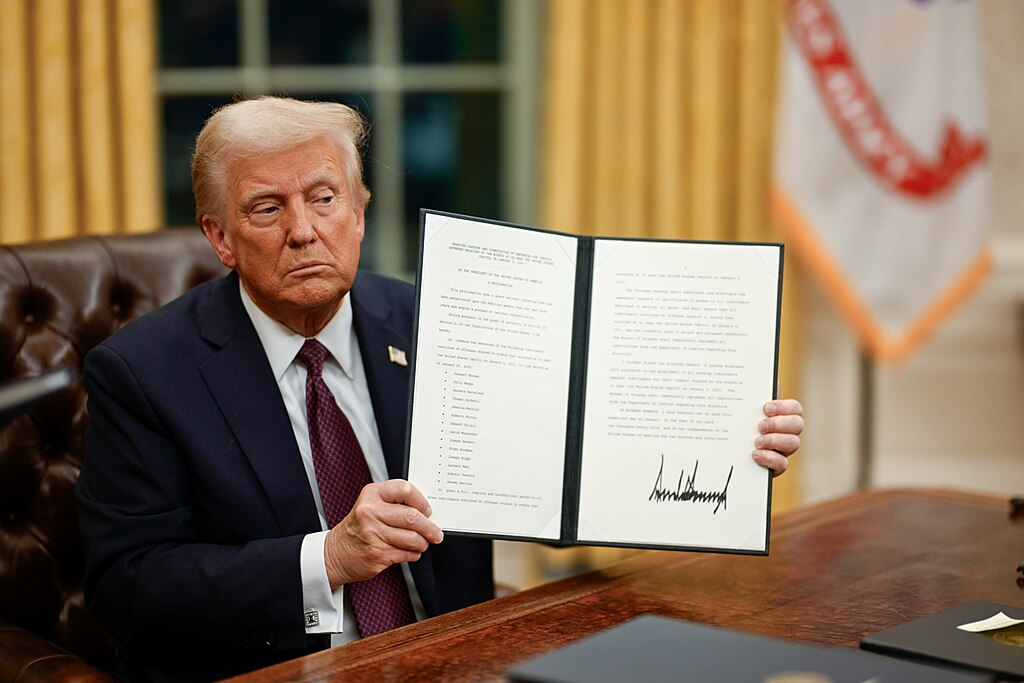
President Donald Trump has signed an executive order introducing federal oversight on large recruiting payments in U.S. college sports, particularly football and men’s basketball. The measure seeks to curb third-party payouts from donors to athletes, aiming to protect funding for women’s and non-revenue sports while clarifying the legal status of student-athletes.
While the National Collegiate Athletic Association (NCAA) already prohibits such payments, donors have exploited loopholes amid the surge in name, image, and likeness (NIL) deals. The White House clarified the order does not restrict fair-market NIL compensation, such as brand endorsements or autograph signings. Federal agencies will now devise enforcement strategies, leveraging regulatory and funding mechanisms, though specific implementation remains uncertain.
The move follows major shifts in college sports since 2021, when the NCAA first allowed NIL monetization. In March 2025, restrictions preventing athletes from negotiating NIL deals before enrollment were lifted after an antitrust settlement with state attorneys general. The White House argues this evolving NIL landscape has created financial instability in college athletics.
Experts anticipate legal challenges, with critics arguing the order may infringe on athletes’ rights under antitrust law. Michael LeRoy, a labor law professor, noted the NCAA’s refusal to recognize athletes as employees or allow collective bargaining as a core issue.
NCAA President Charlie Baker welcomed federal attention, urging bipartisan legislation to address structural threats to college sports. The order is Trump’s latest intervention in athletics, following directives on transgender participation in women’s sports and funding disputes with elite universities.
This executive action could reshape college sports economics, influencing scholarship allocations and the broader NIL market while intensifying debates over amateurism and athlete compensation.













