


 U.S. to Begin Paying UN Dues as Financial Crisis Spurs Push for Reforms
  Ohio Man Indicted for Alleged Threat Against Vice President JD Vance, Faces Additional Federal Charges
  Trump Lifts 25% Tariff on Indian Goods in Strategic U.S.–India Trade and Energy Deal
  U.S. Announces Additional $6 Million in Humanitarian Aid to Cuba Amid Oil Sanctions and Fuel Shortages
  Pentagon Ends Military Education Programs With Harvard University
  Trump Signs “America First Arms Transfer Strategy” to Prioritize U.S. Weapons Sales
  Iran–U.S. Nuclear Talks in Oman Face Major Hurdles Amid Rising Regional Tensions
  China Warns US Arms Sales to Taiwan Could Disrupt Trump’s Planned Visit
  Trump’s Inflation Claims Clash With Voters’ Cost-of-Living Reality
  Jack Lang Resigns as Head of Arab World Institute Amid Epstein Controversy
  Japan Election 2026: Sanae Takaichi Poised for Landslide Win Despite Record Snowfall
  Trump Backs Nexstar–Tegna Merger Amid Shifting U.S. Media Landscape
  Trump Endorses Japan’s Sanae Takaichi Ahead of Crucial Election Amid Market and China Tensions
  US Pushes Ukraine-Russia Peace Talks Before Summer Amid Escalating Attacks
  TrumpRx.gov Highlights GLP-1 Drug Discounts but Offers Limited Savings for Most Americans
  South Korea Assures U.S. on Trade Deal Commitments Amid Tariff Concerns
  Trump Says “Very Good Talks” Underway on Russia-Ukraine War as Peace Efforts Continue


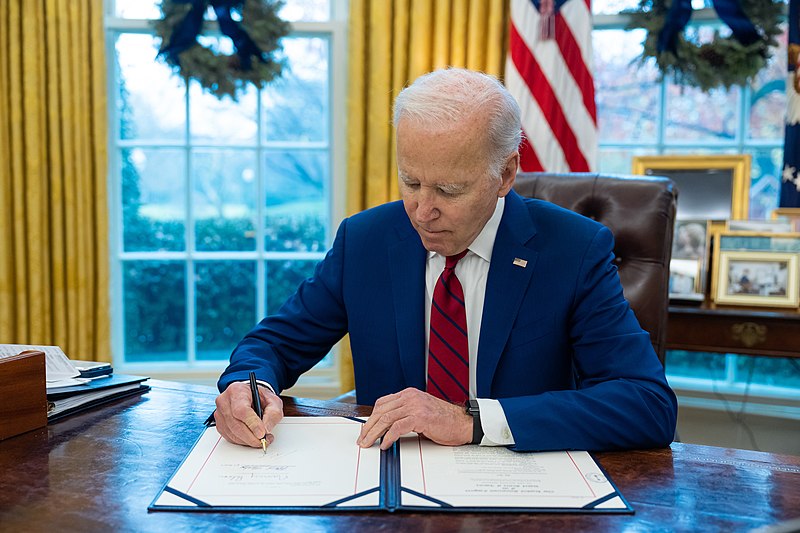
US President Joe Biden has signed the Defense Authorization Act into law passed by Congress last week. However, Biden has expressed concerns over some of the provisions and has urged lawmakers to remove such provisions.
Biden signed the Defense Authorization Act into law Friday last week but raised concerns over some of the provisions in the legislation. Such provisions that Biden expressed concern about may pose a challenge to the Biden administration’s prosecution of detainees in the Guantanamo Bay facility.
“I urge the Congress to eliminate these restrictions as soon as possible,” said Biden in a statement released by the White House. The restrictions the US leader referred to in the bill barred the use of funds to transfer Guantanamo Bay detainees into the United States, effectively shutting down the facility.
The Democratic-led House of Representatives passed the $1.66 trillion government funding legislation, which would provide the military with record funding and ensure continued emergency aid for Ukraine in its war with Russia. The spending bill was passed on mostly party lines, with a vote of 225-201 in the House, following the Senate’s passage of the bill on Thursday last week on a vote of 68-29.
Senate Minority Leader Mitch McConnell was among the 18 Republicans who voted in favor of the bill, while only nine House Republicans voted for the legislation.
The legislation would provide more aid for students with disabilities, funding to protect worker’s rights, more job-training resources, more affordable housing for families, veterans, and those fleeing from domestic violence.
The bill would provide the Pentagon with a record $858 billion budget, an increase from $740 billion in 2021. Lawmakers also included a provision to ban the Chinese-owned video app Tiktok on federal government devices.
An estimated $800 billion would be provided for non-military programs, $68 billion more than the amount in the 2022 fiscal year. Ukraine would also receive $44 billion in aid amidst Ukrainian President Volodymyr Zelenskyy’s visit to Washington last week, as well as $27 billion for victims of natural calamities, increased funding for those struggling with drug addiction, and more funding to assist infrastructure projects coming from the Bipartisan Infrastructure Law that was signed in 2021.













