


 Trump to Deliver National Address on Declassified 2020 Election Intelligence
  UK Sanctions 24 Russian-Linked Targets Over Cyberattacks and Election Interference
  Iran's Supreme Leader Vows Revenge as Trump Threatens Massive U.S. Military Response
  Western Allies Push for More Air Defenses for Ukraine at Paris Summit
  Ann Widdecombe Murder: Police Arrest Second Suspect, Rule Out Terrorism Motive
  Trump Administration Bars U.S. Travelers From Congo Flights Amid Ebola Outbreak
  Reuters/Ipsos Poll: Most Americans Expect U.S.-Iran War to Be Prolonged
  Trump Tells Congress Iran Hostilities Restarted, Citing New 60-Day War Powers Window
  EU Ministers Split as Support Grows for Ban on Trade With Israeli West Bank Settlements
  Zelenskiy Plans Ukraine Government Shake-Up as Prime Minister Svyrydenko Set to Step Down
  EU to Propose New Rules Limiting Children's Access to Social Media
  Ukraine, Europe Launch Freyja Missile Shield to Strengthen Air Defense Against Russia
  Iraq PM Visits Washington as U.S. Oil, Gas Deals Take Center Stage
  UN Says Hamas Disrupted Gaza Aid Distribution, Group Denies Allegations
  Minnesota Wildfires Spread as Governor Tim Walz Deploys National Guard
  US-Iran Strikes Escalate as Strait of Hormuz Crisis Pushes Oil Prices Higher
  Trump Recommends Darline Graham for Interim South Carolina Senate Seat


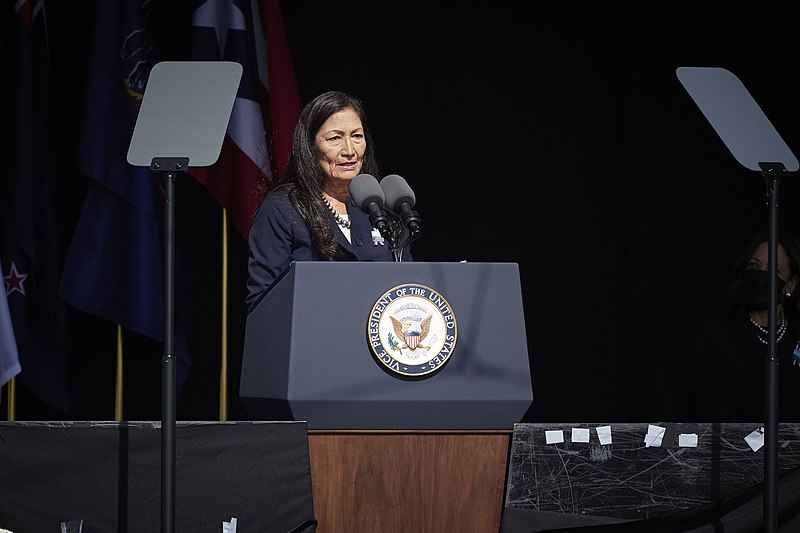
US Interior Secretary Deb Haaland is moving through the final steps to remove a word considered a slur against Indigenous women from federal lands. The department is set to ban the word “squaw” from federal lands following an assessment by the task force in charge of reviewing land names.
AFP reports that Haaland, who is the first Native American to become Interior Secretary, is finalizing steps to remove the word “squaw” from all federal lands. This follows a report by the derogatory geographic names task force that looked through over 660 geographic features in the country that have the slur which the federal government currently refers to as “sq___.”
The effort was first announced back in February when the agency started a comment period and reviewed possible replacement names. The names of several towns were also under review, such as Squaw Harbor in Alaska, according to the release by the department.
The word “squaw” is part of the Algonquian languages of North America, meaning “woman.” However, the word has taken on an offensive tone as it was used as a slur by White people during the colonization of the Americas. The word was commonly used to objectify Native women.
Haaland thanked the task force for their “work to ensure that racist names like sq___ no longer have a place on our federal lands.” Haaland also said she hoped to implement the changes as soon as possible after a vote by the US Board on geographic names.
However, there are other Native Americans who are attempting to reclaim the word in its original meaning.
Earlier this month, Haaland defended the Biden administration’s progress regarding federal fossil fuel leasing during a hearing of the Senate Appropriations Committee, citing the unused leases on federal lands.
This follows the executive order signed by President Joe Biden in January 2021 to temporarily pause new oil and gas leasing on federal lands.
Gas prices have increased this year due to a number of factors, including the war in Ukraine along with production that is struggling to keep up with the demand. The administration has cited the unused leases to address the criticism of its energy policies.







