


 Goldman Sachs Says China Competition Weighs More on EU Growth Than Trade Deficit
  Bernstein Names IAG, Ryanair as Top European Airline Stocks Ahead of Earnings
  Samsung Chairman Lee Jae-yong Expected to Meet Nvidia CEO Jensen Huang on AI and Chip Partnership
  Chinese Chip Stocks Jump as Apple Reportedly Tests CXMT Memory Chips for China Devices
  Bain Capital Exits Kioxia After AI-Fueled Valuation Surge
  Goldman AM Sees Strong Buyout Opportunities in Japan, South Korea and Australia
  Apple Tests China's CXMT Memory Chips as DRAM Maker Gains Global Market Share
  Gold Pulls Back After Hitting $4,180 as Geopolitical Risk Sends Crude Higher
  State of emergency in Crimea as Ukraine focuses pressure on ‘jewel in Putin’s crown’
  China 618 Smartphone Sales Drop 13% as Higher Prices Hurt Demand, Huawei Gains Market Share
  OpenAI GPT-5.6 Set for Wider Release After U.S. Commerce Approval, Report Says
  SK Hynix’s $28 Billion U.S. Share Sale Draws Massive Demand Amid AI Chip Boom


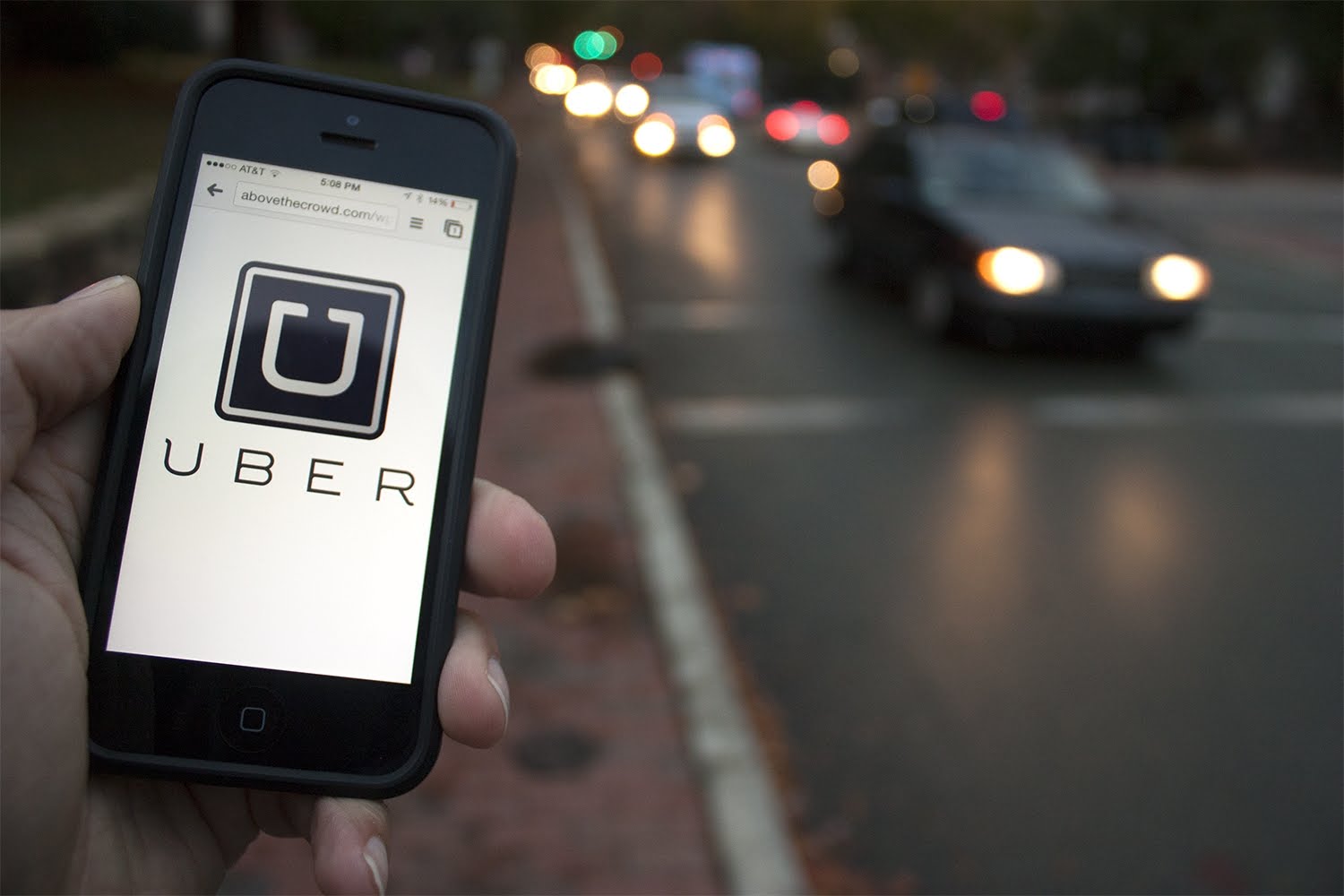

It would be nice to think that Uber’s problems are going to be fixed with the resignation of its CEO Travis Kalanick. Of course, the shareholders who instigated the demand for his resignation were not necessarily expressing a view about what he had done but merely that the company was spending more time focusing on its internal toxic culture than its actual business of expanding its taxi and delivery services.
What hasn’t been brought into question, despite Uber’s lack of integrity in all other areas, is the ongoing validity of the entire model on which Uber is based, the idea that it is simply a technology company that facilitates the so-called “gig economy”. Uber has tried to frame the new economics of using a casual and amateur workforce as an economic revolution that brings benefits to consumers and drivers alike. It could equally be perceived however as simply a way for Uber to shirk any of the normal employer responsibilities and benefits to its drivers and through this form of exploitation provide a cheaper service to customers.
As drivers around the world try and fight to have Uber acknowledge them as employees, it takes a particular type of CEO to consistently ignore the problems created by this business model and to continue to talk up the benefits the company is bringing to society.
Kalanick is not alone in this however. Mark Zuckerberg, CEO of Facebook has long had the job of selling his platform as an optimised advertising delivery system capable of precision targeting of a large captive audience. At the same time, he has sought to convince the public that Facebook is a social good, providing a means of discovering and maintaining relationships through shared experiences. To the public, the contract that the free service is given in exchange for the users accepting targeted ads and more active manipulation is left unstated.
Facebook and other platforms from Google and Twitter encounter problems when the public sees behind the curtain and the true costs of using the platform become apparent. In a direct way, this is when Facebook users have had their emotions explicitly manipulated or when the burden of ads has just become too great and they have resorted to ad blockers.
The more indirect social costs of social media have only recently become apparent however with the realisation that increasing numbers of terrorists involved in attacks in the west especially have been radicalised through content they obtained on social media or through platforms like YouTube.
There continues to be a problem with fake news on social media and its use in influencing opinion and the outcomes of elections.
Although Google and others are increasing the rhetoric at least that they are trying to tackle hateful content, with the proposed approach, it is hard to see how this will be effective. In large part, these companies are trying to appear to be doing something to avoid being forced to take more drastic measures through laws.
Google and Facebook, like Uber, have maintained that they are simply tech companies allowing people to post and view content on their platforms. They have fiercely avoided taking responsibility for that content, whether it is from responsibility for copyright violations through to responsibility for removing child abuse material.
From their perspective, the tech companies still want to promote the view that sharing and posting should be encouraged at all costs, with minimal interference.
This is clearly not going to last however and for legislators in different countries, the decision will be how to force platforms to deal with inappropriate content more effectively. This may mean forcing companies to use more human moderation to check what is being posted rather than relying on AI.
Things are changing however, and the public is increasingly prepared to pay for content that keeps it free of ads. The lack of success of social networks like Snapchat and Twitter also suggest that the public’s enthusiasm for social networks may well evaporate significantly over time.
Uber’s problems highlight that the facade of the vision of society it, and other silicon valley firms are creating isn’t something that society will accept on face-value. For society at least, that is probably a good thing.







