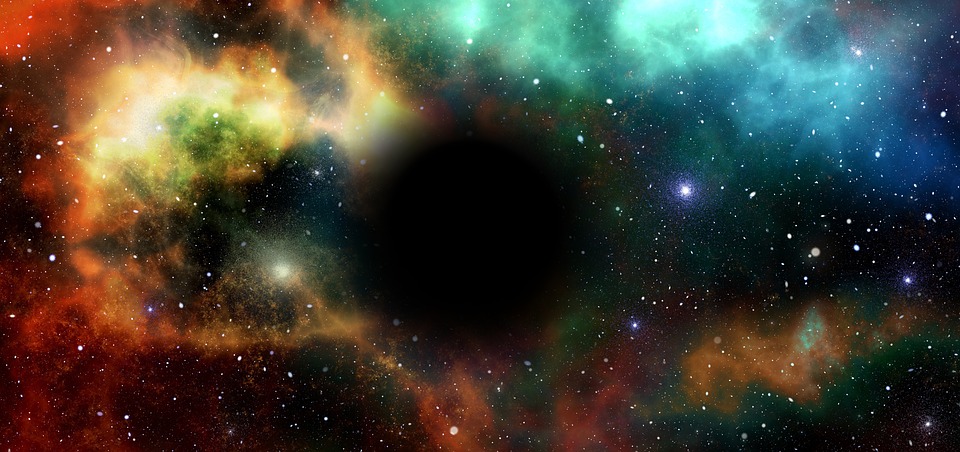
There have been many theories and explanations regarding black holes. However, a scary realization comes in the form of the black hole in the center of our own galaxy, which, experts believe, can consume the planet in the future.
Express reports that the supermassive black hole in the middle of the Milky Way referred to as Sagittarius A can potentially consume the Earth if the planet is directed its way through space. Right now, the black hole is 26,000 light-years away from Earth, which means we’re at a safe distance. This is because one light-year is equivalent to 5.8 trillion miles, but as the sun begins to expand as it goes out, the solar winds could potentially direct the Earth away from its orbit and towards the black hole in the middle of the galaxy.
University of Copenhagen astrophysicist Dr. Charles Steinhardt explained that in the event that the Earth is able to survive being removed from the galaxy, then it would result in either the sun or the planet can be consumed by the black hole after one nonillion years. Steinhardt also went on to say that at the moment, there is a very small chance of it happening. “So if we wait long enough, yes, we might end up merging with our central supermassive black hole.”
Another possibility, which appears to be the more plausible one, is that the sun will expand and burn up the Earth.
With that in mind, can the Milky Way be consumed by the black hole? According to NASA, it cannot. The space agency stated that while the gravitational pull of the black hole is very strong, it is highly unlikely that the black hole could ever consume its host galaxy. They also went on to state that while the gravitational pull is very large for black holes, it is not large enough to consume a whole galaxy.
Thus, even if the sun was to fall into the black hole, the Earth remains intact and safe from any destruction that could happen right away. However, the possibility of the sun becoming a black hole in itself is also highly unlikely, simply because it is not heavy enough.