A scenario from the American Enterprise Institute (AEI) Housing Center suggests that capping minimum lot sizes at 1,000 square feet could have enabled 2.4 million more U.S. starter homes from 2015 through 2024, pointing to land-use rules as one constraint on lower-cost housing supply.
The center's Green Light tool modeled the cap for new subdivisions and defined a starter home by value: no more than four times the median household income in its county. The 2.4 million figure estimates what might have been built under that scenario; it is not a count of completed homes.
The AEI Housing Center says minimum lot-size rules apply in about 90% of U.S. cities and towns and make smaller, less expensive starter homes harder to build. Its tracker counted bills to allow smaller lots in 18 states as of Oct. 19, 2026.
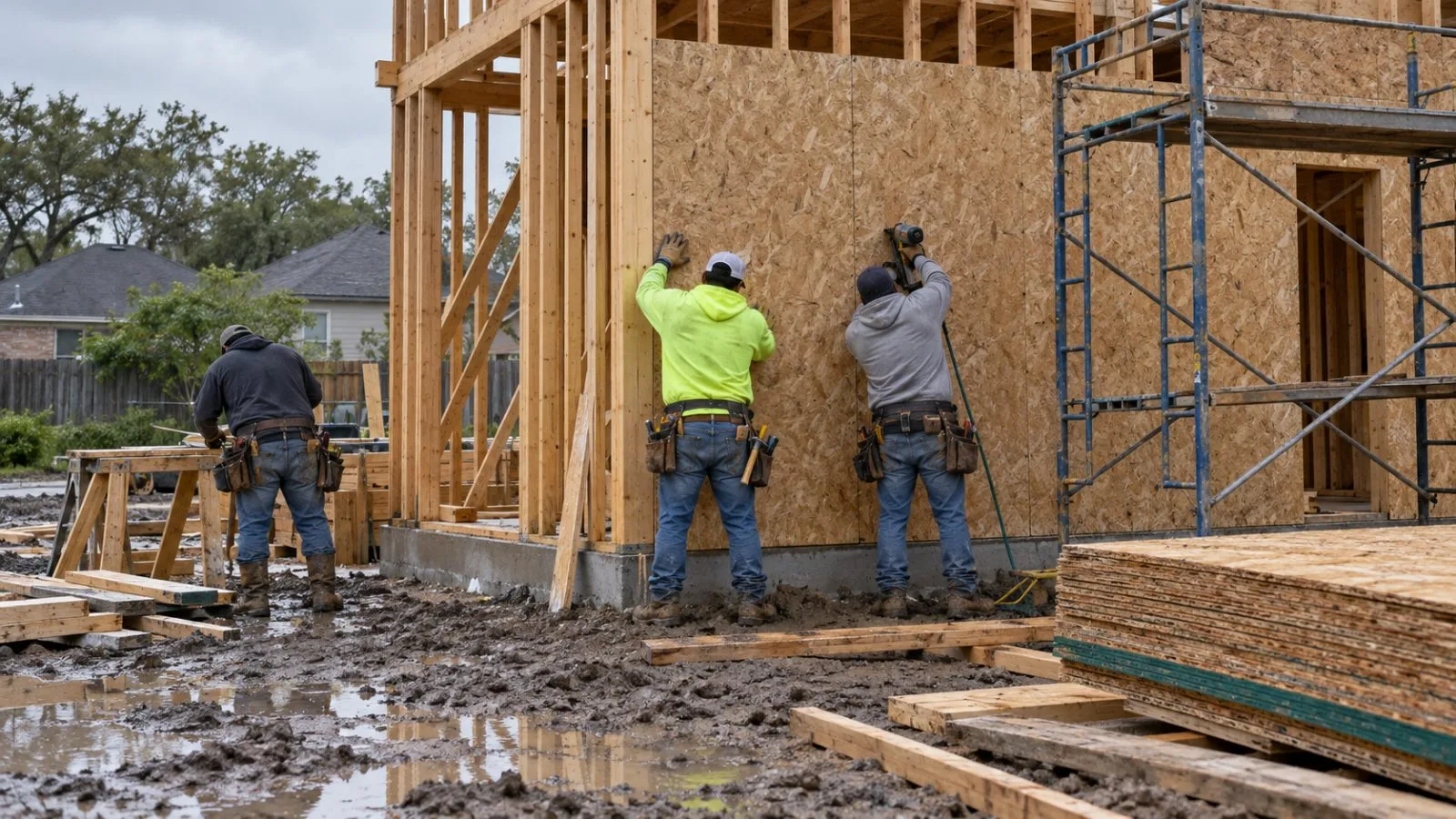
Builders also reported pressure on staffing. John Burns Research & Consulting's September survey found nearly two-thirds of homebuilders said immigration enforcement was affecting their workforce. The firm put the corresponding share at 23% in March and 13% a year earlier.
An analysis by the National Association of Home Builders (NAHB), using U.S. Census Bureau data, found 975,000 single-family homes were completed in 2025. About 30,000 used modular or panelized and pre-cut methods: 14,000 were modular and 16,000 were panelized or pre-cut. Together, those methods accounted for 3% of completions, the same share as in 2023 and 2024.
That 3% share was below the 7% recorded in 1998. NAHB says the share has declined since the early 2000s.
The figures describe different parts of the housing supply picture. AEI modeled potential additions over a decade under a policy scenario, while NAHB counted homes completed in one year. The labor survey records builders' reports of workforce effects from immigration enforcement; these measures do not combine into a single count of the housing shortfall.