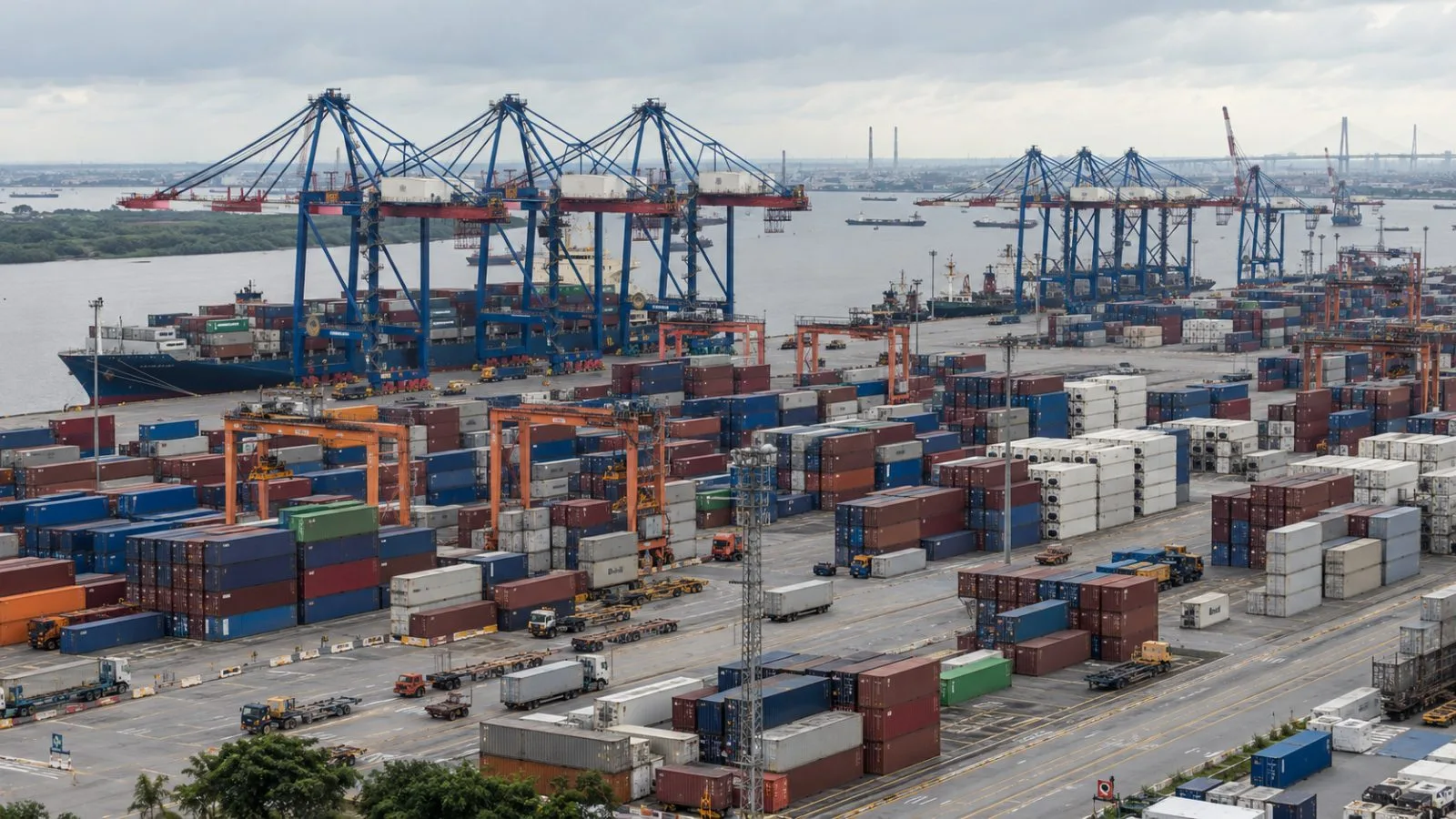
APM Terminals Apapa aims to move 60% of its export containers by rail, making dependable departures a practical test for exporters moving cargo through Lagos.
In its Sept. 14 announcement, APM Terminals gave no timetable for reaching the target. It described two collection points that send loaded export containers back to Apapa. Demand determines how often trains call, but the company reported about three visits a week at each point. A train can carry approximately 60 20-foot equivalent units (TEUs), a measure of container capacity.
The terminal has previously changed a schedule that customers found difficult to plan around. When it relaunched service from Apapa to Moniya, near Ibadan, in February 2025, APM Terminals introduced three departures a week. It said the earlier, unpredictable schedule had complicated cargo planning.
Ghana’s Ministry of Transport reported in September that the 97-kilometer Tema–Mpakadan railway was complete. Transport Minister Joseph Bukari Nikpe said the Ghana Railway Development Authority had obtained two diesel locomotives and 20 wagons and was taking steps toward freight operations.
The government’s proposed cargo route would continue beyond the railway: goods would cross Volta Lake by barge from Mpakadan to Buipe, then travel by road toward northern Ghana and neighboring countries. The ministry said in September that a lakeside facility for transferring cargo was still being developed. It presented the combined route as a way to ease pressure on roads.
Hamburg Port Authority describes one approach to railway maintenance. It says sensors on heavily used port-railway switches send readings on wear and condition to a central system, helping crews identify repairs early. Port of Hamburg Marketing recorded 44.4 million metric tons of freight on the port railway in 2025. The port authority has not reported a measured reduction in downtime from the sensors.
In an Oct. 21 BusinessDay opinion article, Jama Onwubuariri, managing director of Trucks Transit Parks Ltd. (TTP) and a director of West African Truck Terminals, urged operators to identify the switches most likely to interrupt freight movements. He proposed testing sensors at those points and measuring unplanned downtime before expanding the system.