Afghanistan’s opium poppy cultivation expanded 330% in 2026 despite the Taliban’s ban, while a separate food-security forecast puts 19.2 million people at risk of acute food insecurity this winter.
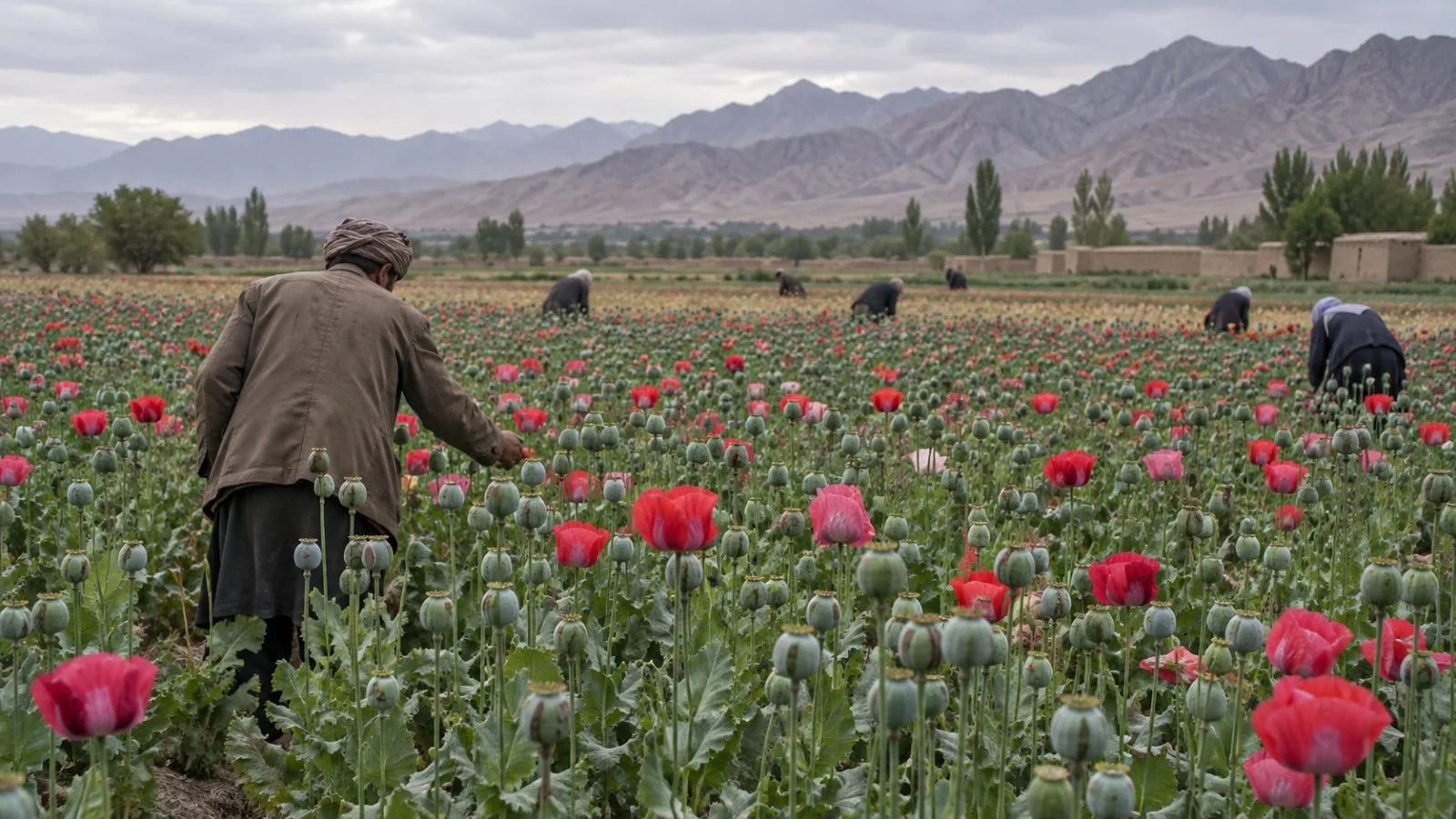
The United Nations Office on Drugs and Crime (UNODC) estimated that poppy covered more than 43,000 hectares, up from 10,200 hectares in 2025. The agency put opium production at just under 1,500 metric tons, 400% higher than about 300 tons the previous year. Taliban authorities disputed UNODC’s cultivation estimate and said the actual area was about half as large, Reuters reported.
The Taliban announced the ban in April 2022. UNODC estimates show cultivation at 232,000 hectares that year before it fell to 10,200 hectares in 2025. The agency said enforcement sharply reduced cultivation and described the lack of sustainable alternative livelihoods as an ongoing rural challenge.
UNODC’s 2025 estimates put poppy returns at about $17,000 per hectare in Helmand and $12,000 in Badakhshan. The comparable figures were $800 for wheat and $1,600 for cotton. UNODC Executive Director Monica Juma said the rise showed how hard it is to sustain declines “when poor farmers have no alternatives to feed their families.”
Reuters reported that Mohammad Dawood, a 28-year-old farmer in Balkh province, was working cotton and wheat fields that barely provided a living. Dawood said he was still complying with the ban and that on a bad day he earned one-fortieth of what he had made from poppy. “Now, my children are malnourished,” he told Reuters.
Separately, the Integrated Food Security Phase Classification (IPC) projects 19.2 million people, or 38% of Afghanistan’s population, will face IPC Phase 3 or above (Crisis or worse) in acute food insecurity. It estimates 4.04 million children aged 6 to 59 months will need treatment for acute malnutrition in 2027, including nearly 1.1 million with severe acute malnutrition.
The Food and Agriculture Organization of the United Nations and the World Food Programme cite high food and transport costs, scarce work and declining humanitarian assistance as pressures on households. They say improved harvests have not restored many families’ access to nutritious food. The IPC projection covers November 2026 through April 2027.