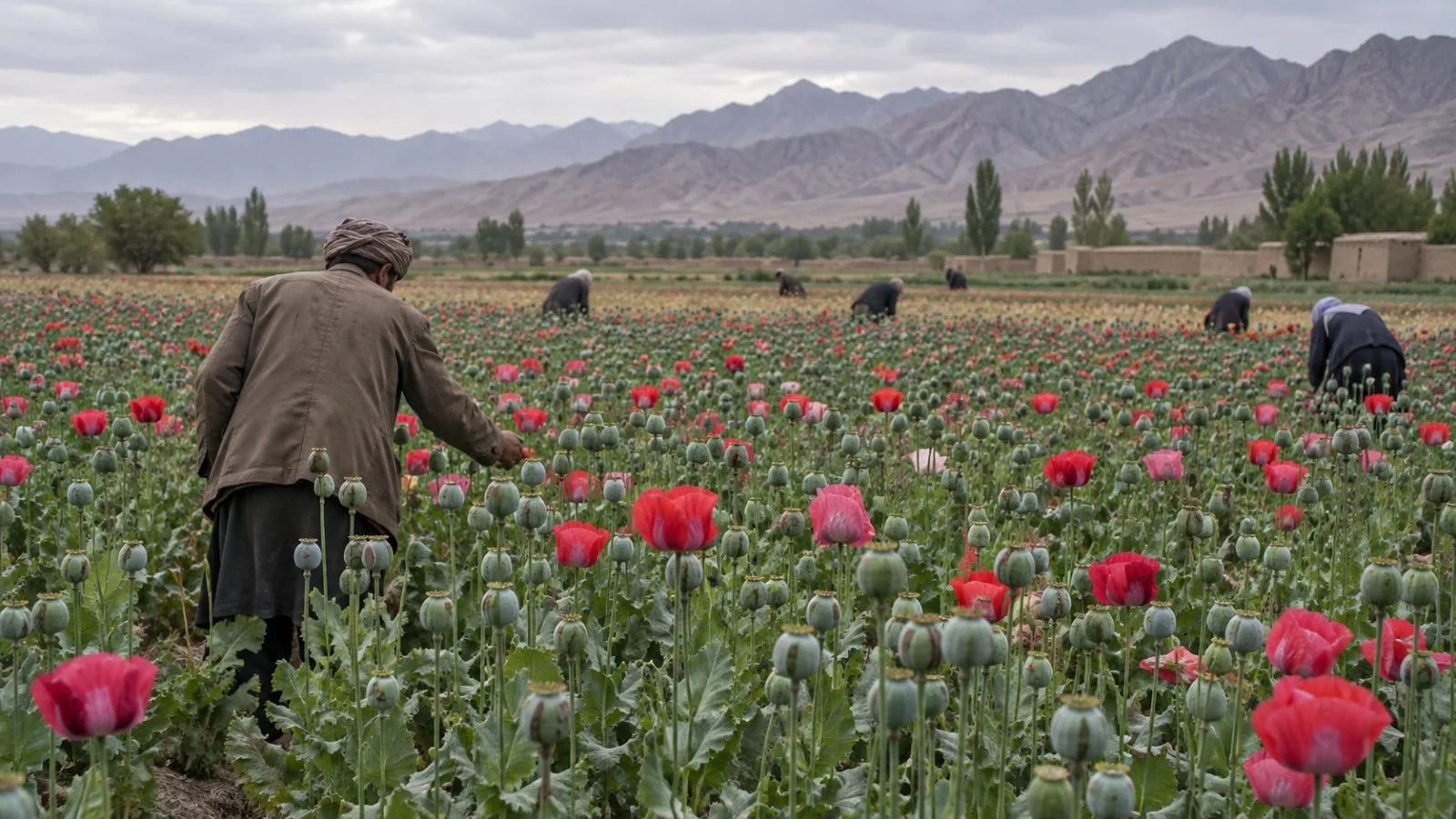
Afghanistan’s 2026 opium output reached nearly five times the previous year’s level, the United Nations Office on Drugs and Crime (UNODC) said, marking the first significant production increase since the Taliban’s 2022 ban.
UNODC estimated production at just under 1,500 tonnes, compared with about 300 tonnes in 2025. Poppy covered more than 43,000 hectares, a 330% increase from roughly 10,000 hectares a year earlier. The 2026 area remains below the pre-ban total of 232,000 hectares; EconoTimes previously reported the 330% expansion in cultivated area.
Cultivation reached 16 of Afghanistan’s 34 provinces, five more than in 2025. Northeastern Afghanistan accounted for three out of every four cultivated hectares, while the southwest was the main growing region before the ban. The de facto authorities reported eradicating 22,000 hectares this year.
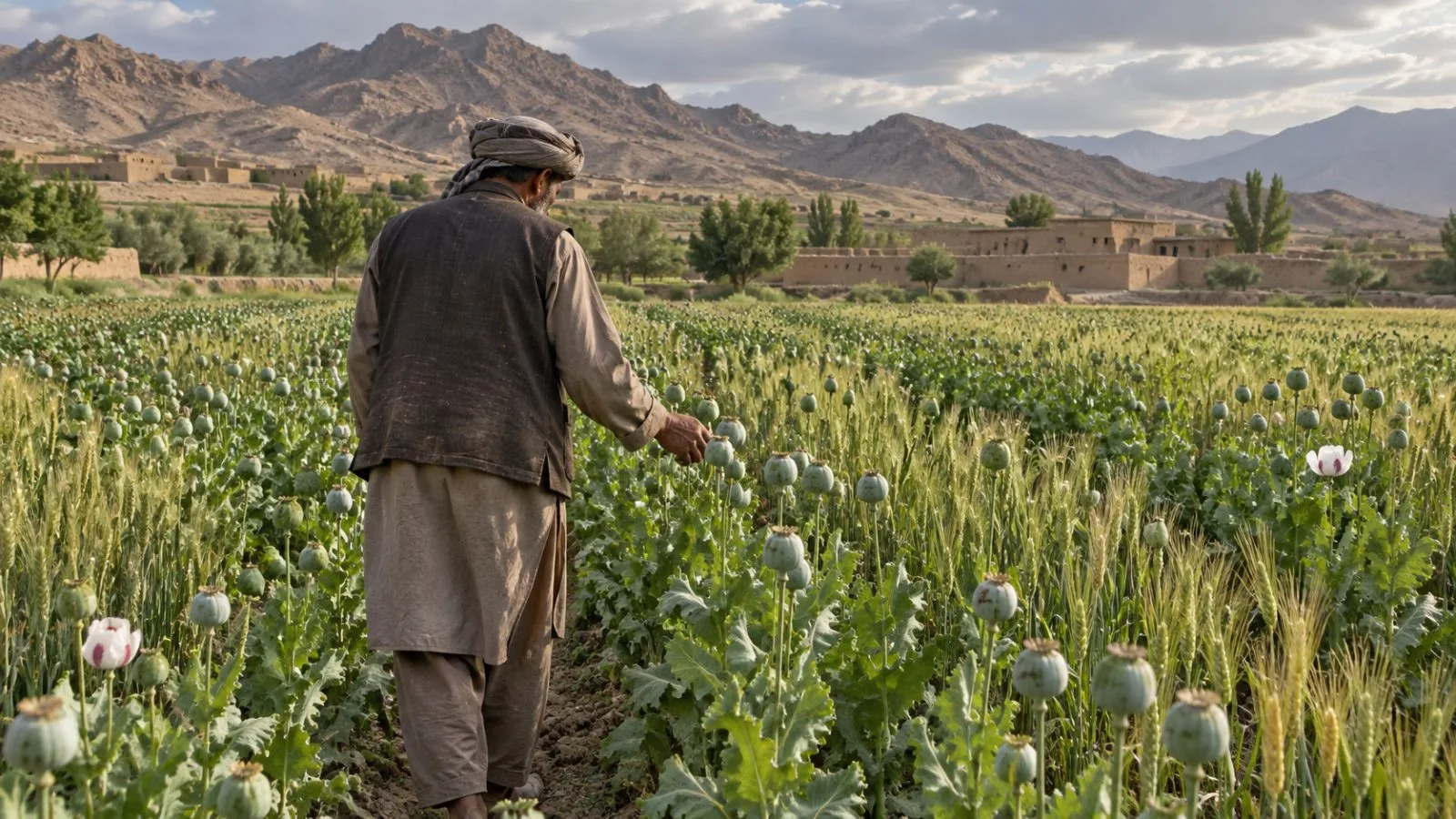
UNODC said farmers appeared to be reducing the risk of detection by placing small poppy patches among cereal crops or inside walled compounds, and by changing planting and harvest times. UNODC Executive Director Monica Juma said sustaining lower cultivation is difficult when poor farmers lack other ways to support their families. She urged authorities and international partners to invest in rural livelihoods, farm infrastructure and access to markets, saying farmers have “no alternatives to feed their families.”
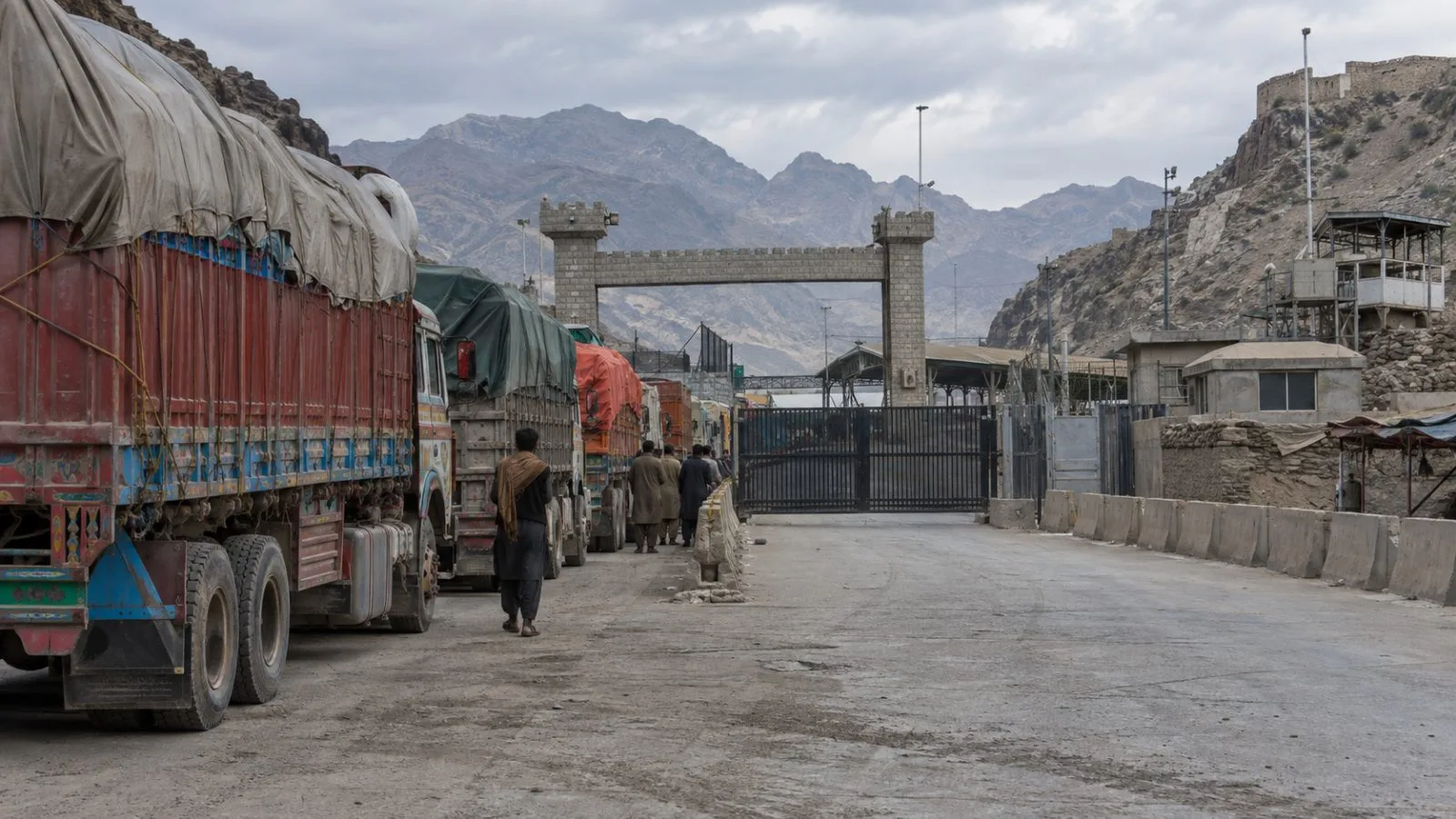
The reported opium price was $500 per kilogram, down from $570 in 2025 but still above the pre-ban level of less than $100. UNODC said price differences between regions may encourage traffickers to move opium from the northeast toward the southwest.
The UNODC survey said traffickers in the region appeared to have used opium stockpiles to sustain distribution since the ban. Recent seizure data suggest those reserves may be shrinking. UNODC’s 2026 World Drug Report also found early signs of falling heroin supplies in Europe. The agency said sustained demand and high prices could encourage further cultivation if stocks continue to decline.
UNODC said continued monitoring will show whether the 2026 increase fades or develops into a broader expansion of opium and heroin production.