Air pollution kills around 7 million people each year. Most of these deaths occur in developing countries, where solid fuel is often burned in poorly ventilated spaces. However, between 26,000 and 38,000 of those deaths occur in the UK.
People in the UK spend over 80% of their time indoors, whether at home, at work, at school or commuting. So making sure the air inside those enclosed spaces is safe to breathe is crucial.
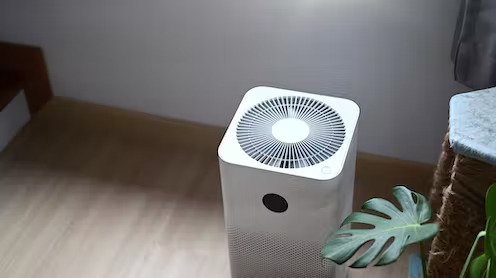
In recent years, there has been an ever-widening range of air-cleaning devices on the market, especially once it became clear that COVID was an airborne disease. Some devices work by thermal or photocatalytic oxidation, others by adsorption, filtration, UV germicidal irradiation, ion generation and electrostatic precipitation.
Despite their scientific-sounding names, none of these technologies removes all the indoor air pollutants and many generate undesirable chemical pollutants, as was detailed in a recent report by the UK government’s Scientific Advisory Group for Emergencies (Sage).
For instance, ionising devices give particulate matter an electrical charge that causes it to fall onto surfaces, removing it from the air. However, they can also produce ozone through their operation. Electrostatic precipitation devices also charge particulate matter to remove it but can produce nitrogen oxides and ozone.
Chemical oxidation devices actually use an ozonizer or a mixture of chemicals to release ozone or other oxidants directly into the room. Given that ozone and nitrogen oxides are harmful gases, some of these devices are merely displacing one pollutant with another.
The Sage report concluded that air-cleaning technologies were likely to provide only limited benefit in spaces that were adequately ventilated and were not necessary unless there were specific risks (such as a busy road outside, so making natural ventilation more difficult). The report also concluded that, if needed, those technologies using filtration or germicidal UV were most likely to be beneficial if used correctly.
One problem with air-cleaning devices is that they are unregulated in the UK. Anyone buying such a device has to rely on information provided by the manufacturer to determine how efficiently it removes pollutants.
The devices tend to be tested under carefully controlled laboratory conditions rather than in a typical, occupied building. The issue of secondary pollutant formation is often not addressed, and advice on where an air-cleaning device should be placed for best results is often absent.
There is too much onus on the consumer to assess the benefits of air-cleaning technologies and which one they should choose.
Making it easier for consumers
To make this easier for consumers, the government needs to create an accredited and independent organisation to test these devices for safety and effectiveness. Testing should be carried out in a realistic indoor environment to ensure that each device is safe to use and maintain as it ages.
And manufacturers should provide clear advice on how to operate and maintain their air-cleaning devices. Operating and maintaining these devices should be as simple as possible.
Manufacturers should also provide the operating parameters, as they currently do for white goods, such as fridges and cookers. Parameters would include things like noise (if the device is too noisy, there is a risk people will turn it down), maintenance costs, the volume of a space that can be cleaned, and pollutant removal efficiency. These should be provided in a standard checklist format, making it easy for consumers to compare devices.
Even with these changes in place, consumers will still need to consider whether indoor spaces or rooms really need air-cleaning technology. This is perhaps the most difficult aspect, given that many consumers will lack the expertise or equipment to understand whether or not they need to clean the air in their homes.
For most homes, natural ventilation is sufficient, particularly after activities that lead to high indoor emissions such as cooking and cleaning. Using a cooker hood in the kitchen when cooking and an extractor fan when using the bathroom will also help. If a building is located on a busy road, opening windows on the other side of the building, or outside of rush hour may be necessary.
One relatively cheap way to help homeowners assess whether they need air cleaning in addition to ventilation would be to buy a carbon dioxide monitor. A recent report indicates that carbon dioxide concentrations consistently above 1,500 parts per million suggest that ventilation is poor and that air cleaning could be beneficial.
Finally, air cleaning will only ever be an interim solution. For most buildings, the best solution is to remove air pollutants from outdoors and ensure that there are adequate window openings to provide sufficient ventilation.