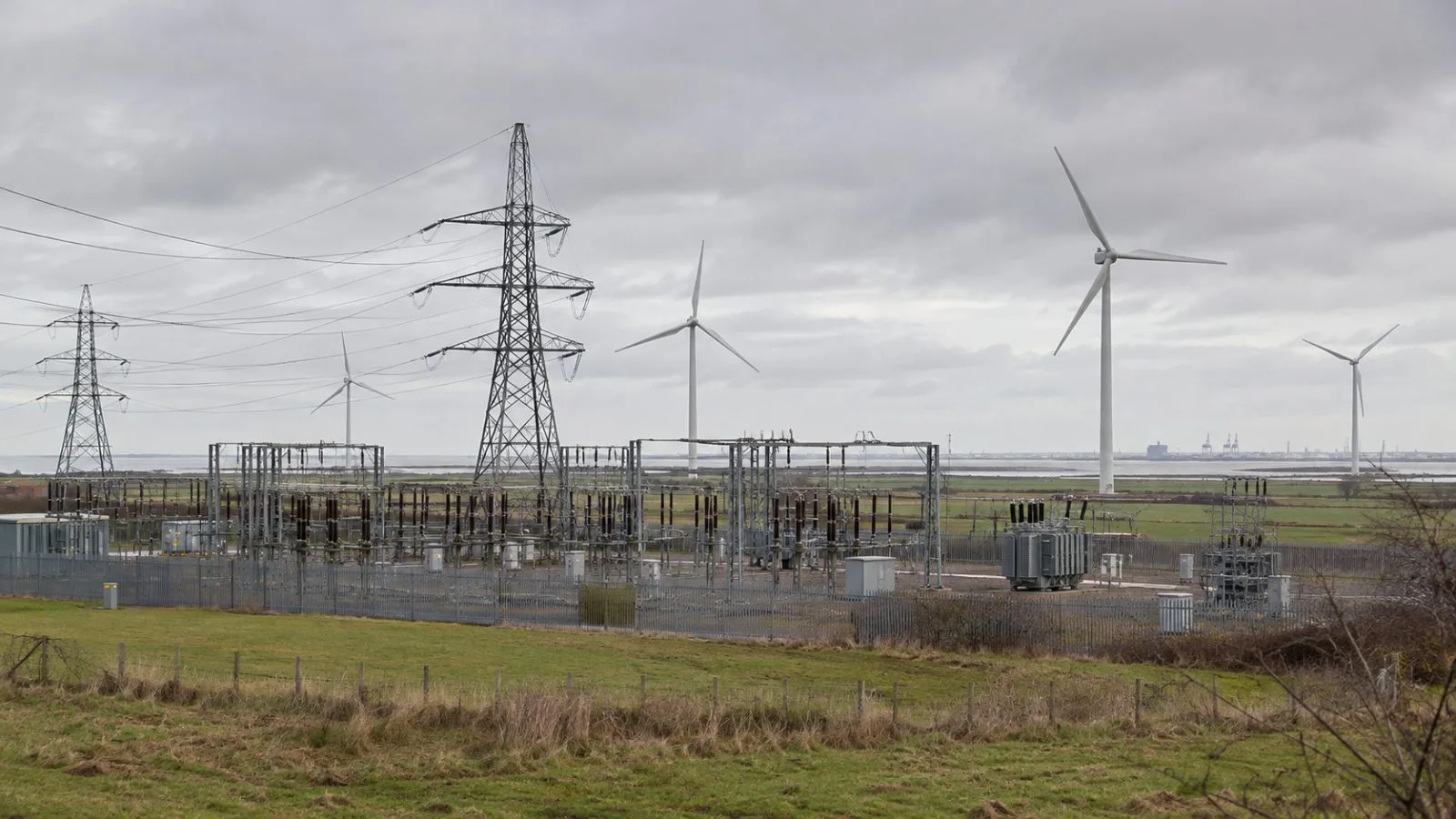
Amazon's planned $7 billion renewable-energy commitment in India through 2030 links a global company's power needs to India's 500-gigawatt non-fossil electricity capacity target, which the government is pursuing.
Amazon said Nov. 17, 2026, that the new investment is additional to $4 billion in Indian renewable projects already under contract. The company said the four newly detailed projects are part of that earlier portfolio, rather than the new $7 billion plan.
The four power purchase agreements cover projects with a combined capacity of 934 megawatts across three states. In Karnataka, Amazon contracted for a 234-megawatt wind farm and a 200-megawatt project combining wind and solar. The other agreements cover a 300-megawatt solar project in Madhya Pradesh and a 200-megawatt solar project in Rajasthan.
Amazon estimates that its full Indian renewable-energy portfolio, once operational, will exceed two gigawatts and produce enough electricity each year to match the use of more than 3.5 million Indian households. That is an annual consumption comparison; the company did not say the power would go directly to those homes.
Amazon lists 57 projects in India. Fourteen are utility-scale wind and solar projects that supply electricity to the grid, while 43 are on-site solar installations at its facilities. The company said the projects will add electricity sources to the grid, support its operating needs and contribute to India's energy security.
The India projects also relate to Amazon's global climate goals: reducing the carbon intensity of electricity used in its operations by 65% by 2030, from a 2019 baseline, and reaching net-zero carbon across its operations by 2040. Kara Hurst, Amazon's chief sustainability officer, said, “This additional investment of US$7 billion underlines our long-term commitment.”
India's Ministry of Power said in a response to the Rajya Sabha that the government is working toward 500 gigawatts of installed non-fossil electricity capacity by 2030. That goal measures national generation capacity; Amazon's carbon-intensity target concerns the electricity powering its own operations.