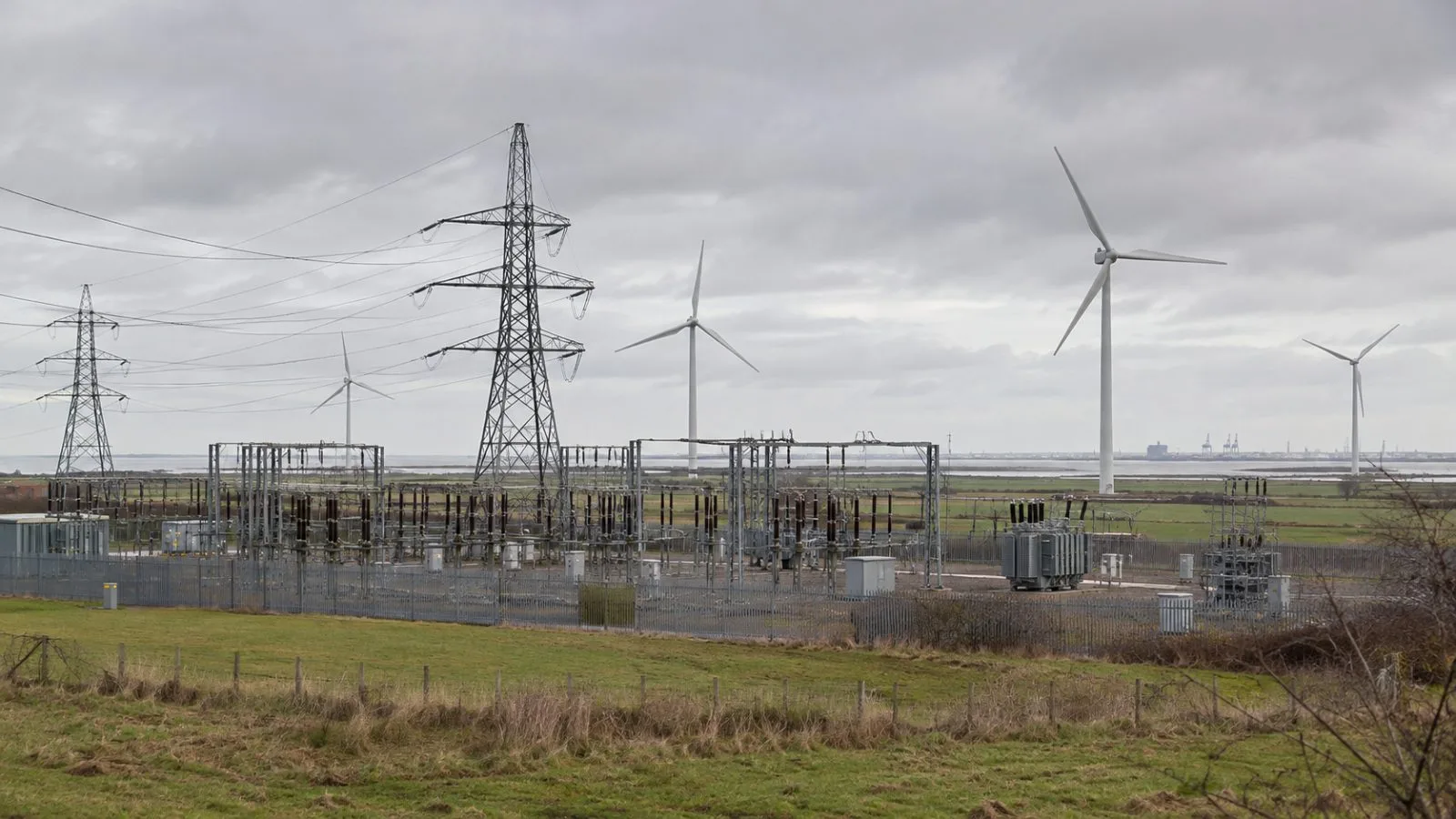
The Guardian reported that Great Britain’s renewable projects built from 2003 to 2014 could generate £8.7 billion in combined support and power sales next financial year, while wholesale prices shape subsidy costs and bills.
The Energy Competitiveness Unit (ECU) estimates £4.5 billion would come through the Renewables Obligation (RO) and £4.2 billion from wholesale electricity sales, The Guardian reported. Together, those two income streams make up the £8.7 billion forecast. The Guardian reported that higher gas-linked wholesale prices can increase these projects’ power-market revenue, which they receive alongside RO certificate income.
The Department for Energy Security and Net Zero (DESNZ) is consulting on a voluntary Wholesale Contract for Difference (WCfD). Under its lead design, generators would get more predictable wholesale-market revenue while keeping the RO support they already receive.
The consultation also seeks views on a hybrid option covering both income streams. It would replace wholesale revenue and remaining RO revenue with separate fixed-price payments, with the RO payment discounted relative to expected RO revenues. DESNZ says the added complexity could delay consumer benefits or implementation.
The Guardian reported a separate ECU scenario for a “fair value” contract for difference (CfD) that would cover both streams. If all generators moved to that arrangement, electricity costs could fall by £3.8 billion next year and £9.2 billion over 10 years, the report said.
The government says Exchequer funding will cover 75% of Great Britain’s domestic RO costs for three years, shifting that share from household energy bills to public finances.
Under the RO, eligible generators receive certificates for renewable electricity and can sell them to suppliers or other buyers for income alongside power sales. The schemes in England and Wales and Scotland began in 2002, stopped accepting new applicants in 2017 and can continue supporting some accredited generators until 2037. RenewableUK Chief Executive Tara Singh told The Guardian that renewable projects were “pushing expensive gas off the system.”
The consultation closes Dec. 9, 2026, and the government aims to publish its response shortly afterward.