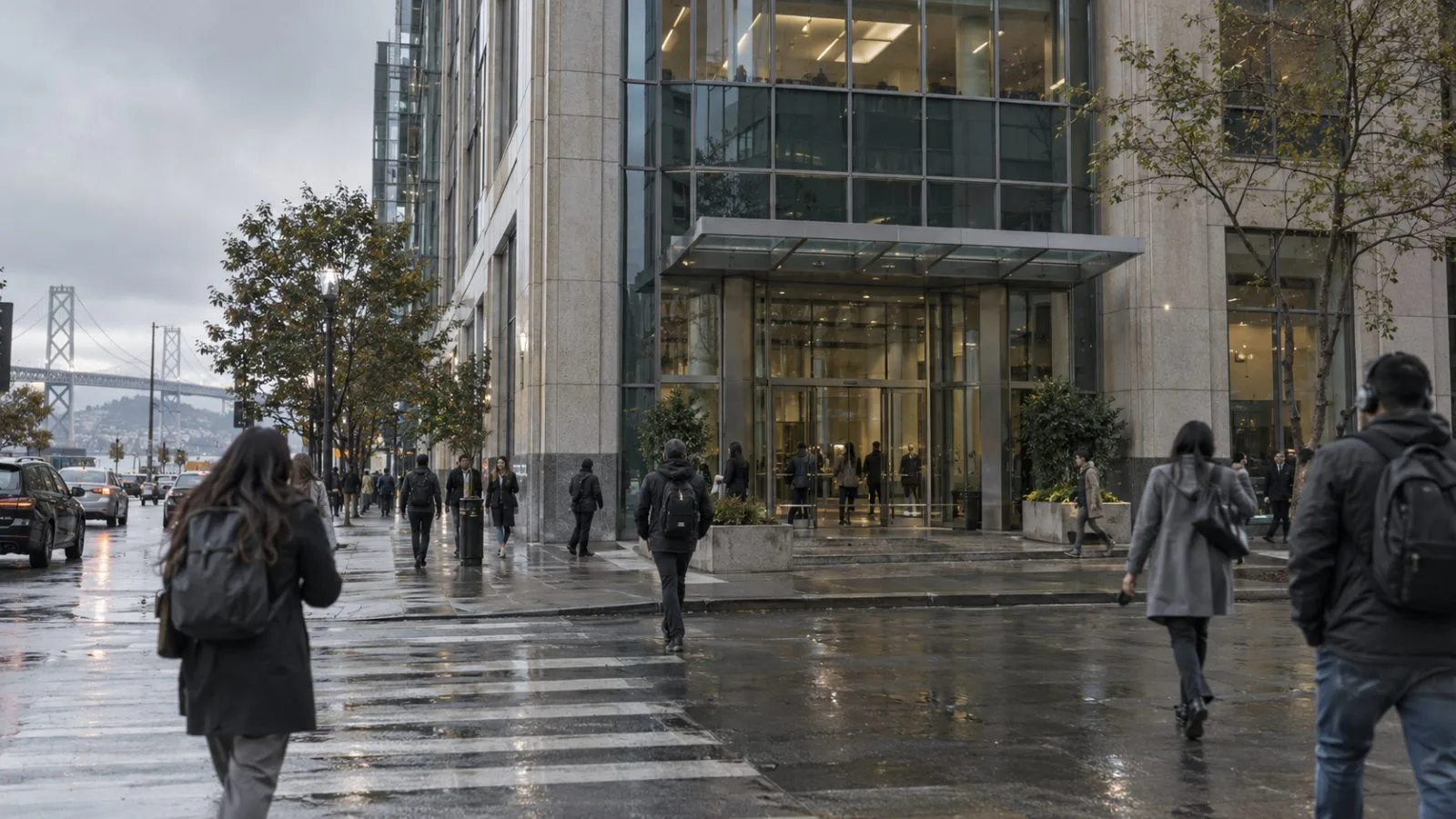
SAN FRANCISCO — More than 100 protesters gathered outside Anthropic’s headquarters Nov. 19 as the artificial-intelligence company began public trading, pressing for regulation and continued human control over advanced systems.
KQED reported that demonstrators blocked the entrance and that about four people were arrested. The outlet also reported that San Francisco police confirmed arrests but could not verify the number or charges while the investigation remained active.
The protest centered on recursive self-improvement, which Anthropic describes as an artificial-intelligence system independently creating a more advanced successor. Protester Phoebe Thomas Sorgen told KQED that Anthropic was the company nearest to achieving that capability and said it was already out of control. Jeffrey Ladish, executive director of Palisade Research, said governments should intervene when companies acknowledge that advanced AI could endanger lives and national security.
Anthropic’s shares opened at $111.50 and ended the session at $97.17, KQED reported. Reuters reported that the company reached a valuation of about $2 trillion during its Nasdaq debut.
Anthropic’s prospectus filed with the Securities and Exchange Commission priced the IPO at $83 per share and covered 980 million Class A shares, with an underwriters’ option for 147 million additional shares. The filing listed total offering proceeds of $81.34 billion before expenses.
The prospectus also described a planned $26 billion private placement of Class N stock. Anthropic estimated net proceeds of about $104.8 billion from the IPO and private placement, increasing to approximately $117 billion if the option is fully exercised. The filing said the funds would support a business dependent on major computing and infrastructure spending.
Anthropic says it has not developed recursive self-improvement and considers its arrival uncertain, though institutions may have less time to prepare than expected. The company says newer systems can handle more technical and delegated work, while people continue to set objectives and make key judgments; it identifies loss of control as a possible danger.
The demonstration comes amid other public calls for human control of AI, including earlier remarks by OpenAI CEO Sam Altman that people must retain control as the technology advances, as reported in earlier EconoTimes coverage.