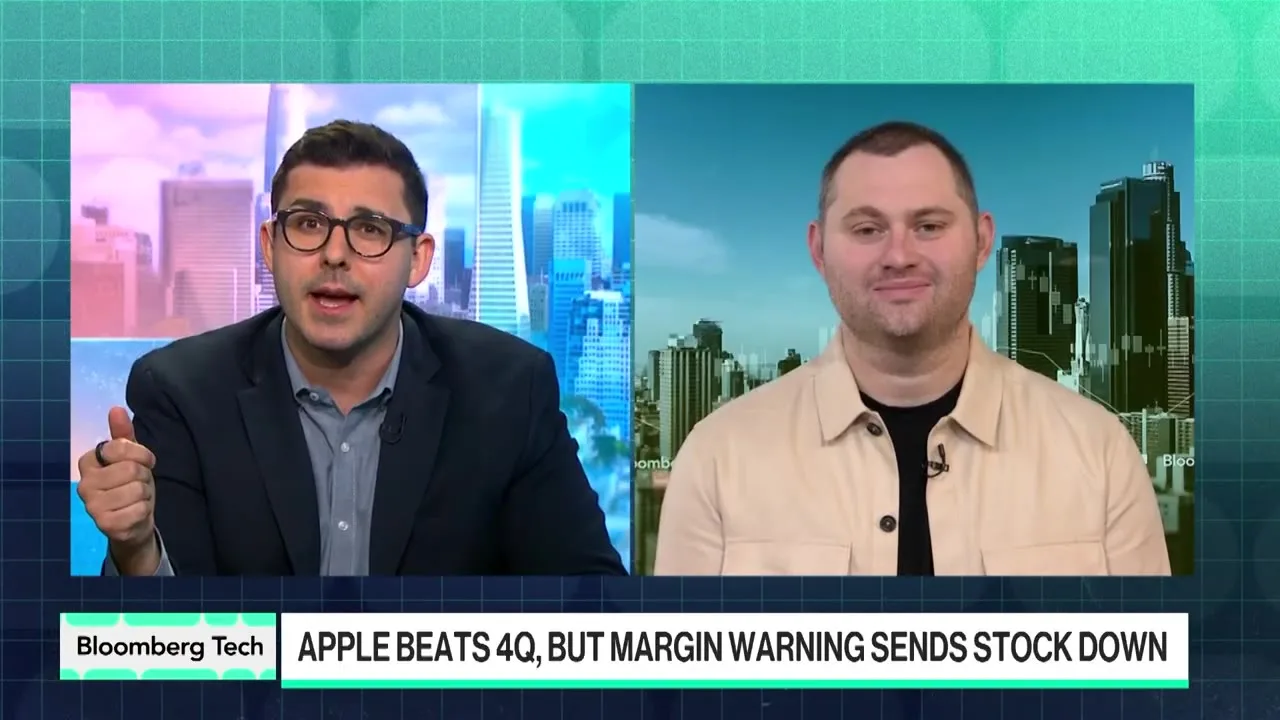
Apple forecast holiday-quarter revenue growth of 7% to 10%, but said worsening memory shortages would squeeze margins into its next fiscal year, Bloomberg Tech reported, citing the company's earnings commentary.
The sales outlook exceeded the roughly 6.1% growth analysts expected. But price increases introduced in June and September would cover only part of the added costs, leaving the company facing a squeeze on profitability.
The company's forecast and results were discussed on Bloomberg Technology, published Nov. 3. The coverage described Apple's own earnings announcement and comments, including its expectations for memory costs and the limits of its price increases.
Apple expected the memory shortage to worsen in the December quarter and through the rest of fiscal 2027. Gross margin, the share of revenue left after product costs, was the focus of concern despite the stronger sales outlook.
The discussion also linked pressure on profitability to spending on improvements to Siri's artificial intelligence capabilities. It gave no spending figure or timetable for delivering those improvements, leaving their cost and timing unspecified.
Higher prices helped Apple's reported sales, but made the underlying demand for its products harder to establish. The discussion did not establish whether customers bought more devices or whether higher prices offset a fall in the number sold.
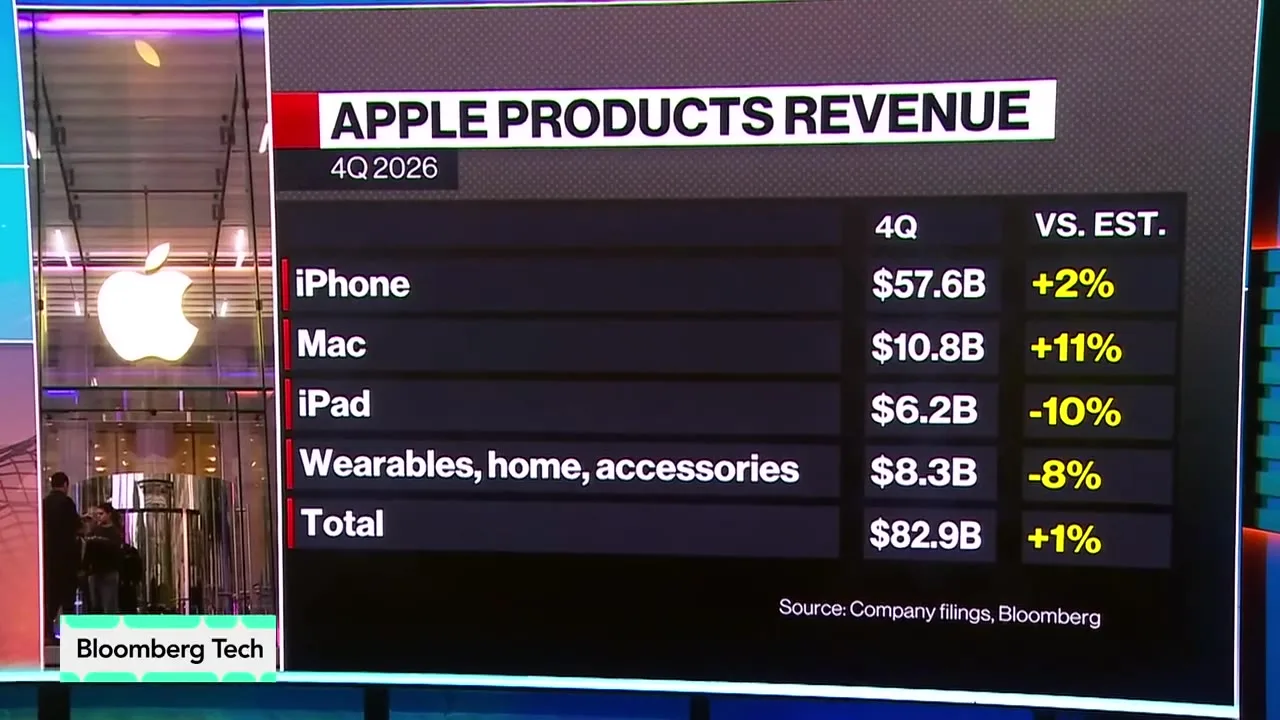
Apple's iPhone revenue exceeded $57 billion in the fiscal fourth quarter, compared with a Wall Street expectation of about $56.5 billion. The quarter covered September and included two weeks of sales of the iPhone 18 Pro and Pro Max.
The company raised prices by $100, with larger increases for models offering more storage. Those increases meant revenue could rise even if unit sales fell, limiting what the dollar figures alone established about customer demand.
The fiscal fourth quarter did not include sales of the iPhone Duo, which had a late-October launch. That timing meant the September results reflected only part of the company's latest phone releases, alongside the price changes.
Supply shortages also limited access to the Duo. The discussion described buyers facing waits until February, March, April or May, putting some purchases beyond the holiday quarter and into later financial results.
The release schedule also excluded an iPhone Air or regular iPhone 18 from this year's cycle. The discussion left open how much of Apple's expected revenue growth would come from higher prices, device sales or the timing of availability.