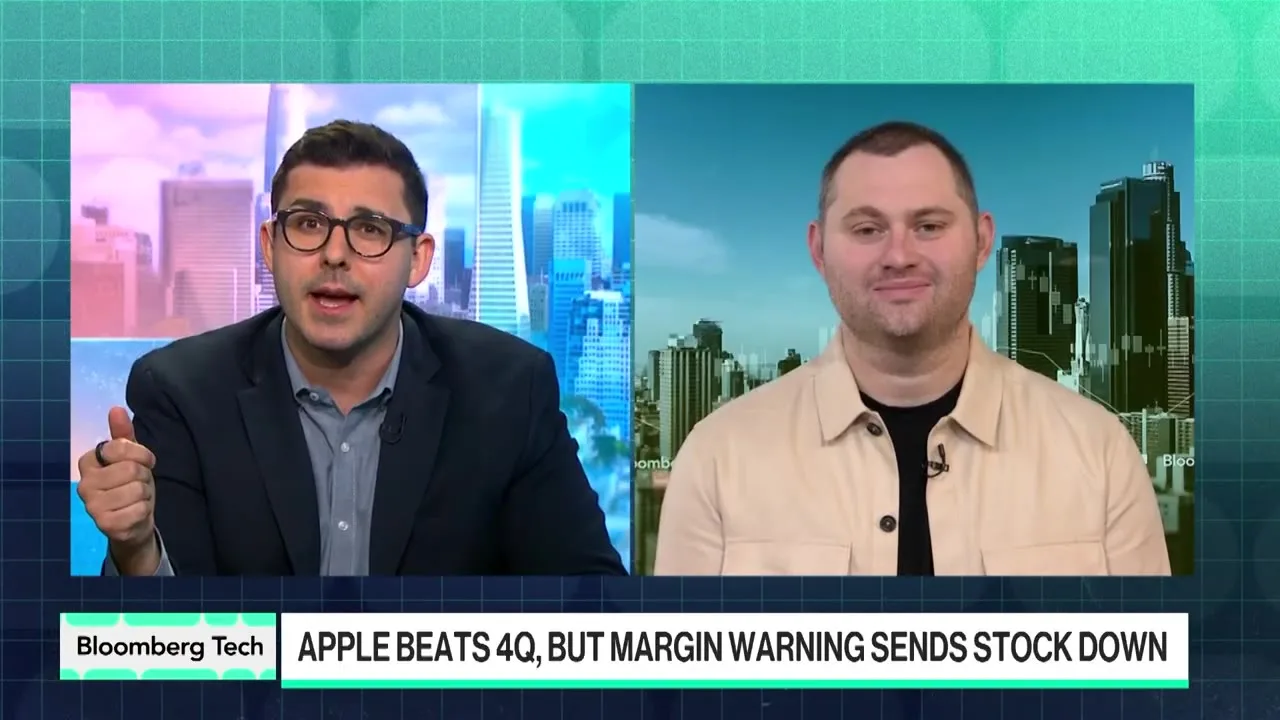
Apple forecast revenue growth of 7% to 10% for the holiday quarter, while rising memory costs threatened its profit margins, Bloomberg Technology reported in its Nov. 3 broadcast.
The company's forecast exceeded Wall Street's expectation of about 6.1% growth even at the bottom of the range. But its outlook for gross margin, the share of sales left after production costs, weighed on shares.
Apple executive John Ternus said memory shortages would worsen in the December quarter and across 2027. Price increases introduced in June and September would cover only part of the additional costs.
The company also faced spending to improve Siri's artificial intelligence capabilities. The broadcast gave no numerical forecast for gross margin or a figure for that spending, leaving the size of those costs unspecified.
Apple delivered record revenue in its fiscal fourth quarter, which covered the September quarter. Its holiday forecast pointed to slower annual revenue growth than a year earlier, despite coming in above Wall Street's expectations.
Higher prices complicated the picture of demand for the company's products. A $100 price increase, together with larger increases for higher storage capacities, could support revenue even if the number of phones sold fell.
The available figures did not establish whether unit sales had fallen. They also did not separate the contribution from higher prices from changes in the number or mix of devices customers bought.
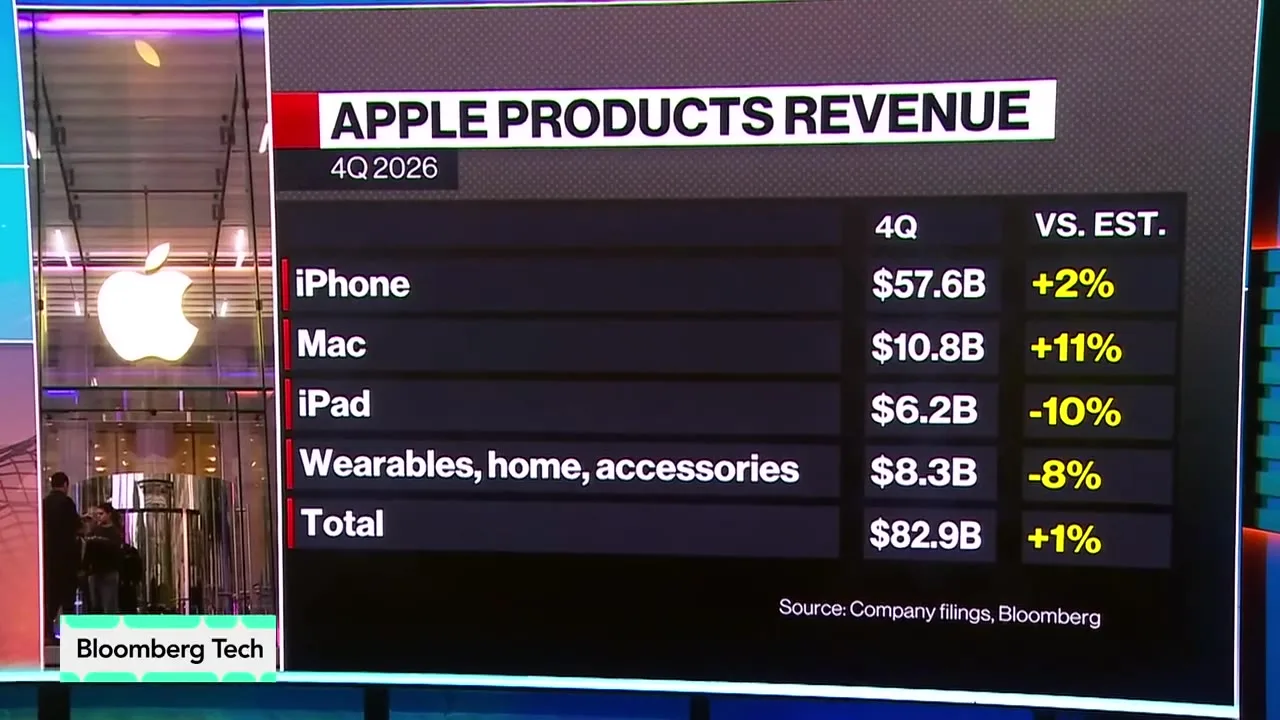
Apple's iPhone revenue exceeded $57 billion in the fourth quarter, compared with Wall Street expectations of about $56.5 billion. The result beat expectations before the iPhone Duo contributed to the company's quarterly sales.
The September quarter included the iPhone 18 Pro and Pro Max but excluded the Duo, which was scheduled for a late-October launch. Apple also had no regular iPhone 18 in this year's release cycle.
Supply shortages meant some customers would have to wait until as late as May to receive the Duo. The timing would push sales of those phones into later financial quarters.
Apple did not give a clear answer on when Duo supply would catch up with demand. That left open how quickly it could fill orders after the launch and how sales would fall across quarters.
Apple's Mac revenue grew 24%, while revenue in China missed Wall Street expectations by about $1 billion. Ternus nevertheless said the company was proud of its results in China.
Apple shares fell about 2% during the session after dropping almost 4% earlier. At the earlier low, the stock was heading for its biggest decline since July.