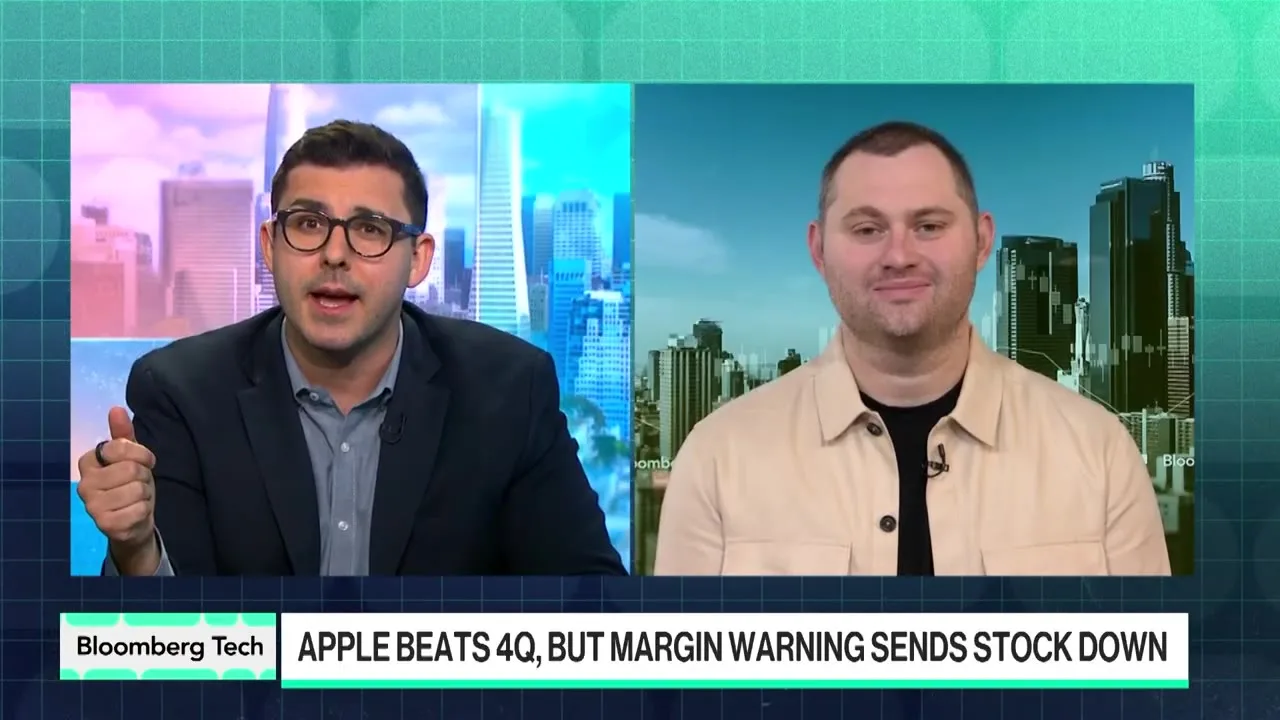
Apple forecast revenue growth of 7% to 10% for the holiday quarter as a memory shortage continued to weigh on its business, the company said in its earnings guidance.
That compares with Apple's 12% revenue growth in the September quarter. The company expects the increase to follow 17% growth a year earlier, when it launched the iPhone 17 Pro.
Apple Chief Executive John Ternus said the company recorded its highest number of customers upgrading their devices in China. Bloomberg Television covered the earnings remarks on Power On, published Nov. 5.
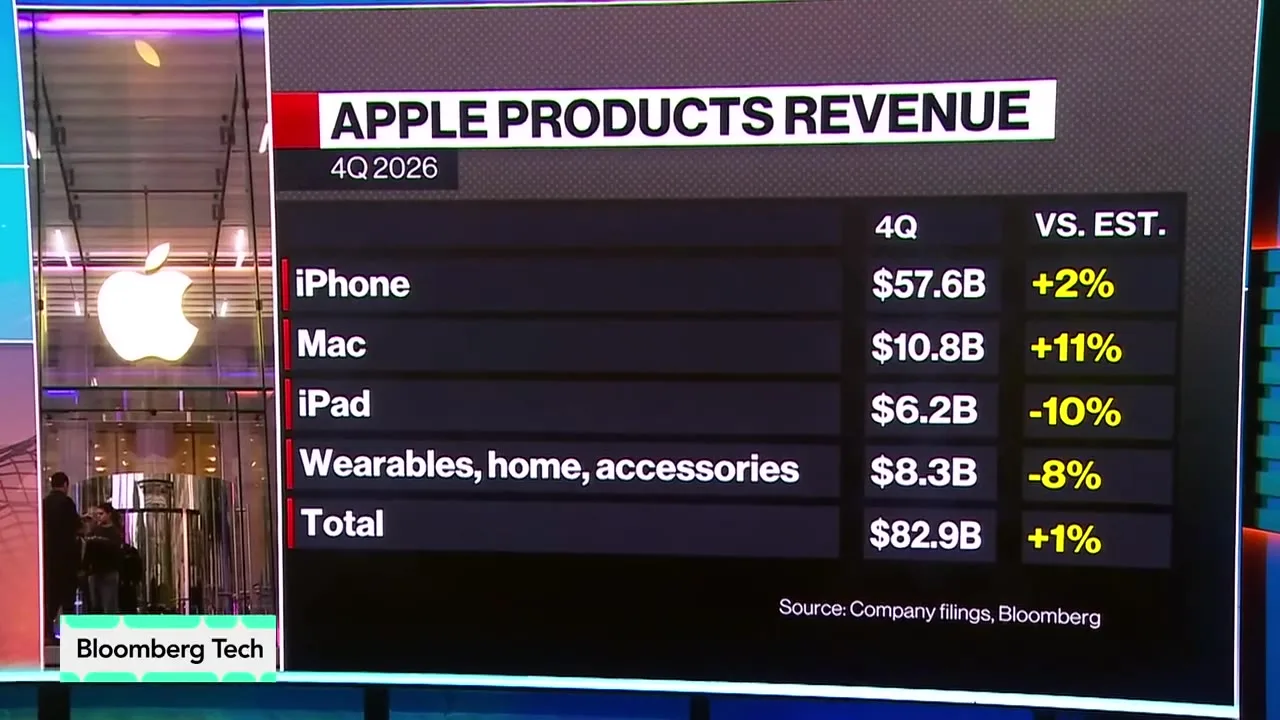
Apple reported September-quarter revenue of more than $114 billion, including more than $57 billion from iPhones. The phone business accounted for about half of sales despite a narrower September launch focused on its premium Pro models.
The company raised prices on Macs, iPads, home devices and other products in June, followed by iPhone price increases in September. Apple described those increases as only a “partial offset” to the higher costs it faced.
Apple forecast a gross margin in the mid-40% range for the holiday quarter. That measure represents the share of revenue left after the direct cost of products and services, before other expenses.
The company said the memory shortage would continue through the December quarter and throughout fiscal 2027. It did not give a date for the shortage to end or a commitment to further product price increases.
Apple also reported that it sold more Macs in fiscal 2026 than in any previous fiscal year. Its China revenue rose 21% to $17.5 billion, alongside the record number of customers upgrading that Ternus described.
Supply constraints also affected the newly launched iPhone Duo. New orders placed minutes into the Oct. 16 preorder process received delivery dates of Jan. 25 to Jan. 29, Bloomberg reported, putting those deliveries beyond the December quarter.
The chief of Foxconn, Apple's manufacturing supplier, expressed confidence in an interview with Bloomberg that the company would catch up with iPhone Duo demand and production needs. The supplied remarks gave no firm date for that to happen.
Memory suppliers Samsung and SK Hynix pointed to 2030 for supply and demand to move toward balance. They said buyers had already booked the bulk of their production of dynamic random access memory, used to hold data while devices operate, through 2029.
Those suppliers' timelines extend beyond the fiscal year covered by Apple's comments on the shortage. Apple left open how long the higher costs would persist and whether its June and September price increases would need to be followed by others.