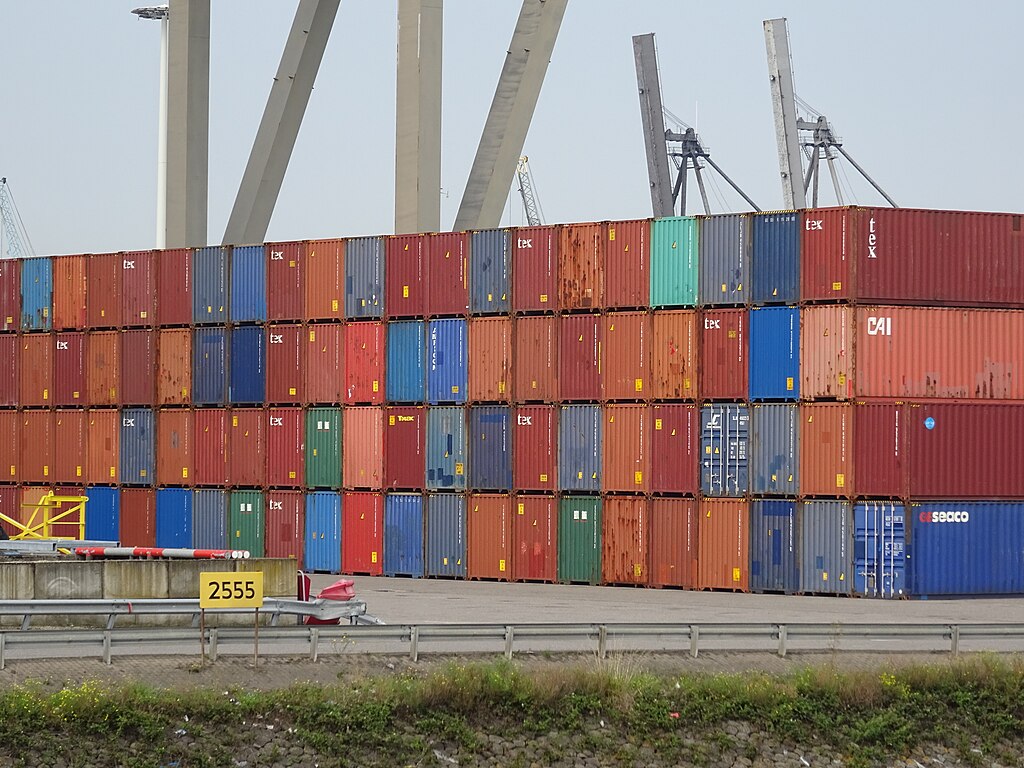
Australia’s trade surplus narrowed sharply in August as imports grew faster than exports, falling well below market expectations, according to data released Thursday by the Australian Bureau of Statistics.
The seasonally adjusted goods trade surplus dropped to A$495 million from A$1.35 billion in July. Economists had expected a surplus of around A$2 billion.
Australian exports rose 3.7% month-on-month to A$47.43 billion, recovering from a 3.3% decline in July. The rebound was led by non-monetary gold exports, which jumped 20.2%. Coal, coke and briquettes increased 4.7%, while other mineral fuels gained 2.8%. Metal ores and minerals, however, declined 1.5%.
Imports climbed at a faster 5.8% pace to A$46.94 billion. Capital goods imports surged 22.3%, driven by a 79.3% increase in automatic data-processing equipment. Non-monetary gold imports soared 91.1%, while consumption-goods imports fell 7%.
Commodity shipment volumes also strengthened. Iron ore lump volumes increased 17.2%, hard-coking coal shipments rose 16.3%, and thermal coal volumes gained 9.9%. LNG volumes slipped 0.2%. Meanwhile, unit values for iron ore lump and hard-coking coal declined 4.4% and 4.2%, respectively.
The August figures followed a stronger June performance, when Australia recorded a A$1.93 billion trade surplus as exports surged 9.6% and imports slipped 0.2%.
The trade report came two days after the Reserve Bank of Australia raised its cash rate by 25 basis points to 4.60%, marking its fourth increase this year. The RBA cited higher global energy prices, stronger technology-goods prices linked to artificial intelligence demand and persistent domestic capacity pressures.
August inflation subsequently came in slightly below forecasts. Headline CPI rose 4.0% year-on-year versus expectations of 4.1%, while trimmed mean inflation remained at 3.6%.
ANZ continues to expect another RBA rate hike in November, pointing to persistent underlying inflation pressures.
The Australian dollar showed little reaction to the trade figures, with AUD/USD trading around 0.6947 following the release.