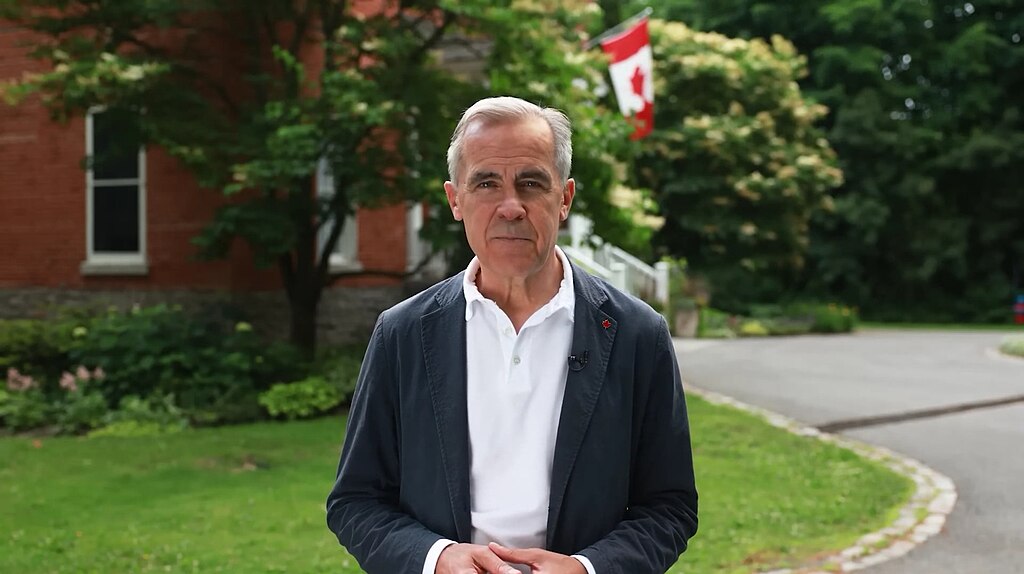
Australia and Canada have signed a series of new agreements aimed at strengthening cooperation on critical minerals, a move designed to secure global supply chains and reduce dependence on China. Canadian Prime Minister Mark Carney announced the agreements during a speech to Australia’s parliament on Thursday, marking the final day of his three-day visit to the country.
The new deals include collaboration within the G7 critical minerals alliance, a Canada-led initiative focused on diversifying and stabilizing the production and supply of essential minerals used in semiconductors, clean energy technologies, and defense systems. Carney described the alliance as one of the largest groups of trusted democratic nations with significant mineral reserves, emphasizing its role in ensuring reliable access to strategic resources. Although specific details of the agreements were not disclosed, the partnership signals deeper cooperation between two of the world’s leading resource exporters.
Western governments have increasingly prioritized securing critical mineral supply chains as geopolitical tensions rise and reliance on China remains high. China currently dominates the production and processing of several key minerals vital to advanced technology manufacturing and military applications. By strengthening partnerships between allied nations, policymakers hope to create a more resilient and diversified global supply network.
Canada and Australia are well positioned to play a major role in this effort. Together, the two countries produce roughly one-third of the world’s lithium and uranium and more than 40% of global iron ore. Canadian Energy and Mining Minister Tim Hodgson recently told Reuters that Canada supports the creation of a production alliance or a buyers’ club to address concentrated supply risks rather than relying solely on price controls.
Australia has also taken steps to boost its own mineral security strategy. The government recently committed A$1.2 billion (about $850 million) to establish a national critical minerals stockpile, initially focusing on strategic materials such as antimony and gallium.
The visit also highlighted broader cooperation between the two nations. Carney’s Asia-Pacific tour includes stops in Japan and India, with the Australian leg focused on strengthening ties between what both leaders described as “middle powers” navigating a rapidly changing global order. Australian Prime Minister Anthony Albanese welcomed Carney’s address, noting it was the first time a Canadian leader had spoken before Australia’s parliament since 2007.
Both governments signaled that cooperation will expand beyond minerals to include defense, maritime security, trade, and artificial intelligence. Carney emphasized that in an era of increasing geopolitical rivalry, partnerships between democratic nations are essential to maintaining economic stability and global security.