


 Moonshot AI Executives Seek Settlement Ahead of Hong Kong IPO
  Lincoln University Students Sue Missouri Over Decades of Underfunding
  Morgan Stanley Predicts $10 Trillion RWA Market by 2030
  FAA Warns US Airlines Over Saudi Arabia Flight Risks
  Epic Games Delays Disney Shooter, Shifts to AI-First Development
  PepsiCo Slashes Poppi Earnout Valuation as Growth Slows
  California Woman Arrested Over Alleged Spying on Taiwan President’s Son
  Syndax Stock Drops 15% After Axatilimab Trial Failure
  Trump Sanctions International Criminal Court, Sparking EU Backlash
  Florida Seeks Tougher Meta Rules to Protect Young Users
  US Supreme Court Revives Trump Administration Voter Citizenship Database
  Russia Approves Sberbank for Crypto Exchange Services
  Arthur Hayes Announces FLOP Testnet Launch Within Weeks
  Elon Musk Donates $366 Million to 2026 US Midterms


 Add as a preferred source on Google


The best word to describe the way Australia taxes alcoholic drinks is “incoherent”.
It was the word used by the 2010 Henry Tax Review to describe a system in which some wine effectively faces no alcohol tax, expensive wine is taxed heavily and cask wine lightly, beer (but not wine) is taxed by alcohol content, brandy is taxed less than other spirits, and cider is taxed differently to beer.
Industry calculations suggest cask wine is taxed at as little as six cents per standard drink, mid-price wine at 26 cents, bottled beer at 56 cents, and spirits at $1.24.
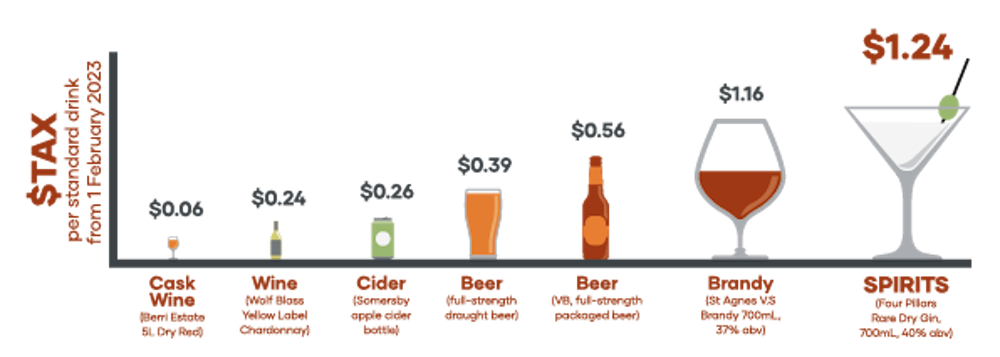
Australian Distillers Association
And yet it is cask wine that is often said to do the most damage.
The Henry Review recommended taxing all drinks containing more than a small amount of alcohol at the same rate per unit of alcohol, regardless of type. It was a recommendation backed by specialists in Australia’s tax system.
Implicit, and largely unexamined, in these recommendations is the assumption that alcohol does the same damage in whatever form it is taken.
Our new study, linking drinkers’ risky behaviours to the types of alcoholic beverages they mostly consume, finds this isn’t so.
Damage depends on the type of drink
Using data from six waves of an Australian recreational drug survey, we find that regular-strength beer and pre-mixed spirits in a can rank among the highest in their links to both drink-driving and hazardous, disturbing or abusive behaviours.
Mid-range are mid-strength beer, cask wine, and bottled spirits and liqueurs.
At the bottom are low-strength beer and pre-mixed spirits in a bottle, which have the weakest links to risky and abusive behaviours when intoxicated.
Probability of drink driving, by age and beverage type
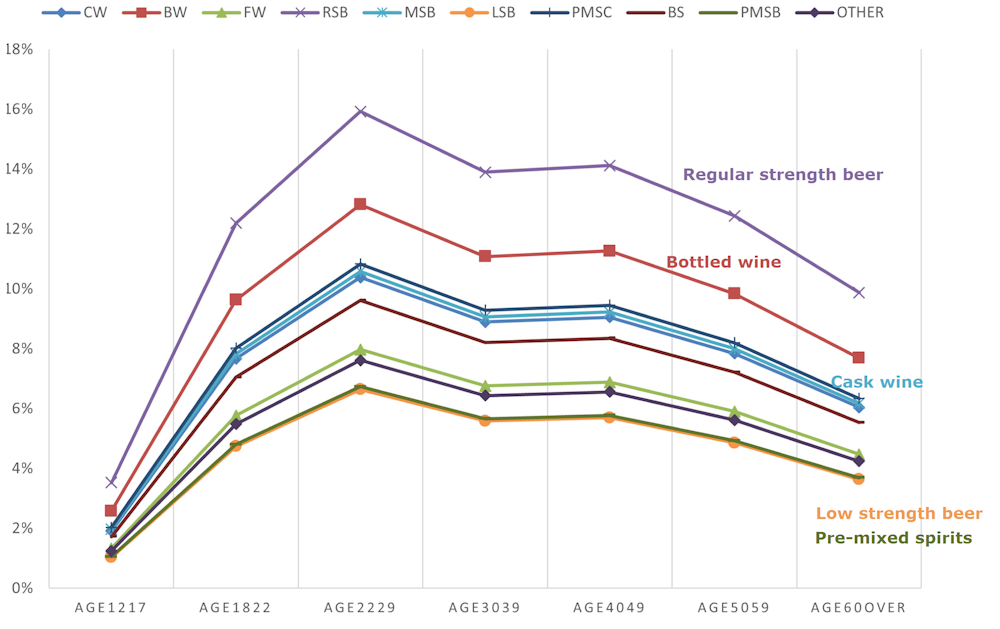
RSB = Regular-Strength Beer; LSB = Low-Strength Beer; MSB = Mid-Strength Beer; BW = Bottled Wine; FW = Fortified Wine; CW = Cask Wine; PMSC = Pre-Mixed Spirits in a Can; PMSB = Pre-Mixed Spirits in a Bottle; BS = Bottled Spirits and Liqueurs. Source: Economic Record
Some of the relationships vary with the type of damage. While bottled wine is linked to a moderate to high probability of drink-driving, it is also linked to a low probability of hazardous, disturbing or abusive behaviours.
Pre-mixed spirits in a bottle are related to a low probability of both drink driving and hazardous, disturbing and abusive behaviours. But when account is taken of the gender of the drinkers (so-called alcopops are typically drunk by females), we find them no longer as safe.
Probability of hazardous, disturbing or abusive behaviour
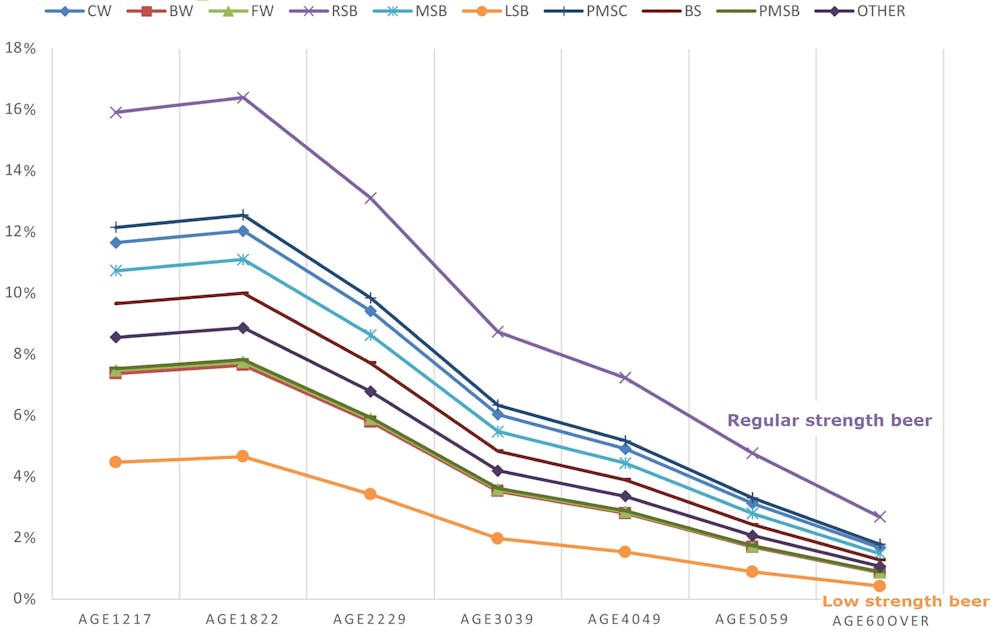
RSB = Regular-Strength Beer; LSB = Low-Strength Beer; MSB = Mid-Strength Beer; BW = Bottled Wine; FW = Fortified Wine; CW = Cask Wine; PMSC = Pre-Mixed Spirits in a Can; PMSB = Pre-Mixed Spirits in a Bottle; BS = Bottled Spirits and Liqueurs. Source: Economic Record
Our study suggests that Australia’s haphazard system of taxing alcohol might have got some things right. Beer, which is typically taxed more highly than wine, seems to do more damage.
But it has got some things wrong. Cask wine appears to be significantly undertaxed relative to the damage it does.
More broadly, our findings suggest that if alcohol is to be taxed according to the damage it does, the tax system we adopt will need to be more complicated than a single rate for every unit of alcohol regardless of the form in which it comes.







