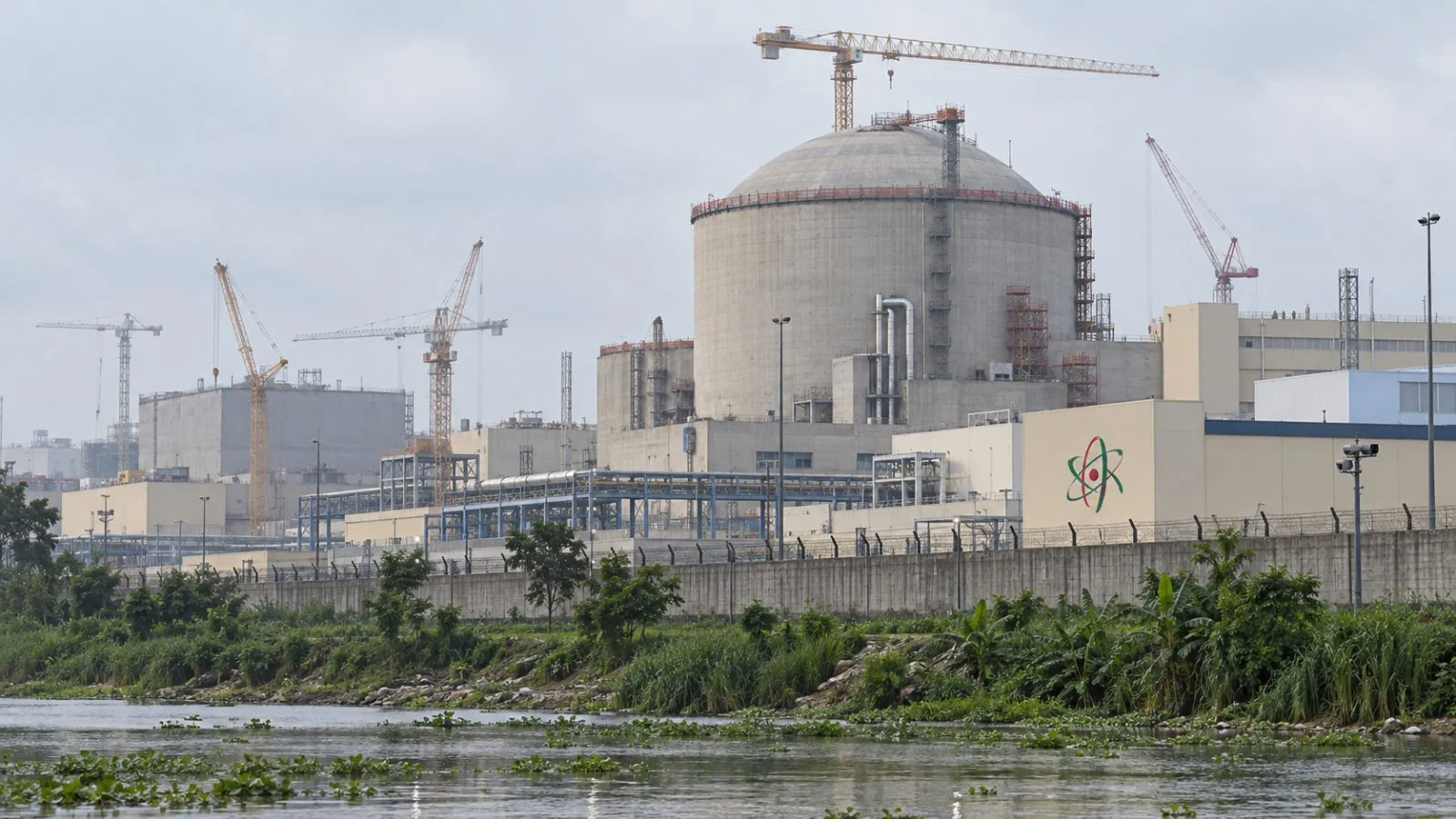
Bangladesh’s government said Unit 1 at the country’s first nuclear power plant reached first criticality Oct. 11, a commissioning milestone that leaves power-level tests and two regulatory approvals before grid connection.
Unit 1 at the Russian-built Rooppur plant attained the milestone at 5:34 a.m. ET (09:34 UTC), the government said. Rosatom, the Russian state corporation building the plant, said the reactor had established a controlled, self-sustaining nuclear reaction at minimum power. It has not begun supplying the national grid.
First criticality shows that the reactor can sustain the reaction, but it is one stage in bringing the unit into service. Rosatom said engineers will now run tests at several power settings before preparing for power start-up and grid connection.
The Bangladesh Atomic Energy Regulatory Authority (BAERA) authorized first criticality Oct. 8 after project officials said they had fixed problems with safety valves. BAERA Chairman Mahmudul Hasan said two further approvals are needed before the unit can send electricity to the grid.
Rooppur is being built in Pabna district with two Russian-designed VVER-1200 reactors. Together, they are rated for 2,400 megawatts of gross capacity. The World Nuclear Association lists Unit 1 at 1,080 megawatts net, compared with 1,200 megawatts gross.
The association says a construction agreement signed in December 2015 was worth $12.65 billion, with Russia agreeing to finance 90% of the contract. Rosatom said 163 fuel assemblies were loaded into Unit 1 between April 28 and May 12, ahead of the October milestone.
India has provided technical advice as well. In its 2019 year-end review, India’s Department of Atomic Energy said it had sent 10 experts to consult on Rooppur under an agreement with the Bangladesh Atomic Energy Commission.
Rosatom hopes to connect Unit 1 to the grid before the end of November. BSS reported Oct. 8, citing project officials, that trial electricity supply might begin by the end of December. Neither target is a confirmed date.