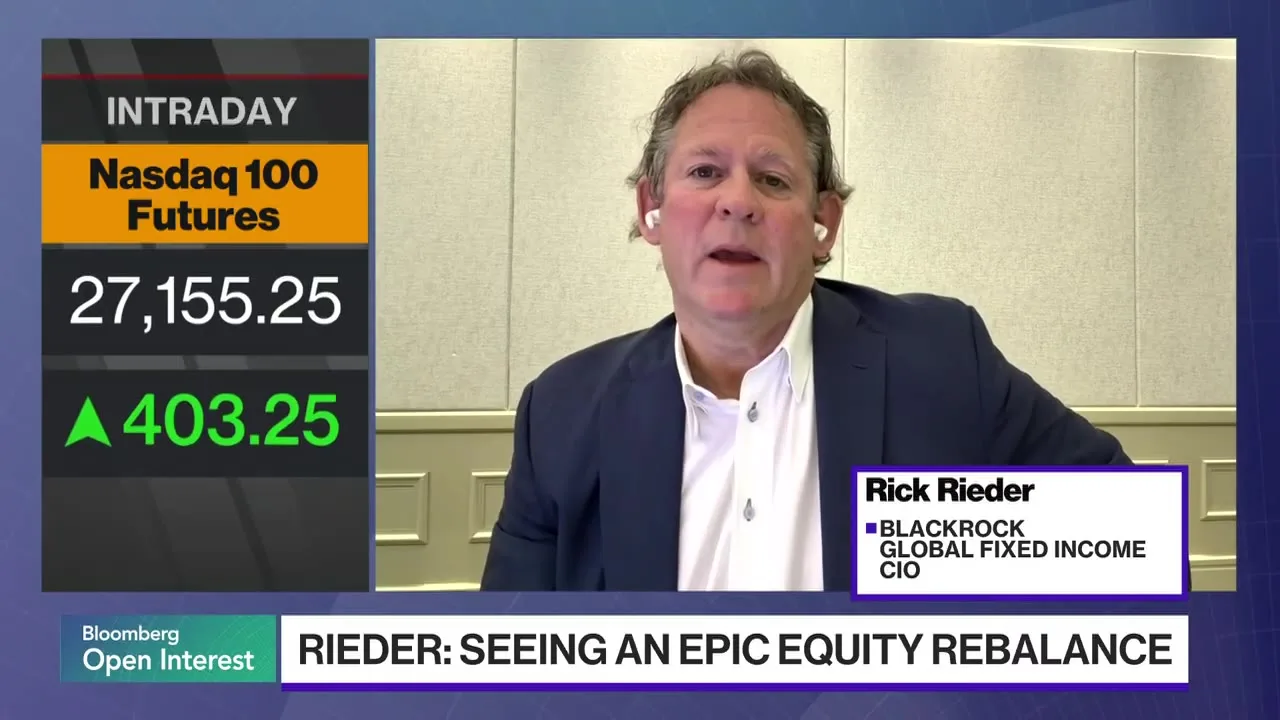
Investors are making an “epic rebalance” toward bonds as concentrated stock holdings and high inflation-adjusted interest rates increase the appeal of income, BlackRock money manager Rick Rieder said.
He put the average investor's equity allocation at 71%, compared with 8% in fixed income. The bond allocation was three times that size 10 to 20 years ago.
Rieder spoke on Bloomberg Television in an interview published Nov. 6. He described the employment figures discussed during the interview as confirmation of strong economic growth, but said investors were looking ahead.
He said the figures mattered less that day than questions about artificial intelligence spending, the previous day's market turbulence and developments around the war over the weekend. He did not identify the conflict.
Rieder said interest rates alone were not particularly exciting at current levels. His argument for bonds rested instead on the income available after inflation and their ability to balance stock holdings.
“Everybody is on one side of the boat,” he said, describing investors' exposure to artificial intelligence and technology. He put the share of equity market net income growth coming from just 10 companies at 70%.
He said uncertainty about future growth had increased, strengthening the case for income alongside equities. His comments did not specify how much money investors might shift or how quickly they might do so.
Rieder rejected the suggestion that the equity market was a bubble, although he said some valuations were too high relative to earnings. He described some earnings growth assumptions heading into 2026 as reaching 30%.
He said those expectations could face reductions, while describing AI-related growth as strong. Borrowing, hedge fund positions and concentrated holdings had contributed to the unwinding of equity exposure over the week and the previous month.
Individual investors still held exposure to the area, leaving room for further rebalancing. He said some equities had become cheap and their valuations looked reasonable even after allowing for weaker growth and AI spending.
Turning to lending, Rieder described AI financing as one of the most attractive opportunities ahead. Existing debts in credit markets and real estate still needed refinancing, while some financing arrangements now included collateral, assets backing the borrowing.
He said BlackRock had been buying more investment-grade credit, debt with relatively strong credit ratings. He described the ability to build a “7% portfolio” while improving credit quality, without specifying the measure behind that percentage.
BlackRock bought a small amount the previous day. Rieder said credit spreads, the extra yield borrowers pay above benchmark debt, had not widened sharply despite the attention on equities.