Rosneft officials privately warned that months of Ukrainian attacks on its refineries could cause lasting damage, Bloomberg reported, as the company disclosed lower first-half refining throughput.
According to Rosneft, throughput at its Russian refineries totaled 35.5 million tons in the first half of 2026. It attributed the reduction to maintenance and repair work, as well as continuing logistical constraints; its public results did not identify Ukrainian strikes as the cause.
Net income attributable to shareholders dropped 18.4% to 200 billion rubles from 245 billion rubles a year earlier. Rosneft cited noncash and one-off factors, including foreign-exchange differences and asset impairments. Earnings before interest, taxes, depreciation and amortization (EBITDA), meanwhile, rose 23% to 1.296 trillion rubles from 1.054 trillion rubles.
Bloomberg, citing people familiar with the matter, reported that officials saw several more months of attacks as a threat to the company’s long-term business. The outlet also said some sites extended repair schedules to limit costs. Rosneft Chief Executive Igor Sechin said the company was “managing constraints related to refining capacity maintenance.” In a statement to Bloomberg, Rosneft said it was taking measures to protect plant security and operations.
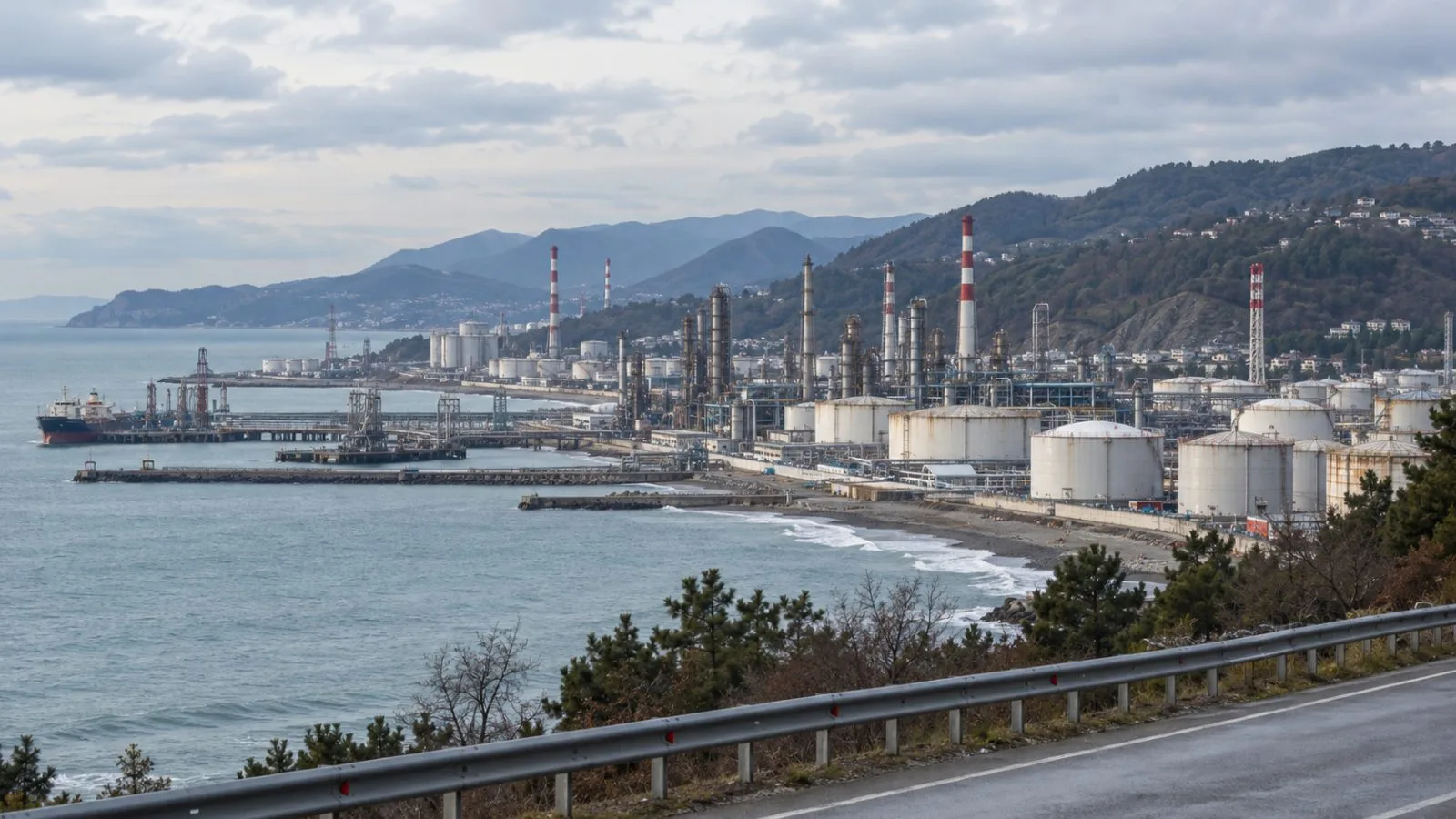
Bloomberg reported that Rosneft runs 12 refineries, accounting for about one-third of Russia’s refining capacity. Its review described outages at three facilities: Tuapse had remained offline since April, Ryazan was shut for more than half the period after a May strike, and Syzran spent much of the past six months idle or operating below one-third of capacity. Bloomberg also said sanctions have made repairs harder by restricting access to components Rosneft previously sourced from Western suppliers.
A drone attack caused a fire at Ryazan on Oct. 15, according to a statement by the regional governor reported by Reuters. Reuters later reported, citing industry sources, that the attack shut the plant’s CDU-6 crude distillation unit.
Russian President Vladimir Putin said Oct. 1 that refinery strikes had cost Russia about 1% of gross domestic product; the Associated Press report did not specify the period covered by his estimate. The International Energy Agency (IEA) cited reduced Russian refinery output as a pressure on diesel supply, with strike damage among the factors behind the lower output. The agency’s assessment was also covered in an earlier EconoTimes report on diesel supply pressures.