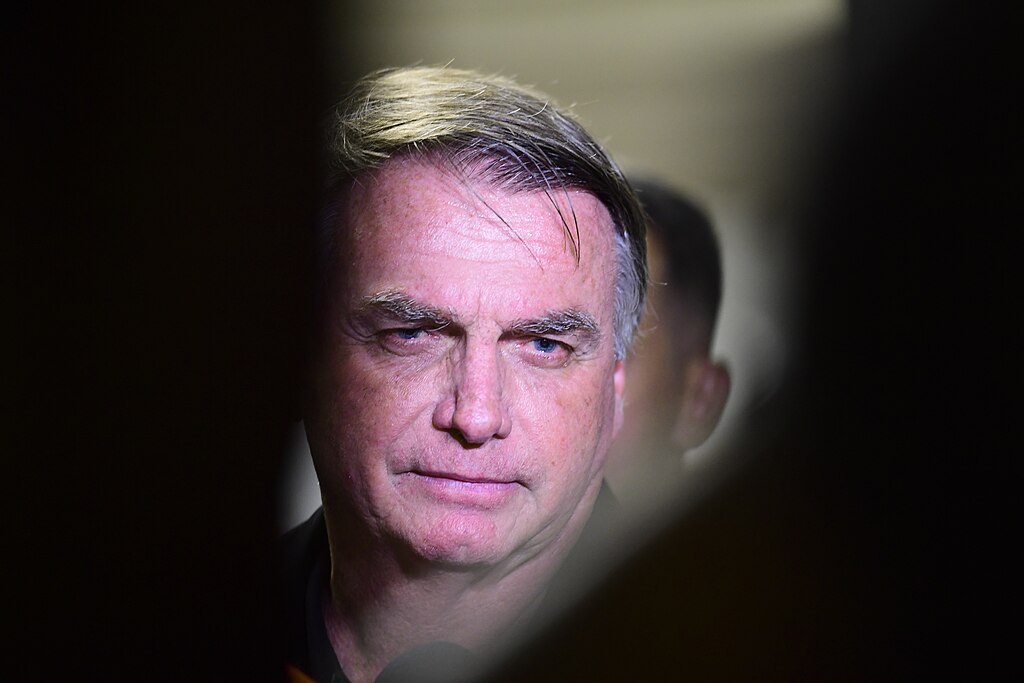
Brazil’s Supreme Court has imposed stricter restrictions on former President Jair Bolsonaro, suspending all non-essential visits to his residence for 30 days as the country moves closer to its October presidential election. The ruling, issued Friday by Supreme Court Justice Alexandre de Moraes, further limits Bolsonaro’s ability to communicate on political matters while serving humanitarian house arrest.
Under the decision, Bolsonaro may only receive visits from his legal team and medical professionals during the suspension period. Moraes said the tougher restrictions were necessary after a social media post by Senator Flavio Bolsonaro, the former president’s son and a presidential candidate, breached the conditions of Bolsonaro’s house arrest.
The controversy stems from a letter written by Jair Bolsonaro and shared online by Flavio Bolsonaro over the weekend. In the message, the former president urged political allies to put aside internal disagreements and unite behind his son’s campaign for the upcoming election. Moraes ruled that the publication violated court-imposed restrictions prohibiting Bolsonaro from engaging in political communication, whether directly or indirectly.
Bolsonaro is currently prohibited from using social media or telephones, either personally or through third parties, under the terms of his humanitarian house arrest. He was granted house arrest this year because of health concerns after being sentenced in 2025 to more than 27 years in prison for plotting a coup following his defeat to President Luiz Inácio Lula da Silva in the 2022 election.
A lawyer representing Bolsonaro did not immediately respond to requests for comment regarding the latest court order.
The new restrictions follow another ruling earlier this week in which Moraes barred Senator Flavio Bolsonaro from visiting his father for 90 days. The senator criticized the decision, describing it as an attempt to influence the election process.
In Friday’s ruling, Moraes also prohibited Jair Bolsonaro from receiving visitors for political or electoral purposes until the conclusion of the election. The order further bans the former president from issuing political statements, including messages disseminated through third parties, reinforcing the court’s efforts to prevent any political activity while he remains under house arrest.