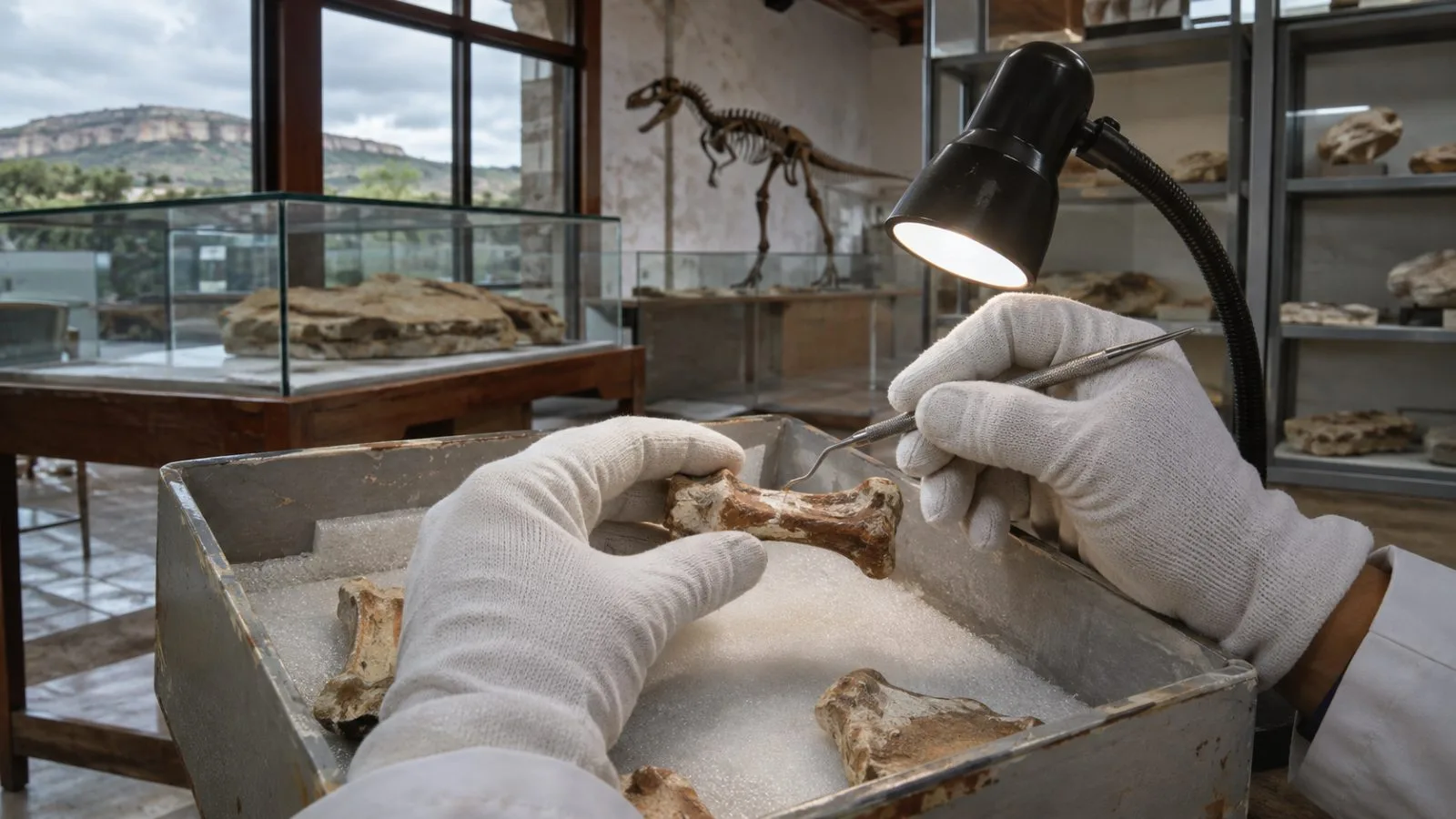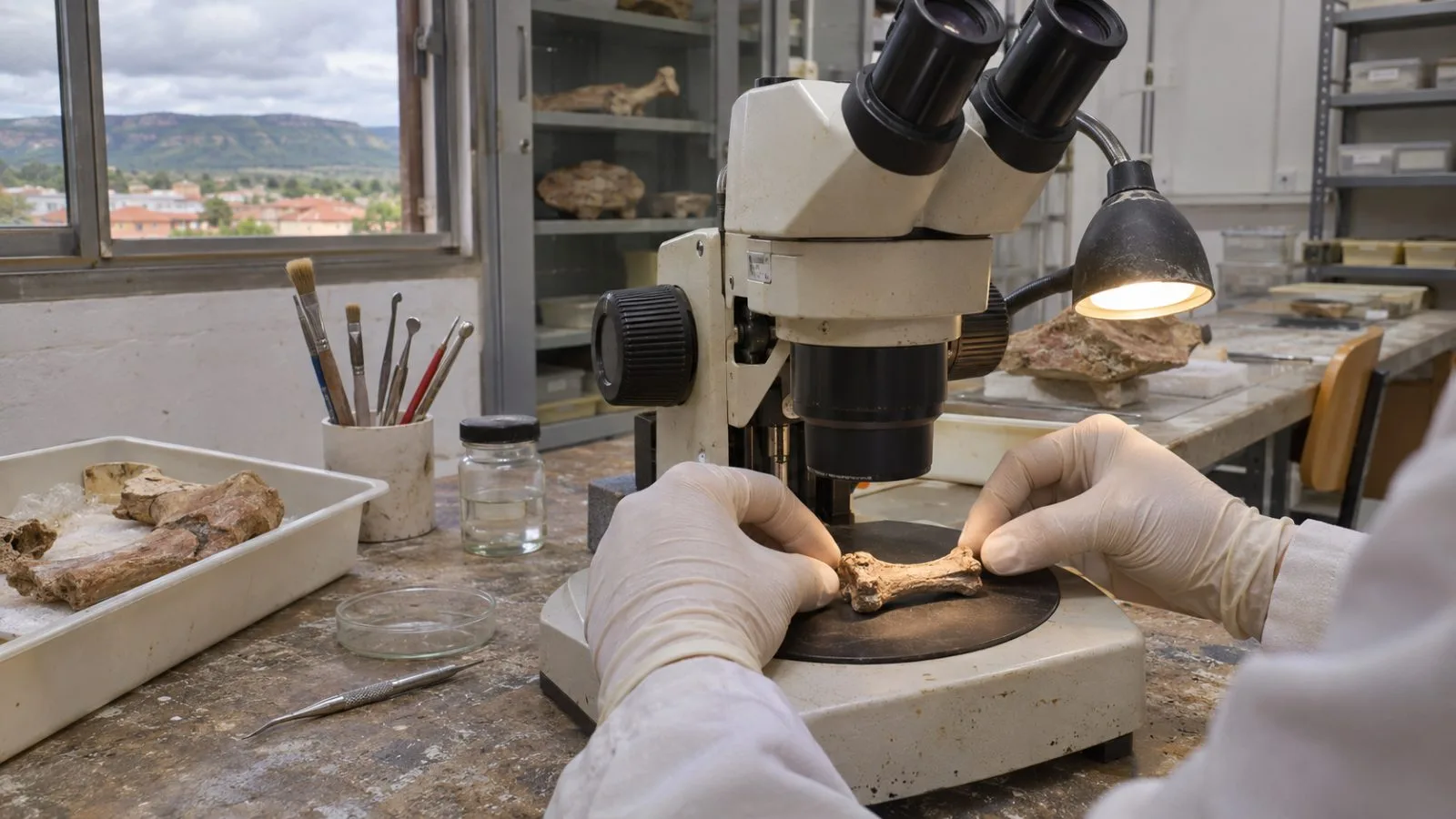
CNA reported that researchers interpreted structures in a Brazilian dinosaur’s hind-limb bone as possible red blood cells, alongside chemical signals related to heme that do not establish intact hemoglobin survived.
CNA said the microscopic forms were found in channels running through bone from the animal’s right hind limb. The outlet also reported collagen-related amino acids in the fossil and said the study appeared in the Proceedings of the National Academy of Sciences.
Heme is an iron-containing component associated with hemoglobin, the protein that transports oxygen in blood. CNA’s account describes chemical findings related to heme but does not establish that intact hemoglobin remained. The outlet also reported that the study’s lead author cautioned against treating the results as evidence that dinosaur DNA survived.
CNA reported that the animal lived about 115 million years ago and was roughly four years old. A 2020 species description documented a juvenile represented by an incomplete right hind-limb fossil with bones preserved in their original arrangement. That paper estimated the dinosaur’s length at about 3.12 meters and classified Aratasaurus as a coelurosaur theropod.
A 2022 review of soft tissues in fossil bone said earlier reports of blood cells in fossils had not been undisputed at the time. It questioned whether cell-like forms described in previous research were actually blood cells. The Guardian also reported that Prof. Mary Schweitzer questioned the red-cell interpretation of the structures, citing their concave shape.
EconoTimes previously covered the heme analysis of the same Aratasaurus fossil, which identified heme and its breakdown products. The current report adds CNA’s account of microscopic structures and collagen-related amino acids in the bone.