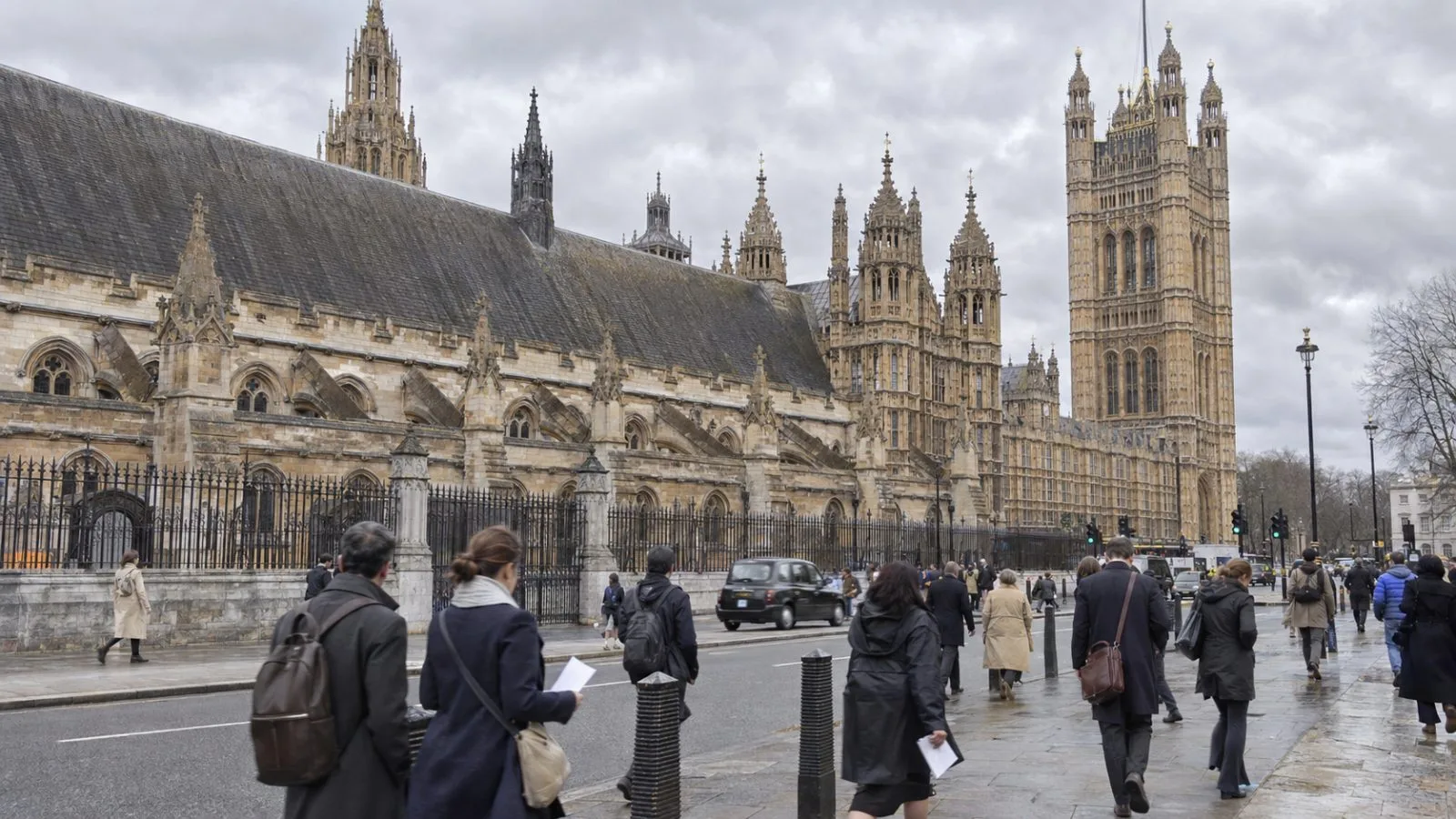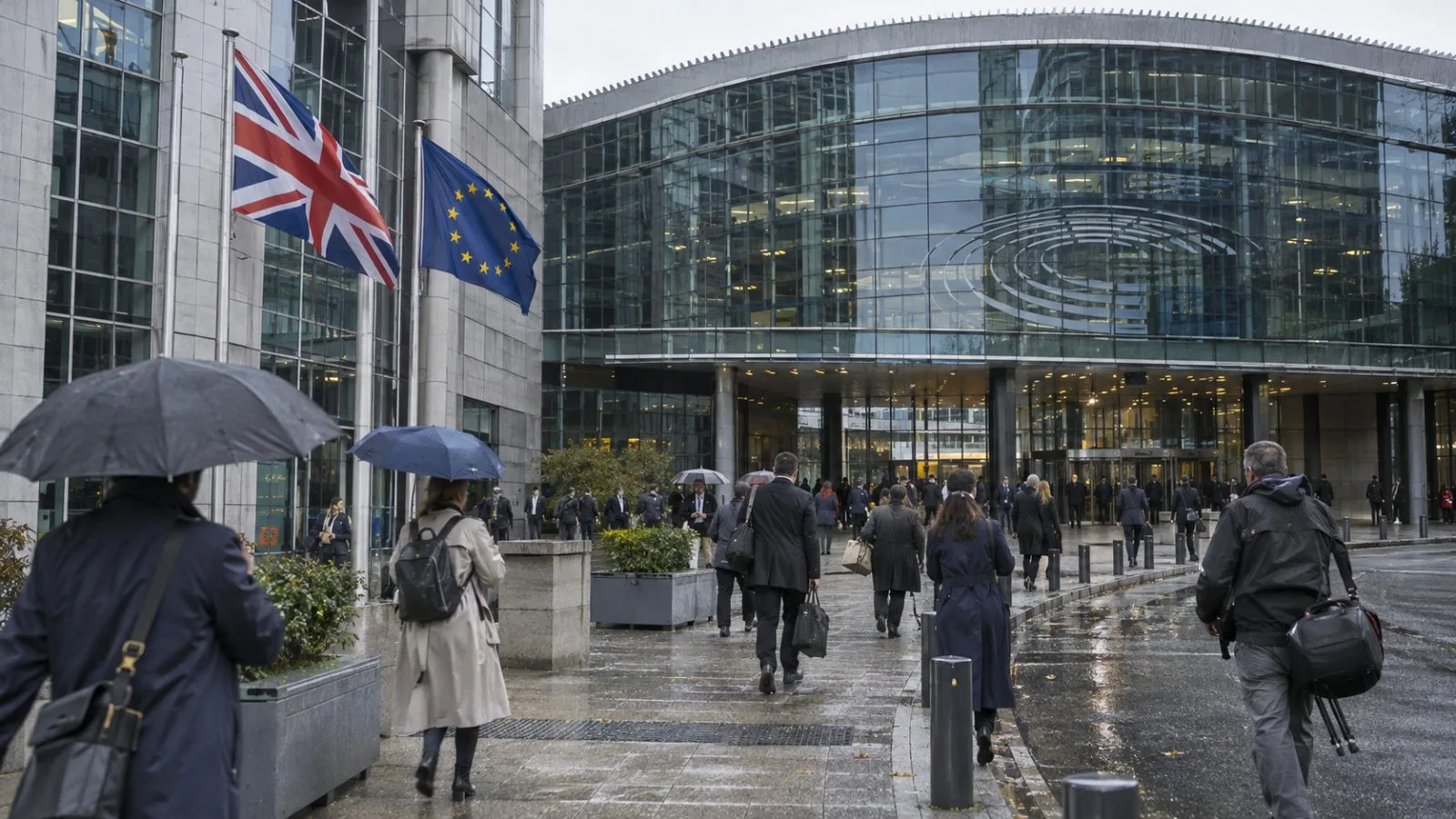
LONDON, Nov. 27 — The UK government has taken its post-Brexit agreement with the European Union into Parliament, seeking powers for trade and emissions deals while excluding free movement and EU single-market and customs-union membership.
The European Partnership Bill received its first reading in the House of Commons on Nov. 26. It would authorize ministers to implement two agreements reached at the Nov. 20 summit in Brussels: a Sanitary and Phytosanitary (SPS) agreement covering agri-food trade and a plan to link the UK and EU emissions trading systems.
The bill calls for dynamic alignment with EU rules in the sectors covered. UK courts would be expected to interpret those rules consistently with relevant Court of Justice of the European Union (CJEU) case law, with UK courts retaining final decision-making authority.
The UK government aims to make the emissions-market link operational by Jan. 1, 2028. It estimates the arrangement could exempt nearly £6.5 billion of UK exports from carbon-border charges and add nearly £3.8 billion a year to the economy by 2040. It separately projects that the wider summit package could increase output by up to £17 billion annually by 2040, equivalent to 0.5% of GDP.
A Cabinet Office impact assessment says the EU accounted for 45% of the UK's total trade in 2025, worth more than £830 billion. More than 91,000 UK businesses exported goods to the EU, while more than 154,000 imported goods from the bloc. The assessment also cites Office for Budget Responsibility assumptions that UK-EU trade will be 15% lower in the long run than it would have been if Britain had remained in the EU.
The government presents food and agricultural exporters, carbon-intensive industries exposed to EU border charges and young people seeking work or study opportunities in Europe as beneficiaries. The bill's explanatory material identifies regulatory alignment as the main trade-off.
The package includes planned UK participation in Erasmus+ in 2027 and a Youth Experience Scheme for 100,000 people from each side annually. Participants aged 18 to 31 would be able to work, study, volunteer, au pair or travel for up to three years, without access to benefits or the right to bring dependants. The EU-UK joint statement says the scheme should apply no later than 2028, while a UK explainer says the first opportunities should be available no later than January 2030.
The UK and EU also agreed to negotiate a separate tuition-fee arrangement within six months of the summit.
In prepared remarks for the Pontignano Conference in Rome on Nov. 27, Secretary of State for Scotland Douglas Alexander is expected to argue that closer ties with Europe are distinct from Scottish independence. The Scotland Office release quoted him as saying, “What was agreed in Brussels last week should be regarded as a floor — a proof of concept, not a ceiling on our ambitions.”
Britain left the EU in January 2020. Scotland voted 62% to remain in the 2016 referendum, with 1,661,191 votes for Remain and 1,018,322 for Leave.
The UK Parliament bill page lists a second reading for Dec. 7, although a House of Commons Votes and Proceedings document dated Nov. 26 gave a different timetable.