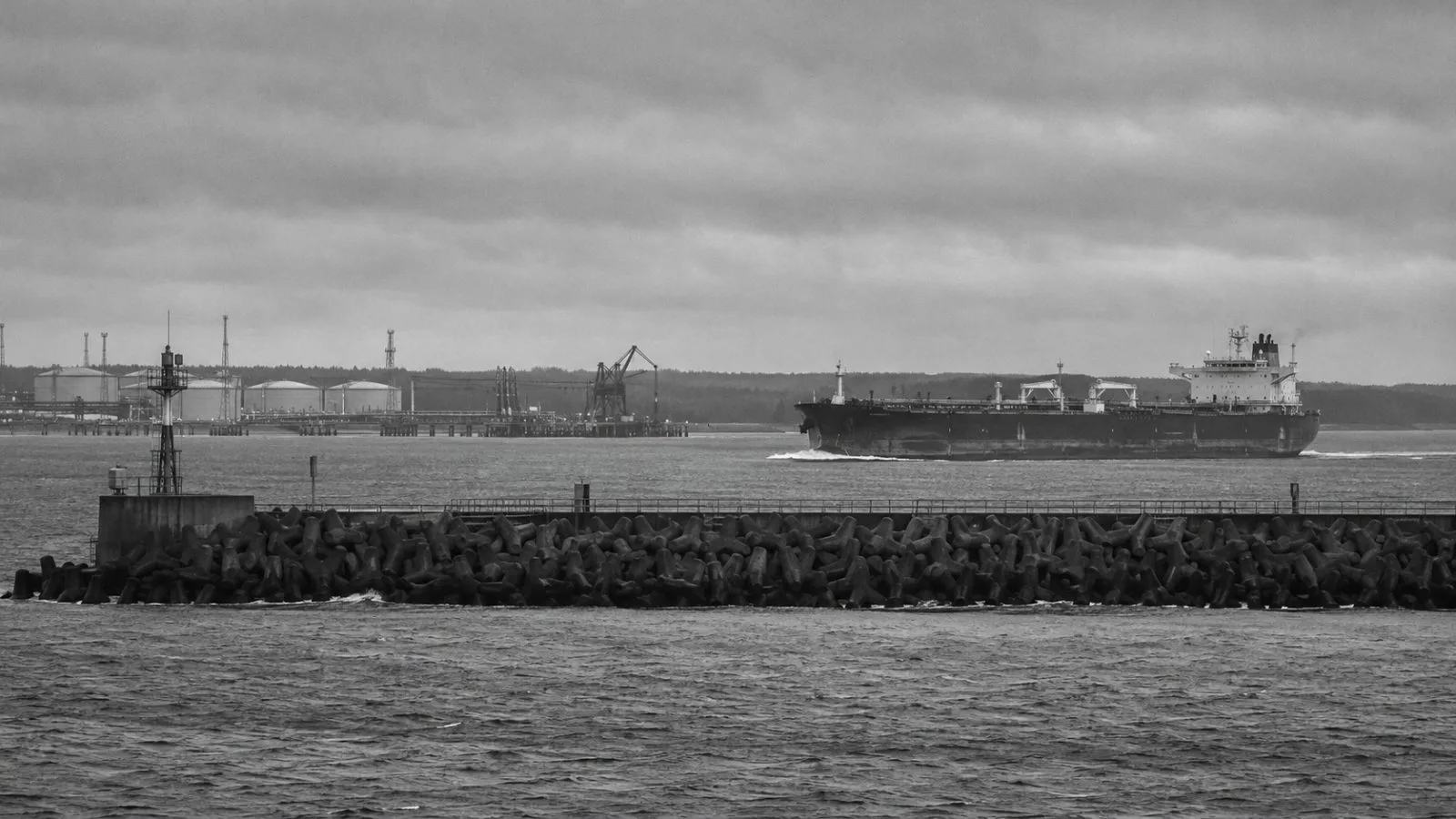
Robin J Brooks said Monday that the European Union’s divisions over Russia policy have weakened efforts to curb the country’s shadow fleet, focusing attention on Baltic ports that he says handle about half of Russia’s seaborne oil exports.
In a post dated Nov. 16, Brooks discussed a chart tracking oil-tanker volumes leaving Russia’s Baltic ports. He read the chart’s gray bars as showing a substantial increase in the shadow fleet’s presence in the Baltic. The ports, he said, account for about half of Russia’s seaborne oil exports.
Brooks criticized European discussions of “China Shock 2.0,” a term used in debates about Chinese exports of electric vehicles and other goods and their impact on Europe’s manufacturing sector. He argued that the focus diverts attention from Russia’s war in Ukraine and the EU’s record on Russia policy. Brooks contended that China’s growing exports of goods to Russia have enabled Moscow to continue the war.
He cited the December 2025 EU summit as an example of the bloc’s divisions. Brooks said leaders did not reach agreement on using Russia’s frozen foreign-currency reserves to finance Ukraine, with France and Italy siding with Belgium against Germany.
He said goods from across the EU continue to be transshipped to Russia, and argued that these shortcomings reflect governance problems that hinder a consistent foreign policy. He called on European policymakers to focus more on curbing the fleet.