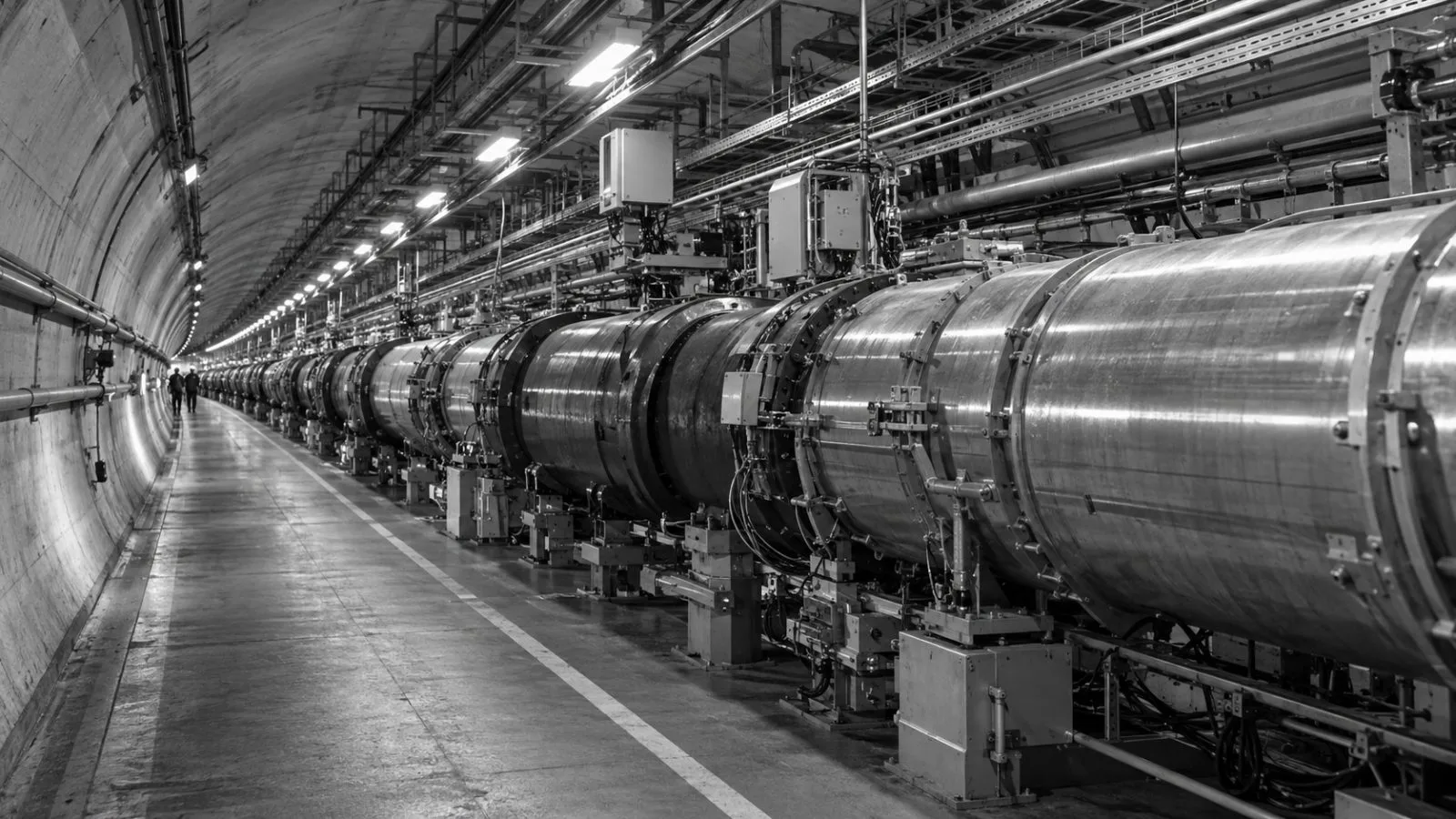
CERN and Mistral AI signed an Oct. 15 statement of intent to develop a particle-physics model as the Large Hadron Collider (LHC) prepares for an upgrade designed to increase collisions and data.
Partners call the initiative the Large Physics Model. It would learn from billions of computer-simulated proton-proton collisions and is intended to support several stages of analysis: reconstructing events, distinguishing particles, searching for unusual signals and reviewing possible detector configurations.
For current LHC research, algorithms interpret detector recordings to infer particles and other objects physicists can study. Machine-learning methods already contribute to selected parts of that analysis. The proposed system would extend AI support across more of the research process. The partners have not reported results demonstrating its performance.
The planned training inputs are simulated events, separate from the experimental LHC records CERN has already gathered. The statement presents the model effort as the opening initiative in a longer scientific AI collaboration between CERN and Mistral AI. It does not detail how simulations will be selected or prepared for training.
The High-Luminosity Large Hadron Collider (HL-LHC) is expected to begin operating around 2030. Compared with the original LHC design, the upgrade targets about 10 times the number of collisions and the data volume. The larger expected flow of material is the backdrop for plans to help researchers handle more analysis.
Enrica Porcari, CERN’s chief information officer, described high-energy physics as a “unique environment” for developing and testing AI. Johannes Brandstetter, Mistral AI’s vice president of AI for Engineering, said the partnership would examine how large-scale models could help with particle physics’ growing complexity.
The announcement did not set a date for development or training and gave no funding figure. Computing resources, access terms, milestones and performance benchmarks also remain unspecified.