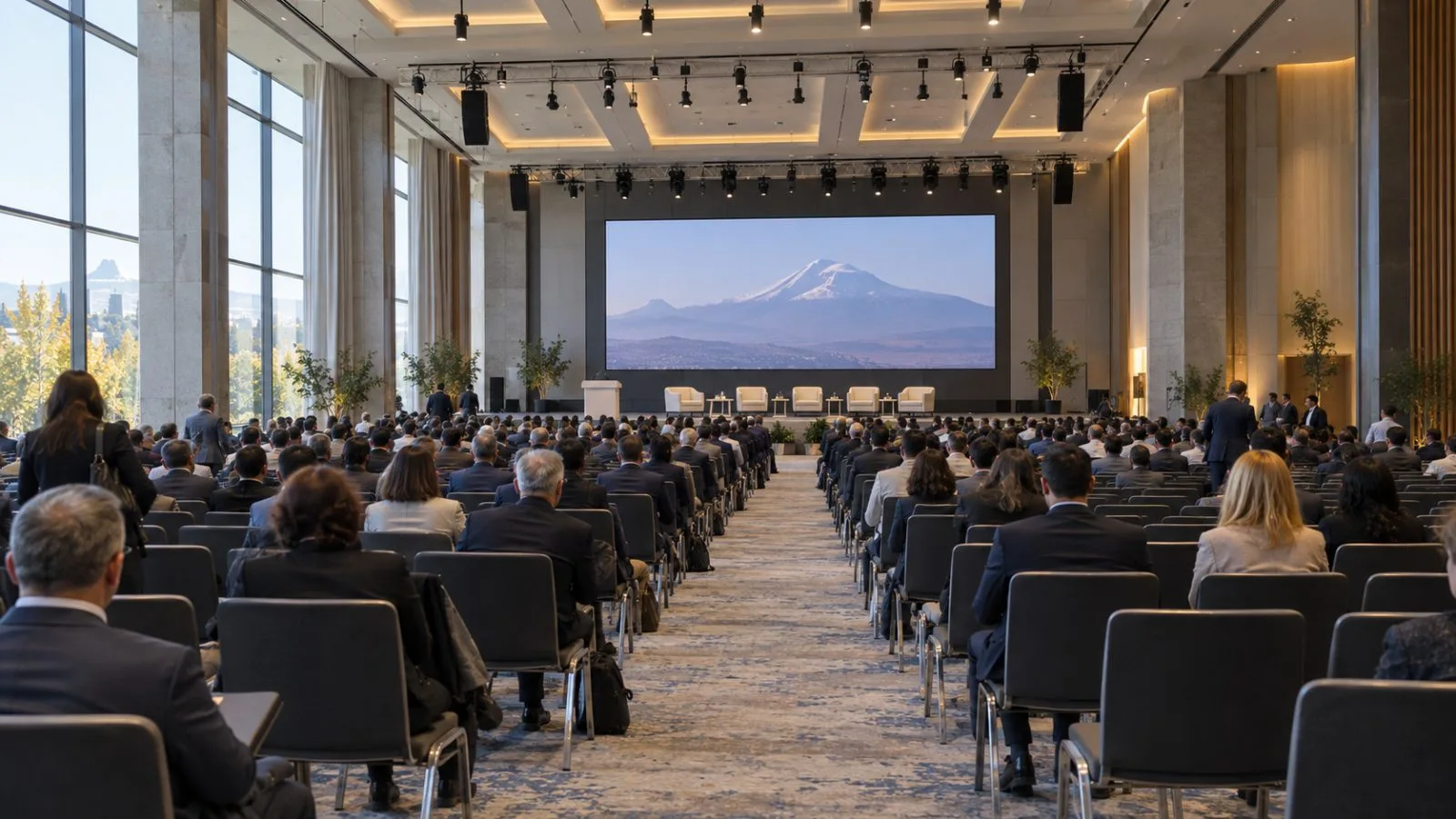
Delegates at the biodiversity conference in Yerevan adopted 14 decisions at a plenary Friday, Oct. 23, as talks continued over company contributions and climate policy.
The 17th Conference of the Parties to the Convention on Biological Diversity (CBD), or COP17, includes meetings under the Cartagena Protocol on Biosafety and the Nagoya Protocol. An itemized account from the International Institute for Sustainable Development (IISD) counted eight decisions under the Cartagena Protocol, four under the CBD and two under Nagoya. The measures addressed compliance and reporting, biosafety, gender, public awareness and invasive alien species.
Established at COP16 in 2024, the Cali Fund is intended to share benefits from commercial use of digital sequence information (DSI) linked to genetic resources. CBD Decision 16/2 recommends indicative contribution rates of 1% of profits or 0.1% of revenue for qualifying commercial entities. To meet the size tests, an entity must exceed at least two thresholds on a three-year average: $20 million in assets, $50 million in sales or $5 million in profit.
The decision calls for at least half of fund resources to address priorities identified by Indigenous Peoples and local communities, where appropriate and consistent with national circumstances and law. It also says the fund should support developing-country Parties, including least developed countries and small island developing states.
The UN Transcripts service says its Oct. 19 session records were generated with automatic speech recognition and are not official U.N. records. In a Working Group I transcript, Egypt, speaking for the African Group, argued that governments should take a stronger role in putting the fund’s framework into practice and that firms should not decide alone whether to contribute. Russia’s transcript-reported position described payments as voluntary, stressed legal certainty and incentives for businesses, and suggested using products to identify potential contributors.
A separate transcript of a Working Group II session records South Africa, speaking for the African Group, seeking reliable access to financing and technology transfer on biodiversity and climate policy. It records Russia opposing additional CBD requirements for national climate measures and favoring voluntary, nonbinding approaches.
The Kunming-Montreal Global Biodiversity Framework sets 23 targets for 2030. The CBD’s first global progress report said nearly 90% of its 196 Parties had established national biodiversity targets, but fewer than half of the targets assessed by Parties were on track.
COP17 is scheduled to run through Friday, Oct. 30. Decision 16/2 schedules an effectiveness review of the Cali Fund for COP18, with the review method due for adoption at COP17.