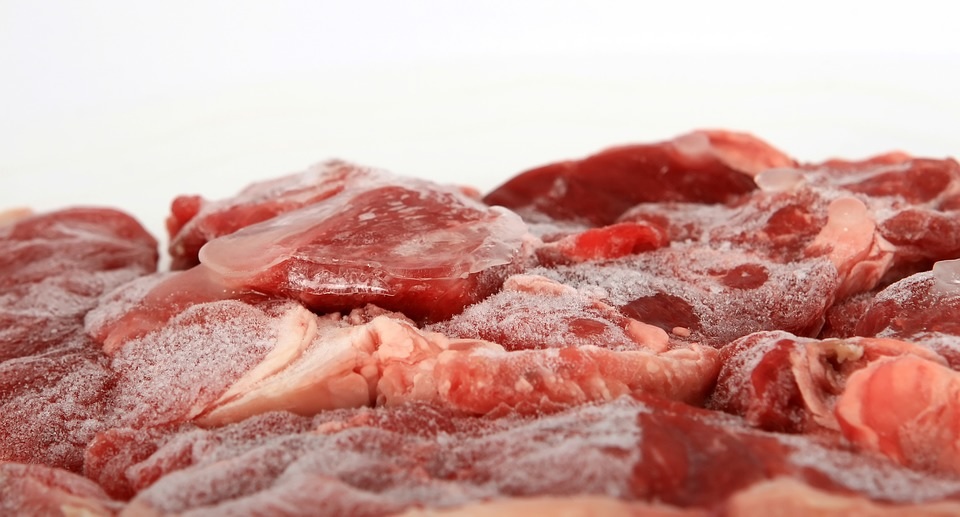
A group of experts conducted research to address one of the common questions people have about COVID-19. The study revealed the virus, SARS-CoV-2, was able to survive and maintain “infectivity” for up to three weeks in various kinds of frozen meats.
COVID-19 virus survives in frozen goods for up to 3 weeks
Since COVID-19 is caused by a new virus, studies are still underway to assess other potential methods of transmission. Like the possibility of contracting the virus through air, there are still many questions on likelihood of getting infected with SARS-CoV-2 through ingestion.
The paper featured on bioRxiv reveals the result of an experiment where SARS-CoV-2 was added into 500 individual, same-sized cubes of salmon, chicken, and pork sourced from various supermarkets in Singapore. The samples were then stored at different temperatures including the recommended food storage refrigeration at 4°C while the rest were frozen at –20°C and –80°C.
Scientists removed the samples from storage to thaw after different periods ranging from 1, 2, 5, 7, 14, and 21 days. The study found that the amount of SARS-CoV-2 added onto the refrigerated and frozen goods did not change regardless of the temperature and the number of days before thawing. “Infectivity was maintained for 3 weeks in both the refrigerated (4°C) and frozen (–20°C and –80°C) samples,” the experts added.
Why people should not panic in buying frozen meats amid COVID-19
The study offers a significant hypothesis on the lingering investigation of whether or not SARS-CoV-2 could be transmitted through food consumption. But it should be noted that the proven common way of its spread remains through coming in contact with droplets produced by a COVID-19 patient.
The ability of the COVID-19 virus to survive for up to three weeks in frozen goods is not entirely surprising, too. The World Health Organization previously pointed out that the MERS-CoV, an earlier discovered type of coronavirus, was able to live for up to two years at -20°C.
It should be noted that there is no confirmed case yet of COVID-19 infection through food consumption. Reports also note that the virus is likely to be killed by stomach acids and there is no direct route for the virus to reach the lungs and replicate once it passes through the stomach and the intestine. The WHO also reported that a “quick reduction” has been observed when SARS coronavirus is exposed to heat at 56°C.
On the other hand, these points are in no way reasons to disregard food safety practices. Experts advise people to maintain proper hygiene and regular cleaning of surfaces where raw foods are being prepared as well as avoiding uncooked meals.
Feature photo by Robert Owen-Wahl on Pixabay