On Nov. 23, the Government of Canada released the 2023 Fall Economic Statement. In a bold move toward empowering consumers, reducing costs and promoting sustainability, the Canadian government has reiterated its commitment to the ‘right to repair.’
The right to repair is a public interest movement seeking greater parts, tools, information and software necessary to repair and maintain the devices and technologies that surround us. Advocates for the right to repair point to the need to reduce planned obsolescence, increase consumer choice and market competition and offer greater social understanding and technological literacy.
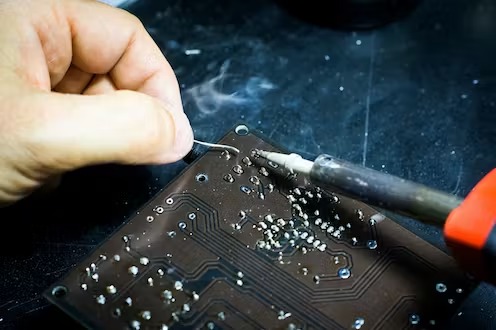
The right to repair movement advocates for consumers to be able to repair their goods.
In setting sights on amending the Competition Act, the Fall Economic Statement signals a decisive step by the federal government to prevent manufacturers from refusing to provide the “means of repair of devices and products in an anti-competitive manner.”
This is welcome news for repair advocates, but making sure that manufacturers are compliant will pose some challenges.
Intellectual property rights
Bill C-244 amends the Copyright Act to allow access to device software for repair-related purposes. With Bill C-244 receiving unanimous support in the House of Commons and now before the Senate, the focus on competition law reforms signals that the government has taken a broad view of their legislative strategy for the right to repair.
But, as many have observed, the approaches taken by manufacturers to refuse access to the “means of repair” are often enabled by a number of different intellectual property (IP) rights.
Copyright in software is just one of many IP rights that can be leveraged to keep a tight leash on repair. Addressing these issues at the market competition level will require a more comprehensive view of the IP dynamics at play when crafting new policy.

Bill C-244 allows access to device software for repair-related purposes. (Shutterstock)
Competition and intellectual property
Manufacturers attempting to restrict access to repair often rely on a combination of copyright, software protection, patent law, industrial design, trademark law, contractual terms of use and warranties to maintain a tight grip on repair processes. A key challenge in recalibrating Canada’s competition rules will be in navigating this often overlapping and complex network of rights.
Any renewed competition policy to promote repair will need to distinguish between the legitimate application of IP rights, and the laws used to prevent independent repair.
Applicable laws
The intersection between IP rights and repair is quite broad. Patent rights can be asserted to safeguard the technical aspects of manufacturers’ devices and products. This includes intricate components and proprietary technologies that are integral to the functionality of devices. In some cases, the line between repairing or “remaking” a product or device with patented components is not entirely clear.
Industrial designs are lesser-known IP rights that can also impact repair. These rights focus on the esthetic elements of products or their components. Manufacturers often use distinctive designs as a means of product differentiation.
In these types of situations, the lines between form and function become blurry, as the distinctive design of parts or components may be the only one that will fit or work properly for repair purposes.
This is an issue that has been well discussed in the European Union, and Canadian policymakers should take note. Of particular concern is the ability for industrial design rights to prevent others from manufacturing or selling replacement parts.
Trademark law, which safeguards brand identity and prevents consumer confusion in the marketplace, is also used by manufacturers to control repair avenues. In some cases, refurbished or replacement parts will bear small trademarks of the original manufacturer.

Intellectual property rights can be applied to industrial design. (Shutterstock)
As a small iPhone repair shop owner in Norway learned, these often microscopic trademarks can offer enormous downstream control by original manufacturers.
Even if these logos are not visible after the part has been installed into the device, their existence on the part itself may be enough to empower the Canada Border Services Agency to deem them “counterfeit goods,” requiring their destruction or issuance of fines.
A challenge for Canada’s competition authorities lies in crafting amendments that prevent abusive uses of trademark rights without diluting their essential protection or the legitimate need to combat counterfeit goods.
Amending the Competition Act
The government is chartering new waters in addressing the right to repair as a market competition issue.
The challenge for policymakers will be in preventing abusive practices while not compromising the exclusive rights guaranteed by various IP statutes. It would certainly not be the first time that policymakers have put their mind to these issues, however.
Canada’s Intellectual Property Law Enforcement Guidelines acknowledge the intricate relationship between intellectual property and competition law. Any approach to recalibrate Canada’s competition rules to embrace repair will need to revisit (and likely significantly add to) these guidelines.
Any proposed amendments to the Competition Act must not only uphold national guarantees, but reconcile with these and other international obligations. Canada’s commitments under various international agreements, including the Agreement on Trade-Related Aspects of Intellectual Property Rights (TRIPS), require that Canada guarantee a certain level of protection for various forms of IP rights.
Even beyond IP rights, Canada has agreed to safeguard the secrecy of source code and diagnostic software as part of the Canada-United States-Mexico Agreement (CUSMA). Unless revisited and renegotiated, this obligation alone could limit the government’s wiggle room to create new competition remedies addressing repair, straining the ability of the Competition Bureau to intervene in anti-competitive situations.
As challenging as it may be to wade into these waters, the government’s commitment is welcome news. The intricate dance between competition law and guaranteeing protection for various intellectual property rights signals an opportunity to create a more level playing field for independent repair businesses across the country.
The Fall Economic Statement signifies a recognition and willingness to see the right to repair as a broad-based policy initiative, and this gives reason for much hope and optimism.